

True crime reporting often focuses heavily on the criminal profiles of known serial offenders or high-profile courtroom trials. Yet, the most profound devastation occurs in the immediate aftermath of localized, sudden-onset gun violence—where innocent community celebrations are abruptly transformed into forensic crime scenes. The tragic mass shooting in Stockton, California, which claimed the life of 20-year-old Michael “Mikey” Wells, stands as a harrowing example of this structural urban reality.
On April 17, 2021, what was supposed to be a peaceful milestone celebration turned into a war zone when multiple gunmen opened fire on an outdoor birthday gathering.
Click here to watch the brutal shooting
The resulting investigation exposed the severe, ripple-effect trauma experienced by families thrust into the center of unprovoked violence. By examining the mechanics of the ambush, the psychological weight of a father’s immediate grief, and the frustrating path toward legal justice, this article provides a high-value analysis of the Stockton tragedy alongside a precise timestamp guide to the definitive media coverage.
📹 Video Transcript and Key Interview Timestamps
The investigative news segment from KCRA 3 News, titled ‘Father recounts final moments of son killed in Stockton birthday party shooting’, captures the raw, unedited emotional gravity of the immediate aftermath. Below is an analytical timestamp breakdown of the vital turning points in the footage:
-
[0:00 – 0:45] 🚨 The Forensic Perimeter and Initial Reports
The video opens with standard broadcast reporting, showcasing the expansive police perimeter, active evidence markers on the pavement, and initial data provided by the Stockton Police Department regarding the five victims of the mass casualty event.
-
[0:46 – 1:55] 🎙️ A Father’s Agony: Michael Wells Sr. Speaks
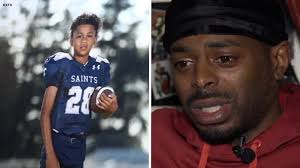
The focal point of the high-value footage shifts to the victim’s father. In a deeply somatic recount of the shooting, he describes hearing the sudden volley of shots and rushing outside only to find his son, Mikey, mortally wounded. He recounts holding his son during his final breaths, providing a devastating glimpse into the immediate human cost of gun violence.
-
[1:56 – 2:40] 🕯️ Remembering “Mikey” and Community Outrage
Family members and neighbors describe Michael Wells as an innocent, non-confrontational young man who was simply attending a family event. The narrative shifts to the community’s growing exhaustion with structural violence in Stockton and the urgent plea for witnesses to step forward.
-
[2:41 – End] 🚔 The Police Appeal and Active Investigation
The segment concludes with an official statement from law enforcement. Detectives emphasize the lack of immediate suspect descriptions and issue an appeal to the public for surveillance footage, dashcam data, or anonymous tips to help identify the shooters.
🎭 The Architecture of an Ambush: The Stockton Birthday Shooting
The mass shooting occurred on the 8100 block of Palamee Lane in North Stockton. A multi-generational group had gathered in the front yard and driveway of a residential home to celebrate a family birthday. The environment was entirely civilian, characterized by music, food, and family interactions.
At approximately 9:15 PM, the peaceful gathering was violently disrupted. Multiple unidentified suspects approached the residence and unleashed a hail of high-velocity gunfire directly into the crowd before fleeing the scene in a vehicle.
[The Palamee Lane Mass Shooting Metrics]
The Scene       ──> Residential driveway, multi-generational birthday celebration.
The Assault     ──> Multiple shooters approach on foot/vehicle; rapid, indiscriminate fire.
The Toll        ──> 5 victims struck; 4 wounded, 20-year-old Michael Wells killed.
The Aftermath   ──> Suspects flee immediately; community plunged into a forensic investigation.
The sheer volume of rounds fired created immediate chaos. When the gunfire ceased, five individuals were struck by bullets. While four victims survived their injuries after being rushed to local hospitals, 20-year-old Michael Wells succumbed to his wounds in his father’s arms right on the driveway. The clinical precision of the attack indicated either a targeted gang-related retaliation that misidentified its venue, or an act of indiscriminate urban terrorism—leaving an entire neighborhood picking up the pieces of an unresolved catastrophe.
🔍 Was the Perpetrator Caught or Jailed?
The legal status of the Stockton birthday party shooting highlights a frustrating reality within urban homicide investigations: the perpetrators remain largely at large, and the case has faced significant hurdles in achieving full judicial resolution.
Following the 2021 shooting, the Stockton Police Department launched an aggressive homicide investigation, treating the event as a multi-suspect mass shooting. Because the attackers utilized a rapid drive-by or hit-and-run ambush strategy under the cover of darkness, identifying the specific gunmen proved exceptionally difficult.
-
Initial Arrests: In the months following the tragedy, investigators executed several warrants targeting local street level operations, leading to peripheral arrests on weapon charges. However, tying specific individuals directly to the triggers pulled on Palamee Lane required an incredibly high threshold of forensic and ballistic proof.
-
The Wall of Silence: Detectives publicly noted that despite the presence of numerous witnesses at the party, a pervasive “wall of silence” and fear of retaliation severely hindered the collection of direct eye-witness testimony.
-
Current Status: No principal shooters have been successfully convicted or definitively jailed for the murder of Michael Wells. The case remains classified as an active, open homicide investigation. The Stockton Police Department, alongside secret witness programs, continues to offer monetary rewards for any verified digital footprint, video footage, or informant testimony that can secure a grand jury indictment against the killers.
✒️ Editor’s Opinion: The Anatomy of Somatic Trauma and Unresolved Grief
In mainstream true crime media, stories are often wrapped up neatly within a 60-minute episode, concluding with handcuffs clicking and a judge handing down a life sentence. The story of Michael Wells Sr. holding his dying son on a Stockton driveway shatters this comfortable illusion. It forces us to look at the permanent, open-ended trauma of unresolved violence.
Michael Wells was not a participant in a violent lifestyle; he was an innocent young man celebrating a birthday.
When anonymous shooters fire indiscriminately into a crowded yard, they aren’t just killing a target—they are injecting a permanent poison into the psychological infrastructure of an entire family. The father’s testimony is of immense social value because it illustrates the raw biology of grief. He did not have time to process or flee; he was forced to pivot instantly from a celebratory state into a emergency somatic crisis, watching his son’s life slip away.
-
-
Father recounts son’s final moments after being shot at birthday party When the perpetrators of such a crime are not immediately caught and jailed, the trauma is compounded. The family is denied the structural boundary of closure that a courtroom sentencing provides. High-value journalism demands that we do not let these cases fade into cold-case statistics. We must continuously archive them, keeping the public pressure on law enforcement and breaking through community walls of silence, because an unpunished mass shooting is an open wound across the entire fabric of public safety.
❓ Frequently Asked Questions (FAQ)
Q: Who was the victim killed in the Stockton birthday party shooting?
A: The sole fatality of the mass shooting was 20-year-old Michael “Mikey” Wells, described by his family as a loving, non-violent young man who was simply attending a family birthday celebration.
Q: How many people were injured in the attack?
A: A total of five people were struck by gunfire. Four victims survived their injuries after receiving emergency medical treatment, while Michael Wells died at the scene.
Q: Have the shooters been arrested and jailed?
A: No. While law enforcement has pursued multiple leads, no suspects have been formally charged or jailed for the murder of Michael Wells. The case remains an open, active homicide investigation.
Michael Wells was not a participant in a violent lifestyle; he was an innocent young man celebrating a birthday.
When anonymous shooters fire indiscriminately into a crowded yard, they aren’t just killing a target—they are injecting a permanent poison into the psychological infrastructure of an entire family. The father’s testimony is of immense social value because it illustrates the raw biology of grief. He did not have time to process or flee; he was forced to pivot instantly from a celebratory state into a emergency somatic crisis, watching his son’s life slip away.
This excruciating burden of processing a public slaughter is an experience shared by communities torn apart by sudden, large-scale urban tragedies. The profound psychological shock of having a celebratory space violated by unpredictable malice demands an immense amount of internal resilience from the survivors. A deeply moving exploration of this emotional battlefield is analyzed in *The Facing of Evil: Chris Owen Confronts Darrell Brooks in the Wake of the Waukesha Massacre*. In that case, a family member was forced to navigate the traumatic aftermath of an indiscriminate attack on a holiday parade, eventually standing face-to-face with the perpetrator in a courtroom. Whether a family is forcing their way through a high-profile trial against a volatile mass murderer or navigating the quiet agony of an unsolved drive-by shooting, the structural damage to the family unit remains identical: they are left to rebuild their lives in a reality that was shattered in a matter of seconds.
When the perpetrators of such a crime are not immediately caught and jailed, the trauma is compounded. The family is denied the structural boundary of closure that a courtroom sentencing provides. High-value journalism demands that we do not let these cases fade into cold-case statistics. We must continuously archive them, keeping the public pressure on law enforcement and breaking through community walls of silence, because an unpunished mass shooting is an open wound across the entire fabric of public safety.
—
## ❓ Frequently Asked Questions (FAQ)

