

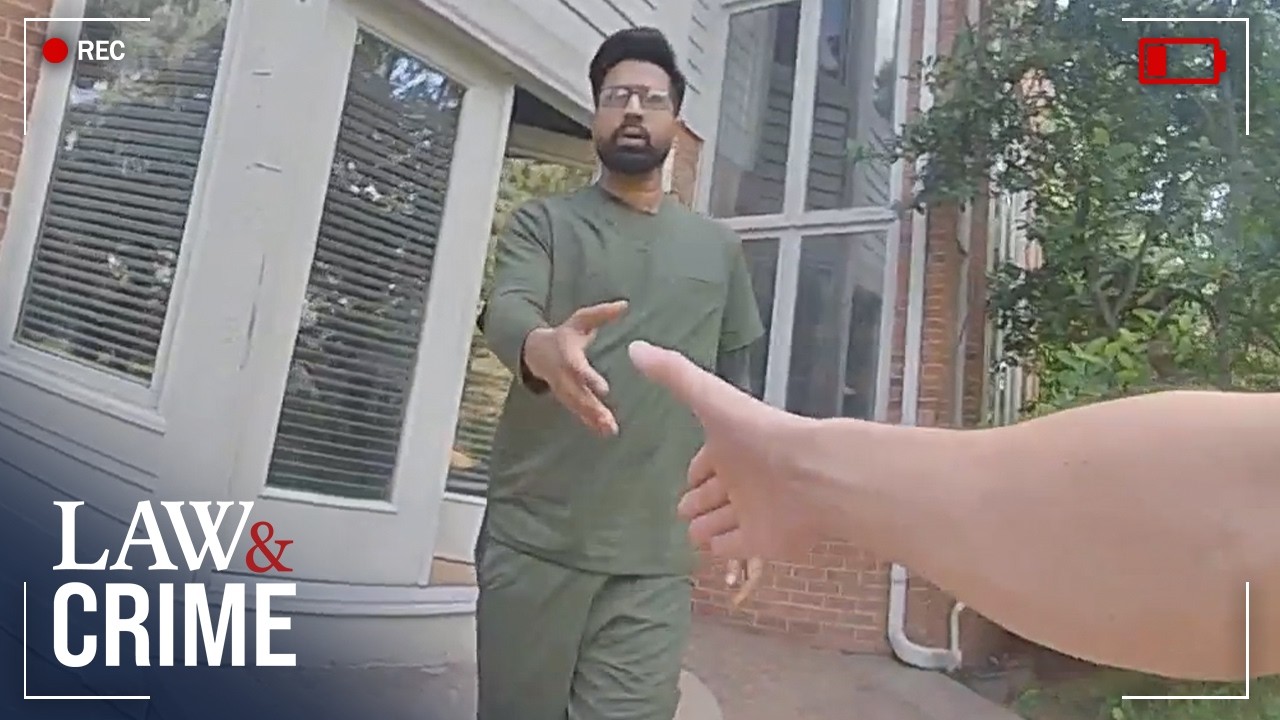
Inside the multi-decade sentencing of an Oakland County physician whose systemic abuse and hidden-camera operation targeted hundreds of unsuspecting victims.
The pristine, sterile environment of a hospital is built entirely on an unwritten covenant of absolute trust. Patients willingly put their health, their privacy, and their lives into the hands of medical professionals, expecting protection at their most vulnerable moments. That sacred boundary was shattered in Oakland County, Michigan, by former physician Dr. Oumair Aejaz.
Click here to watch his mansion get raided
Newly released police bodycam footage captures the precise moment law enforcement closed in on the 41-year-old doctor, exposing a dark, multi-year history of illegal surveillance, sexual assault, and exploitation. Swept up in an exhaustive digital forensics investigation that uncovered a massive cache of hidden-camera files, Aejaz’s double life collapsed, resulting in a prison sentence spanning decades.
The Arrest: The Moment the Double Life Collapsed
The newly unsealed bodycam footage provides a chilling, fly-on-the-wall perspective of law enforcement executing the arrest of a man who, on paper, was a highly respected member of the local medical community. In the video, handled by Law&Crime’s Chris Stewart, investigators confront Aejaz with cold efficiency.
The contrast is stark: a professional trained in clinical precision suddenly finds himself completely powerless as detectives strip away his clinical authority. The footage documents the calm before the storm, showing the exact moments investigators secured his personal devices—the very hardware that served as the digital vault for over 13,000 illicit recordings.
Video Breakdown and Crucial Timestamps
To fully grasp how the investigation unfolded and how local authorities successfully dismantled this deep-rooted operation, look closely at these key moments in Law&Crime’s coverage:
-
0:00 – 1:30 | The Incident Overview: Host Chris Stewart introduces the horrifying scope of the charges against Dr. Oumair Aejaz, detailing his position within Michigan hospital systems and the shocking volume of digital evidence seized by the tech-crimes division.
-
1:31 – 4:15 | Exclusive Bodycam Footage: The heart of the release. Watch the live police bodycam interaction as detectives arrive to execute the search warrants and take Aejaz into custody, showcasing his initial, highly calculated reactions to the presence of law enforcement.
-
4:16 – 6:45 | Uncovering the Digital Cache: An in-depth analysis of how the computer crimes unit extracted data from hidden cameras placed across multiple facilities, including private spaces and local community hubs.
-
6:46 – 9:00 | The Devastating Courtroom Verdict: Footages from the sentencing hearing where victims and their families finally confront the disgraced physician directly, highlighting the severe psychological toll of his actions.
13,000 Secret Videos: A Systemic Breach of Trust
The scale of the evidence recovered by the Oakland County Computer Crimes Unit is staggering. Detectives ultimately pulled more than 13,000 digital files from hard drives, hidden lenses, and personal computers controlled by Aejaz. The investigation revealed that his predatory behavior was not an isolated lapse in judgment, but a meticulously organized, six-year pattern of behavior.
“The exploitation of women and children—especially in cases where he used his trusted position as a physician—is absolutely unconscionable,” stated Oakland County Sheriff Michael Bouchard.
The digital trail exposed that Aejaz didn’t limit his surveillance to hospital exam rooms. Incriminating evidence proved he had hidden cameras recording family members, house guests, and even unsuspecting members of the community undressing at a local swim school in Rochester Hills. The total lack of boundaries left a sprawling trail of trauma that investigators spent months meticulously mapping to identify individual victims.
The Sentence: 35 to 60 Years Behind Bars
In October, facing an airtight case built on undeniable digital forensics, Aejaz entered a plea of “no contest” to 31 distinct counts of severe sexual misconduct. Crucially, the Oakland County Prosecutor’s Office refused to offer any form of leniency or a plea agreement, ensuring that the full weight of the law could be applied at sentencing.
His formal convictions included:
-
2 Counts of First-Degree Criminal Sexual Conduct
-
3 Counts of Second-Degree Criminal Sexual Conduct
-
4 Counts of Child Sexually Abusive Activity
-
13 Counts of Using a Computer to Commit a Crime
-
9 Counts of Capturing/Distributing Images of Unclothed Persons
During an emotional and highly charged sentencing hearing in the Oakland County Sixth Circuit Court, Judge Martha Anderson handed down a definitive sentence of 35 to 60 years in state prison. Under Michigan law, Aejaz must serve a minimum of 35 calendar years before he is even eligible to be considered for parole, effectively ensuring he will spend the majority of the rest of his natural life behind bars.
The Ongoing Fallout: A $140 Million Legal Battle
While the criminal trial has reached its conclusion, the systemic institutional fallout is only beginning. The discovery that a staff physician was actively recording and abusing patients while on duty has triggered massive corporate civil litigation.
Henry Ford Hospital, where Aejaz held medical privileges, recently proposed a landmark $140 million class-action settlement intended to cover thousands of potential survivors caught in the scope of the data. However, the legal battlefield remains highly fractured. Prominent personal injury firms representing individual survivors have publicly rejected the blanket settlement, arguing that the financial figure does not provide enough accountability for the monumental institutional failure that allowed Aejaz to operate undetected for nearly six years.
As independent investigations continue across multiple counties to determine if further hidden cameras were deployed at alternative medical facilities, the newly released bodycam footage stands as a stark, permanent record of the exact moment a prolific predator was finally stopped.
The systemic breakdown of institutional safety seen in the medical sector echoes across other high-trust environments, where questions of accountability and justice frequently spark public outrage. A prime example of this ongoing societal debate can be found in the recent controversial ruling detailed in Spared Prison: International Student Spared Prison for Sexual Assault Spree (Note: Replace with your actual target URL). In that case, a serial offender avoided active jail time after a string of offenses, triggering an intense national conversation regarding sentencing leniency, campus safety protocols, and whether the judicial system is adequately prioritizing victims over the institutional standing of defendants—a core frustration shared by the survivors of both medical malpractice and public safety failures alike.
-

