

The Confrontation at the Deli Counter: A High-Stakes Intervention
Digital platforms have fundamentally transformed how modern predators operate, creating a decentralized web of hidden communication channels. In a highly documented sting operation conducted in North Charleston, South Carolina, independent child protection advocates from EDP Watch tracked down a heavily registered sex offender operating under a string of legal aliases.
Tristan Thomas Logan MacGyver Alexander Kirk Frost, a 36-year-old registered sex offender (RSO), believed he was using secure, encrypted messaging platforms to organize an illicit encounter with a minor and her sister at a secluded location. Instead, his digital footprints led investigators straight to his workplace—a local grocery store deli counter.
The resulting confrontation exposed the deep complexities of independent sting operations, the immediate panic of a cornered suspect, and a critical initial breakdown in communication with local law enforcement.
Key Video Timestamps and Chronology
The real-time developments of the operation reveal the precise moments the suspect attempted to deflect accountability and destroy active evidence:
-
[01:09] – Advocate Demarcus outlines the suspect’s full legal name, prior registered offender status, and the nature of the online solicitation logs.
-
[04:20] – The physical confrontation begins at the grocery store deli counter, where Frost immediately attempts to claim his accounts were hacked.
-
[06:41] – Frost claims a childhood accident at age 14 left him with severe memory gaps, attempting to explain why he cannot recall soliciting a minor.
-
[08:28] – Confronted with direct visual evidence and matching chat logs, Frost realizes his identity is completely exposed.
-
[12:32] – The initial responding police officer arrives on the scene, triggering a hostile bureaucratic gridlock with the independent advocacy team.
-
[14:16] – Realizing the advocate is not a police officer, Frost turns combative, accusing the team of entrapment and attempting to exit the premises.
-
[17:56] – In a desperate bid to clear his device, Frost boasts to the camera that he has successfully deleted his entire local media archive.
-
[19:35] – Post-incident update detailing the execution of a formal police search warrant, uncovering a massive digital archive and resulting in 40 felony counts.
Anatomy of the Deception: Deflections and the Memory Defense
When confronted behind the counter of his workplace [04:20], Frost initially executed a series of standard defensive maneuvers common among online targets. He claimed absolute ignorance of the persona he had been messaging, suggesting his active Facebook and Telegram accounts had fallen victim to a concurrent data breach or cyber hack.
As the advocacy team pressed forward with matching data logs from his device, Frost shifted his defensive strategy from external denial to medical mitigation. He asserted to investigators that a traumatic accident during his youth [06:41] induced systematic, short-term memory blackouts, comparing his mental state to a complete lack of cognitive recollection.
However, when confronted with explicit media files sent directly from his personal profiles [08:28], the psychological defense collapsed. Frost admitted to serving a prior 18-month sentence for child exploitation distribution charges, revealing a deep-seated behavioral pattern.
The Law Enforcement Stand-Off: Jurisdictional Friction
The operational dynamic shifted dramatically with the arrival of the first responding North Charleston police officer [12:32]. Rather than immediately detaining the registered offender, the initial officer focused heavily on the legal authority of the independent advocates.
“You guys aren’t doing stuff with the Internet Crimes Against Children (ICAC) task force… you are not a sworn officer conducting an investigation,” the responding officer stated, refusing to immediately process the store-level evidence.
This interaction highlights a recurring conflict in modern citizen-led stings. Law enforcement agencies often push back against independent groups due to concerns over chain-of-custody protocols, potential entrapment defenses, and the interference with active, underlying state investigations.
The standoff escalated within the store as Frost, realizing the advocates held no arrest powers, openly accused the team of illegal entrapment [14:16] and attempted to flee back into the commercial space.
The Destruction of Evidence and the Forensic Rebound
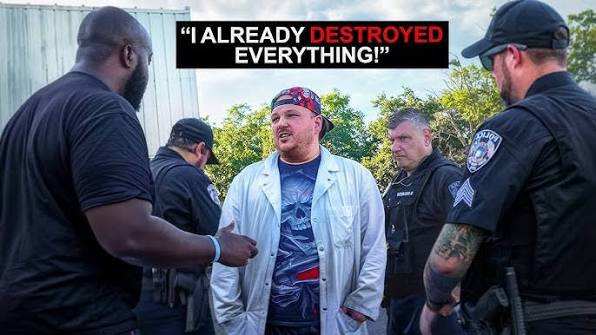
Believing he had found a legal loophole due to the responding officer’s initial hesitation, Frost openly declared that he had purged his local phone cache. “Ain’t nothing going to happen, I’ve already destroyed everything,” Frost stated confidently to the camera [17:56], assuming that deleting files on a consumer-grade mobile device permanently erased the criminal liabilities.
This assumption highlights a fundamental misunderstanding of modern digital forensics. While deleting a file or a chat thread removes it from the user interface, the underlying metadata, unallocated space cache, and server-side logs frequently remain fully intact.
Following the arrival of higher-ranking police supervisors and a supportive secondary unit, the North Charleston Police Department took formal custody of the suspect and initiated an expansive investigation.
The subsequent judicial update proved devastating for the defense [19:35]. Armed with a comprehensive digital search warrant, internet crimes detectives raided Frost’s residence and executed advanced data recovery protocols on his physical hardware. They successfully reconstructed the deleted media files, expanding a localized solicitation case into a massive federal-level exploitation profile. The state ultimately handed down a staggering 40 fresh criminal counts against Tristan Kirk Frost, ensuring he faces decades in state custody as a multi-time reoffender.
Frequently Asked Questions (FAQ)
What is the legal definition of entrapment in independent sting operations?
Entrapment occurs strictly when a law enforcement officer induces an otherwise innocent person to commit a crime they would not have otherwise committed. Because independent advocates are private citizens and not agents of the state, the legal defense of entrapment rarely applies to their operations.
Can deleted files on messaging apps like Telegram be recovered by police?
Yes. Even if a user utilizes “wipe” or “delete for both parties” features, physical device forensics can extract cached thumbnails, database fragments, and network log history directly from the internal flash memory storage of a seized phone.
Why do local police sometimes clash with independent child safety groups?
Law enforcement agencies operate under strict constitutional guidelines regarding the chain of custody and the fourth amendment. When private citizens gather evidence, it can occasionally create procedural challenges in a court of law, leading some initial responding officers to treat independent stings with extreme administrative caution.
This harrowing intersection of digital vulnerability and parental instinct is vividly illustrated in the article, “A Parent’s Worst Nightmare Unfolds: Father Confronts and Beats Alleged Predator Targeting Underage Daughter.” The case highlights the escalating desperation many parents face when formal legal avenues feel painfully slow or inadequate to stop immediate online grooming. Confronted with explicit proof of an adult targeting their child, the boundaries of standard legal recourse often blur, giving way to explosive, protective rage. This specific confrontation underscores a volatile, growing cultural flashpoint: the dangerous rise of vigilante justice when the safety of minors is threatened in the digital age.

