

The Verdict That Closed a 30-Year Mystery
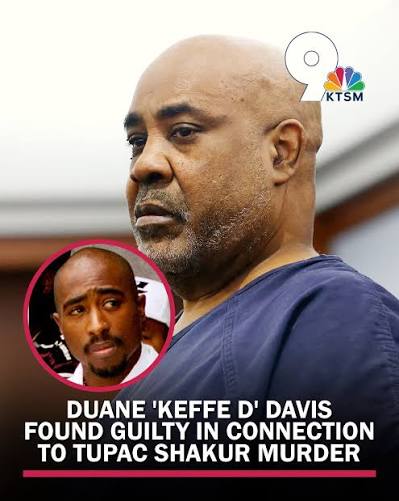
The former Compton gang leader charged with orchestrating the 1996 drive-by shooting of hip-hop legend Tupac Shakur was convicted of first-degree murder by a Las Vegas jury on Monday, marking a long-awaited reckoning in one of the most notorious unsolved killings in music history.
Jurors needed only about three hours of deliberation to return their unanimous guilty verdict against 63-year-old Duane “Keffe D” Davis in the nearly 30-year-old killing. Davis, who chose not to testify during the trial, faces up to life in prison without the possibility of parole and is scheduled to be sentenced on October 13 by Clark County District Court Judge Carli Kierny.
Shortly after hearing the clerk read the conviction for first-degree murder with a deadly weapon, Shakur’s sister, Sekyiwa “Set” Shakur, embraced a man seated behind her and wiped her eyes with a tissue, according to a live feed of the proceeding from The Associated Press. The emotional moment in the gallery reflected decades of unresolved grief for a family and a global fanbase that had long given up hope of seeing anyone held criminally responsible in a courtroom.
The Night of September 7, 1996: A Deadly Casino Retaliation
The events that led to the fatal shooting began in the lobby of the MGM Grand hotel in Las Vegas following a heavyweight championship boxing match between Mike Tyson and Bruce Seldon. Tupac Shakur, traveling with Death Row Records co-founder Marion “Suge” Knight and a heavy entourage, engaged in a physical brawl with Orlando “Baby Lane” Anderson, a member of the South Side Compton Crips and the nephew of Duane Davis.
According to prosecutors, Davis could not let the violent public beatdown of his nephew stand under gang code. Chief Deputy District Attorney Binu Palal argued during closing statements that Davis immediately took command, securing a .40-caliber Glock handgun and gathering a crew to retaliate.
“He acquired a firearm, got his group together, and went hunting for Mr. Shakur,” Palal told the jury, framing Davis as the “on-site, on-ground commander” of the assassination plot.
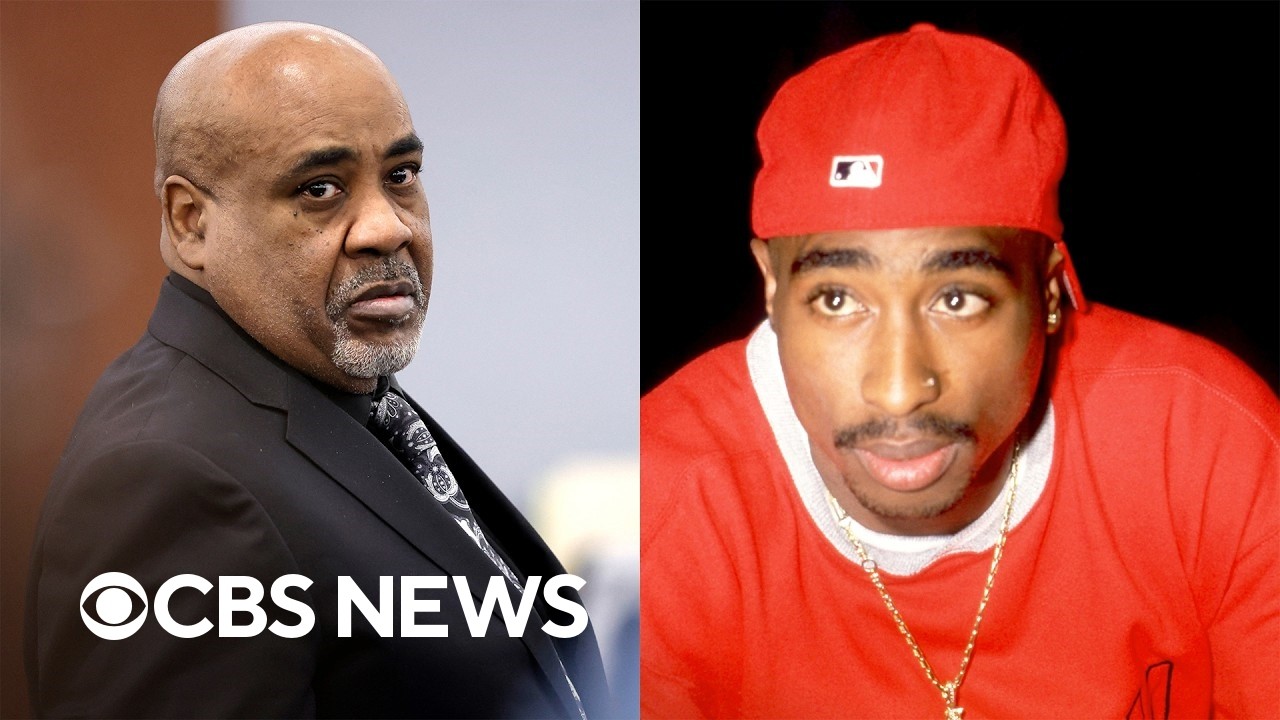
Hours after the casino brawl, a white Cadillac pulled alongside the black BMW sedan driven by Suge Knight at a red light near the Las Vegas Strip. A shooter inside the Cadillac opened fire, striking Shakur four times in the chest, arm, and thigh, while Knight sustained a graze wound to the head. Shakur succumbed to his injuries six days later at University Medical Center, dying at the age of 25.
Behind the Sudden Courtroom Shake-Up: D4vd Drops Top Defense Team for Public Defender in Murder Trial
While Keffe D’s conviction demonstrates the long reach of physical evidence and public confessions, another high-profile celebrity murder case in Los Angeles saw a major procedural shift on August 31, 2026. David Anthony Burke, the 21-year-old indie-pop artist known as D4vd, sent shockwaves through the court during his re-arraignment by terminating his elite private defense team—led by celebrity attorney Blair Berk—and opting for a court-appointed public defender.
Despite reports that Burke earned millions from his music deal prior to his arrest for the murder, dismemberment, and concealment of 14-year-old Celeste Rivas Hernandez, the court determined he qualified for public representation. Los Angeles County Superior Court Judge Charlaine Olmedo appointed Deputy Public Defender Walid Fouad Kandeel to lead the defense.
The defense swap came right after Judge Olmedo ruled following a July preliminary hearing that prosecutors had presented sufficient evidence—including Tesla telemetry, Uber logs, and DNA—for Burke to stand trial on first-degree murder charges with special circumstances. While Burke entered a fresh plea of not guilty alongside his new counsel, the sudden transition to a public defender introduces new strategic dynamics and potential timeline delays as the Los Angeles District Attorney’s Office weighs whether to pursue the death penalty.
Nevada Law and the Mechanics of Aiding and Abetting
A central legal pillar of the prosecution’s case was that Nevada state law does not distinguish between the individual who pulls the trigger and the orchestrator who enables the crime.
Although prosecutors did not assert that Davis fired the handgun himself—and the gunman inside the Cadillac has never been definitively named in court—they proved beyond a reasonable doubt that Davis obtained the illegal firearm, handed it to the back seat, and directed the vehicle toward Shakur’s location.
Under Nevada’s vicarious liability and accomplice statutes, providing the murder weapon and coordinating the vehicle’s positioning rendered Davis fully culpable for first-degree murder with a deadly weapon.
How Keffe D Prosecuted Himself: The Memoir and Media Tour
For decades, the investigation into Shakur’s death sputtered due to a lack of physical evidence, non-cooperative witnesses, and the eventual deaths of every other occupant inside the white Cadillac:
-
Orlando “Baby Lane” Anderson (Keffe D’s nephew) was killed in an unrelated gang shooting in 1998.
-
Deandre “Big Dre” Smith died in 2004.
-
Terrence “Bubble Up” Brown died in 2015.
Left as the sole surviving witness from the Cadillac, Davis spent years giving media interviews, appearing on podcasts, speaking to street historians, and participating in police proffers. In 2019, Davis authored and published his autobiography, Compton Street Legend, in which he explicitly outlined his involvement in the Las Vegas shooting.
During the trial, prosecutors played over eight hours of recorded interviews and cited passages from his memoir, presenting Davis’s own words as primary confession evidence. Defense attorney Michael Sanft attempted to frame Davis’s statements as exaggerated street tales and fictionalized bravado designed purely to make money from book sales, arguing that authorities lacked independent physical or surveillance evidence placing Davis in Las Vegas that night.
However, the jury accepted the prosecution’s evidence, concluding that the core material facts of Davis’s admissions aligned directly with the physical reality of the crime scene.
What Happens Next: Appeal Plans and October Sentencing
Immediately following the reading of the verdict, Davis informed Judge Kierny of his intention to appeal the conviction, while also asking for the return of personal items seized during a 2023 search warrant on his Henderson, Nevada home.
Davis remains held without bail at the Clark County Detention Center. At his October 13 sentencing, he faces multiple potential terms under Nevada law, ranging from 20 to 50 years to life imprisonment without the possibility of parole.
For Tupac Shakur’s family, friends, and millions of supporters worldwide, the conviction provides a definitive judicial answer to a 30-year-old tragic mystery, establishing legal accountability for the night hip-hop lost one of its most defining voices.
Frequently Asked Questions (FAQ)
Did Duane “Keffe D” Davis pull the trigger that killed Tupac Shakur?
No. Prosecutors did not allege that Davis personally fired the gun. Under Nevada state law, anyone who aids, abets, coordinates, or supplies the weapon for a murder can be charged and convicted of first-degree murder as a principal participant.
Why did it take nearly 30 years to convict Keffe D?
The original investigation stalled due to a lack of physical evidence and reluctant witnesses. The case gained breakthrough momentum after Davis publicly detailed his role in the murder across TV interviews, podcasts, and his 2019 memoir, Compton Street Legend, providing prosecutors with self-incriminating evidence.
What sentence does Keffe D face at his October 13 hearing?
Davis faces up to life in prison without the possibility of parole. Prosecutors did not seek the death penalty in this case.
Who else was in the car with Keffe D during the shooting?
The white Cadillac carried four men: Duane “Keffe D” Davis, his nephew Orlando “Baby Lane” Anderson, Terrence “Bubble Up” Brown, and Deandre “Big Dre” Smith. Davis is the only occupant who survived long enough to stand trial, as the other three men died in separate incidents over the years.
The chances of Duane “Keffe D” Davis avoiding prison are essentially zero (0%).
Following his August 31, 2026 conviction for first-degree murder with a deadly weapon, he remains incarcerated at the Clark County Detention Center in Las Vegas without bail while awaiting formal sentencing.
Key Dates & Expected Sentence
-
Formal Sentencing Date: October 13, 2026
-
Expected Prison Sentence: Life in Prison without Parole (LWOP) or Life with Parole Eligibility after 20 to 50 Years.
-
Under Nevada law (NRS 200.030), first-degree murder carries severe mandatory sentencing options. Because prosecutors did not pursue the death penalty, Clark County District Court Judge Carli Kierny must choose between:
-
Life in prison without the possibility of parole.
-
Life in prison with parole eligibility after 20 years.
-
A definite term of 50 years, with parole eligibility after 20 years.
-
-
Why He Will Not Avoid Prison
-
Mandatory Custody for First-Degree Murder: In Nevada, a conviction for first-degree murder carries mandatory prison time. Judges have no legal discretion to grant probation or community supervision for this level of violent crime.
-
Age vs. Sentence Length: Davis is 63 years old and has significant chronic health conditions (including past treatment for cancer). Even if Judge Kierny issues the most lenient statutory option—a 20-year minimum before parole eligibility—Davis would not be eligible to apply for release until he is 83 years old. Given his age and health, any sentence handed down on October 13 effectively operates as a life sentence behind bars.
-
Appeals Offer Minimal Relief: While Davis’s defense team confirmed plans to appeal the conviction, legal experts view the likelihood of an overturned verdict as extremely slim. The prosecution’s case was built directly on hours of Davis’s own recorded police proffers, media interviews, and his published 2019 memoir (Compton Street Legend), providing a strong evidentiary record that appellate courts rarely disturb.

