

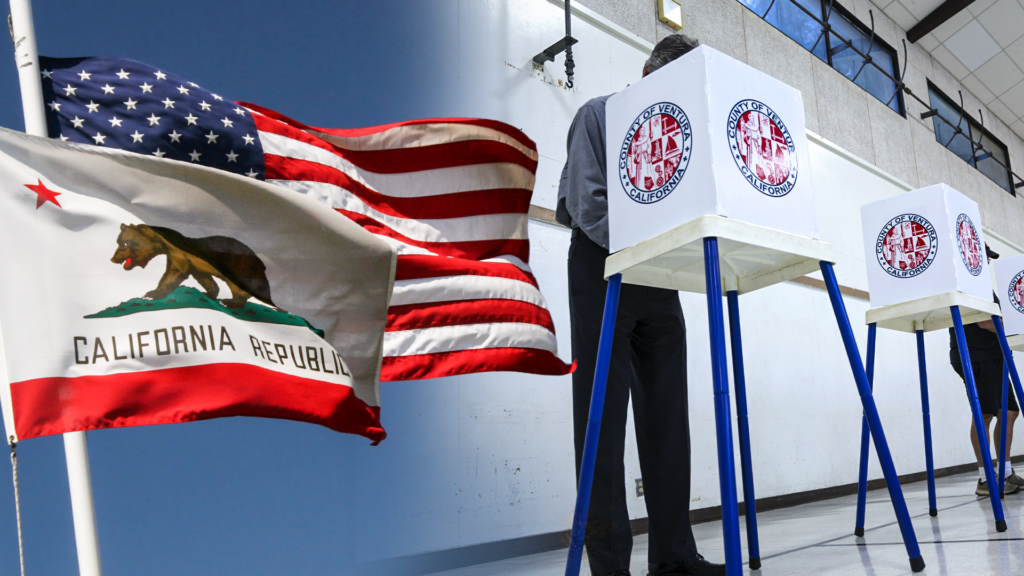
An Electoral Fluke or a New Reality? The Race for Governor
California’s political landscape is bracing for a “perfect storm” that could result in one of the most unusual general elections in its modern history. Despite the state’s reputation as a Democratic stronghold, current polling and the mechanics of the “top-two” primary system suggest a non-zero probability that two Republicans could end up as the only choices on the November ballot for Governor.
This phenomenon is a direct result of the “jungle primary” system, where the top two vote-getters advance regardless of party affiliation. Currently, the Democratic field is crowded with several second-tier candidates who are effectively cannibalizing the liberal vote. Conversely, the Republican electorate is consolidating behind only two primary options. If the Democratic vote splits thin enough, the state could witness an electoral fluke that leaves the Democratic supermajority in the legislature facing a Republican executive—a scenario that would fundamentally alter the state’s governance.
Beyond the gubernatorial race, the November midterms serve as a critical referendum on the national political climate. While redrawn congressional districts aim to bolster Democratic seats, the “Trump effect” continues to energize both bases, potentially leading to record-breaking turnout in a state that often dictates national trends.
The Billionaire Wealth Tax: A High-Stakes Fiscal Experiment
Perhaps the most media-saturated battle this cycle is the union-led effort to impose a one-time wealth tax on California’s billionaires. While the proposal currently enjoys roughly 50% support in preliminary polls, its path to victory is fraught with legal and economic hurdles.
The Retroactive Legal Challenge
A significant point of contention is the initiative’s “retroactive” language. Proponents seek to tax wealth accumulated prior to the bill’s passage to prevent “tax flight”—the phenomenon where wealthy individuals move out of state the moment a tax is announced.
Legal Analysis: From a constitutional standpoint, retroactive taxation is a legal minefield. While the U.S. Supreme Court has historically allowed some degree of retroactivity in tax statutes (notably in United States v. Carlton), the standard is that the retroactivity must be “rationally related to a legitimate legislative purpose” and limited in duration. California’s proposed wealth tax may face “Due Process” challenges if the look-back period is deemed excessive. Furthermore, critics argue it violates the “Gift Clause” of the California Constitution by effectively penalizing past behavior that was legal at the time.
Reforming the “Landmark” Obstacle: The CEQA Initiative
For decades, the California Environmental Quality Act (CEQA) has been both a shield for the environment and a weapon for special interests. Sponsored by the California Chamber of Commerce, a new initiative seeks to provide wide-scale reform to this 1970s-era legislation.
Even progressive lawmakers like Assembly member Buffy Wicks (D–Oakland) have highlighted the absurdity of current CEQA applications. In one notable hearing, a solar firm reported spending 12 years and preparing a 1,100-page report just to secure permits for a single transmission line.
Why CEQA Reform Matters
The initiative aims to stop “environmental litigation” from being used by unions to extract wage concessions or by NIMBY (“Not In My Backyard”) groups to block affordable housing. By streamlining the environmental impact report (EIR) process, the measure hopes to finally unlock the housing starts that piecemeal legislative exemptions have failed to produce.
The Taxpayer Revolt: Overturning the “Mansion Tax”
The Howard Jarvis Taxpayers Association is leading a charge that feels like a modern echo of Proposition 13. Their initiative targets the limitation of transfer fees on property sales and specifically aims to overturn Los Angeles’ Measure ULA, often called the “mansion tax.”
The Impact of Measure ULA:
- Thresholds: 4% on sales between $5.3M and $10.6M; 5.5% on sales above $10.6M.
- Consequence: Because it applies to commercial properties and apartment complexes, it has significantly chilled multi-family housing development in Los Angeles.
- The “De-facto” Supermajority: The new initiative would also overturn a court ruling that allowed local special taxes to pass with a simple majority rather than a two-thirds supermajority, restoring a higher bar for local tax hikes.
Frequently Asked Questions (FAQ)
Q: How does the “Top-Two” primary actually work? A: In California, all candidates for a given office run on a single ballot. The two candidates who receive the most votes, regardless of their party, move on to the general election. This can lead to “Dem vs. Dem” or “GOP vs. GOP” matchups in November.
Q: Why is Governor Gavin Newsom opposing the wealth tax? A: Despite being a Democrat, Newsom has expressed concerns about the state’s “volatility.” California’s budget is heavily dependent on capital gains taxes from the wealthy. If a wealth tax causes a mass exodus of high-net-worth individuals, it could lead to a permanent deficit.
Q: What is a “Voter ID” initiative doing on the California ballot? A: While California has some of the most relaxed voting laws in the country, a Voter ID measure has gained enough signatures to likely qualify. Critics argue it is a “turnout tool” designed to bring conservative voters to the polls, as actual instances of identification-related fraud remain statistically negligible.
Q: Will CEQA reform actually lower housing prices? A: Economists argue that by reducing the “soft costs” of development—legal fees, years of delays, and massive environmental reports—builders can bring units to market faster and at lower price points.
Legal Analysis: The Battle for Ballot Box Integrity
The upcoming election also features a clash over “special taxes.” Traditionally, Proposition 13 and Proposition 218 required a two-thirds vote for local special taxes. However, recent court decisions suggested that if a tax is put on the ballot via a voter initiative (rather than by the city council), a simple majority (50% + 1) is sufficient. The Taxpayer Protection and Government Accountability Act seeks to close this “loophole,” mandating a two-thirds requirement for all local special taxes, regardless of how they reached the ballot. This will likely be the most litigated portion of the election results.
Conclusion
California voters are often characterized as deeply liberal, but their history with ballot initiatives tells a more nuanced story. While they may elect Democratic candidates, they frequently vote like fiscal conservatives when it comes to their own wallets. Between the potential for a GOP-only gubernatorial final and the fundamental reshaping of environmental and tax law, November 2024 is set to be a transformative moment for the Golden State.

