

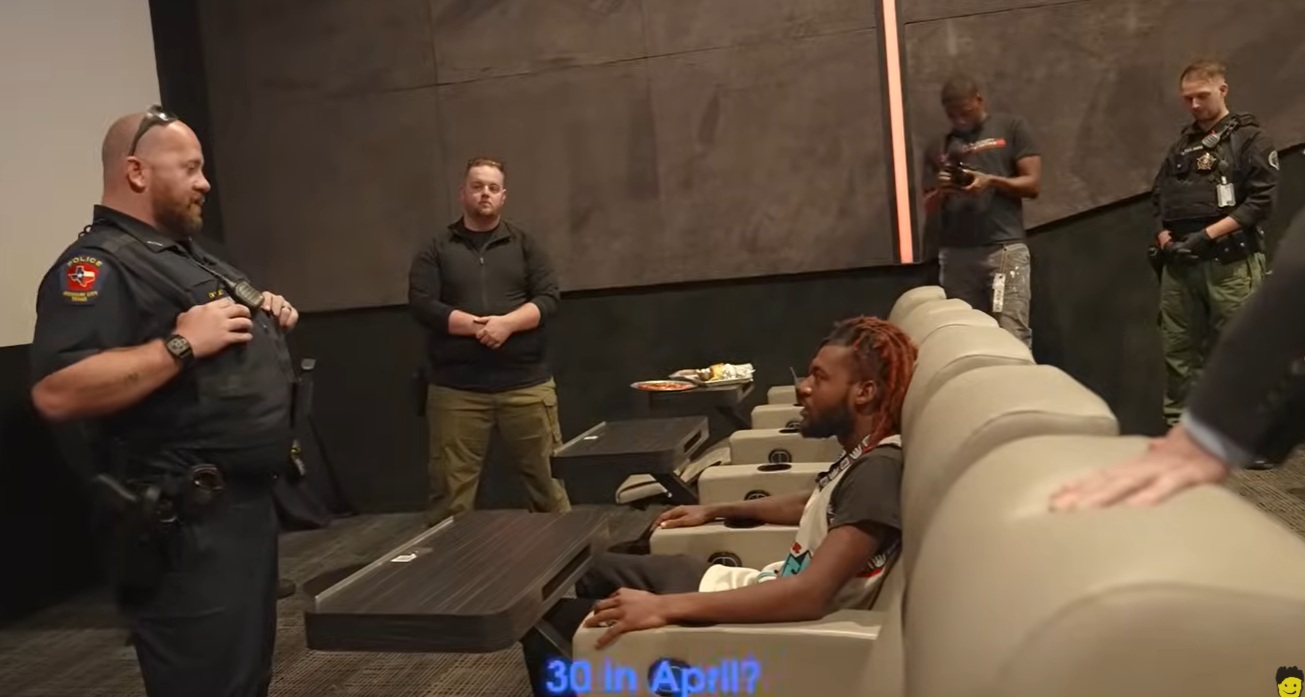
As digital investigative journalism continues to evolve, high-profile creators like Omma and JiDion are pushing the boundaries of the “sting” genre. Their latest collaborative effort, “Inside Catching a Predator in a Movie Theater,” isn’t just viral entertainment—it’s a deep dive into the complexities of community safety, digital ethics, and the often-strained relationship between private investigators and local law enforcement.
This article provides an in-depth summary of the operation, the legal hurdles faced during the sting, and a critical analysis of the predator’s defense mechanisms.
1. The Strategy: Scaling the Sting
Most digital stings occur in residential “sting houses.” However, Omma and JiDion opted for a cinematic approach—literally. By renting out a local movie theater and filling it with extras, the team created an immersive environment designed to lower the target’s guard while maximizing the dramatic reveal.
Key Timestamps & Milestone Events
-
[00:11] The Setup: The team prepares the theater, briefing a large group of extras to act as a normal audience.
-
[01:11] Target Identification: Introducing “Chris,” a 29-year-old man who allegedly believed he was meeting a 14-year-old girl named “Rebecca.”
-
[06:08] The “Passion of Chris” Trailer: In a unique psychological tactic, the team plays a custom-made movie trailer on the big screen that depicts Chris’s own chat logs and intentions as he sits in the audience.
-
[07:30] The Confrontation: Omma and JiDion reveal themselves, beginning the interrogation as the theater lights come up.
-
[20:53] Police Intervention: Local law enforcement arrives, leading to a heated debate over the legality of the operation and “entrapment” concerns.
-
[26:57] The DA Conflict: The officers express reluctance to assist, citing a lack of coordination and manpower for future cases.
2. The Psychology of the Predator’s Defense
The video provides a chilling look at “grooming” tactics and the cognitive dissonance often displayed by targets. During the interrogation starting at [09:10], Chris attempts to frame his presence as a “motivational” or “mentorship” role.
The “Mentor” Shield
The target repeatedly claimed he hung out at parks to “keep kids out of trouble” and “train them in basketball.” This is a classic deflection technique used to justify proximity to minors. However, the creators countered this by reading back explicit chat logs involving physical desires, which Chris eventually admitted to sending, though he claimed he “just says stuff to make people feel good” [18:40].
The Age Gap and “Consent” Logic
One of the most disturbing segments occurs when the target discusses “virginity” and “demons” [15:04], suggesting that his interest in younger girls was rooted in their “purity.” This pseudo-religious or spiritual justification is a recurring theme in predatory behavior studies, used to minimize the predatory nature of the interaction.
3. The Legal Friction: Creator vs. Cop
The climax of the video shifts from the predator to the police. At [25:51], the officers suggest the operation might be “illegal” or constitute “entrapment.” This highlights a significant gap in how modern digital investigations are perceived by traditional law enforcement.
Understanding Entrapment: Legally, entrapment occurs when a law enforcement agent induces a person to commit a crime that the person would have otherwise been unlikely or unwilling to commit. Because Omma and JiDion are private citizens, the legal standard for entrapment is significantly higher, as the “agent of the state” element is missing.
The tension escalated when JiDion accused the officers of “getting in their feelings” and failing to look at the evidence before calling the District Attorney (DA). This highlights the necessity for better protocols between citizen-led investigative units and municipal police departments.
4. Editor’s Opinion: The Ethics of Public Shaming
In my professional opinion, the transition of predator catching into high-production “spectacle” is a double-edged sword. On one hand, the transparency provided by Omma and JiDion’s long-form videos exposes the flaws in the judicial system—specifically the reluctance of some departments to act on digital evidence. On the other hand, the “theater” aspect risks turning serious criminal investigations into mere content. However, seeing the predator’s defense crumble under the weight of his own words on a 40-foot screen is a powerful deterrent. While the police in this video were hesitant, the public nature of these exposures often forces the hand of the legal system in the long run.
5. FAQ: Understanding the “Passion of Chris” Incident
Q: Was the predator arrested on the spot? A: No. Due to procedural disagreements and the police’s concerns regarding the “illegal operation” status of the sting, the target was not taken into custody immediately. However, the team aimed to file a warrant following the event [29:23].
Q: Why did the police call the DA immediately? A: The officers claimed they needed to inform the DA of an “illegal operation” involving entrapment before even reviewing the chat logs provided by the creators. This led to significant friction between JiDion and the lead officer.
Q: What were the “cliff notes” of the evidence? A: The evidence included voice notes from the target, photos of his “washboard abs” sent to a minor, and explicit messages detailing physical acts he intended to perform once they met at the theater.
Q: How did the target react to the movie trailer? A: Initially, he seemed confused, then visibly uncomfortable as he realized the “film” being shown was a compilation of his own predatory messages and photographs.
6. The Long-Term Impact
The video concludes with a stark reminder: “Just because he’s not getting arrested today doesn’t mean he’s not going to get arrested next week” [29:18]. The goal of these creators is to build a “drive” of evidence that is undeniable, even if local patrol officers are initially dismissive.
This operation serves as a blueprint for how digital communities can mobilize to protect vulnerable groups, even when legacy systems are slow to adapt to the realities of online grooming.

