

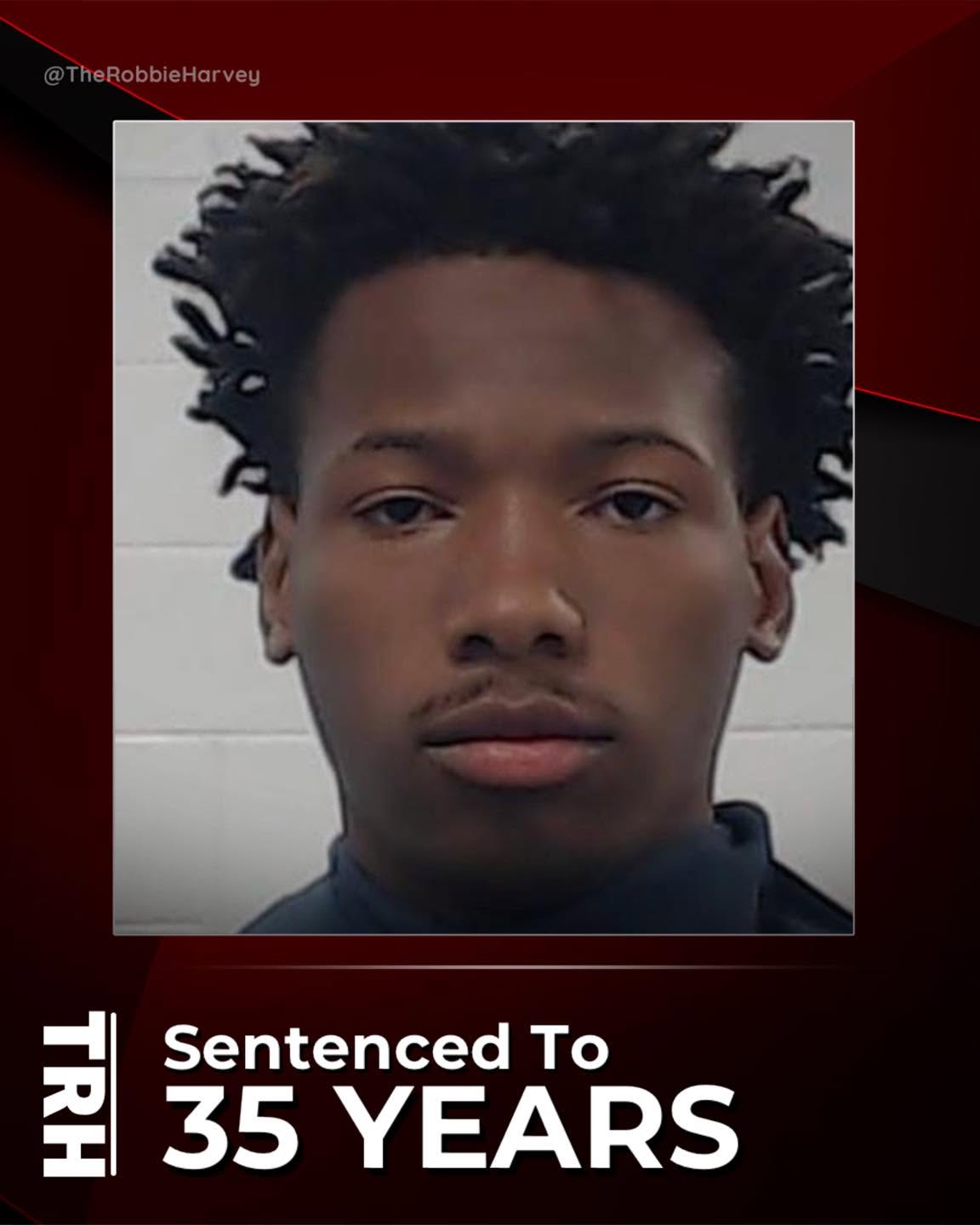
A single moment of unchecked rage can completely erase two futures in the blink of an eye. That harrowing reality took center stage at the Collin County courthouse in McKinney, Texas, where a jury handed down a definitive 35-year prison sentence to 19-year-old Karmelo Anthony. The punishment brought a somber end to the highly publicized trial surrounding the tragic 2025 stabbing of 17-year-old high school track athlete Austin Metcalf.
The case stands as a grim masterclass in how a total deficit of impulse control can turn a mundane high school dispute into a lifetime of destruction.
Click here to watch the judge hammer him before delivering the sentence
What began as a petty argument over sitting beneath a rival school’s team tent on a rainy day escalated into a fatal confrontation because one individual chose to carry a weapon and meet a physical shove with a lethal blade. In less than three hours of deliberation, the Texas jury rejected all claims of self-defense and “sudden passion,” forcing Anthony to face the adult consequences of an unprovoked, reactive attack.
[The True Cost of a High-Stakes Sentence]
Total Prison Term Imposed: 35 Years (Texas State Penitentiary)
Mandatory Minimum to Serve: 17.5 Years (Before any parole consideration)
Projected First Parole Hearing: Late 2043
Age Upon First Possible Release: 36 Years Old
⏱️ Behind Bars: How Much Time Will He Actually Serve?
Following the jury’s decision, the immediate question surrounding the Karmelo Anthony jail sentence is the timeline of his incarceration. Under the stringent guidelines of the Texas Code of Criminal Procedure, individuals convicted of first-degree murder face strict mandatory minimum parameters.
-
The 50% Parole Rule: In Texas, an individual convicted of an aggressive, first-degree felony involving a deadly weapon is completely ineligible for parole until they have served flat calendar time totaling at least 50% of their given sentence.
-
The 17.5-Year Horizon: For Anthony’s 35-year term, this mathematical baseline means he must spend an absolute minimum of 17.5 years inside a maximum-security state penitentiary before his file can even sit on a parole board desk.
-
No House Arrest Credit: While Anthony will receive credit for the brief 12 days he spent in county jail immediately following his 2025 arrest, the 14 months he spent sitting comfortably on pre-trial house arrest at his parents’ home will not count toward his final sentence. He will be nearly 37 years old before he experiences his first theoretical opportunity for release.
🧠 The Psychology of Ruin: When Low Impulse Control Takes the Wheel
The physical tragedy of this case is documented in court records, but the psychological lesson is one that applies to every corner of modern society. Karmelo Anthony and Austin Metcalf did not know each other before that fateful rainy afternoon. There was no deep-seated gang rivalry or historical blood feud. The entire incident sparked because Anthony refused to step away from a sports tent belonging to Metcalf’s team.
When told to leave, Anthony did not possess the emotional maturity or impulse control to de-escalate the situation. Instead, he reached into his bag, issued an ultimatum (“Touch me and see what happens”), and when met with a defensive shove, lashed out with a pocketknife.
The Anatomy of Low Impulse Control: When a person has low impulse control, their brain’s prefrontal cortex—the area responsible for logical reasoning and predicting future consequences—is completely hijacked by the amygdala, which drives immediate emotional reactions. They do not see 20 years into the future; they only see the immediate urge to satisfy their pride, anger, or ego in the present moment.
By allowing an explosive burst of anger to dictate his actions for just three seconds, Anthony permanently ended the life of an innocent young man, devastated a grieving family, shattered his own mother’s heart, and threw away the prime decades of his adult life. The discipline of the gym, athletic potential, and future career plans were completely erased because he lacked the internal strength to simply walk away.
https://www.facebook.com/photo/?fbid=1435385425117982&set=a.641843761138823
🏛️ Systemic Echoes: Looking Beyond the Surface
The underlying entitlement that allows an individual to believe they can violently bypass established rules mirrors broader cultural blind spots found inside powerful organizations. When a system allows minor boundary violations to slide, it routinely creates an environment where predators feel safe acting on their worst impulses.

This behavioral path is deeply examined in The Ultimate Institutional Failure: Football Player Back on Field Months After Rape Charge. In that specific investigation, administrative bodies intentionally prioritized performance and prestige over immediate accountability, matching the dangerous mindset displayed by Anthony—who assumed he could introduce a weapon into a weapon-free high school sporting event without facing immediate, devastating systemic consequences. Both instances stand as urgent reminders that failing to address aggressive entitlement early always paves the way for a catastrophic crisis.
❓ Frequently Asked Questions (FAQ)
Q: Can Karmelo Anthony reduce his 35-year sentence with “good behavior” in prison?
A: No. While “good conduct time” can help a regular inmate with prison job placements or institutional privileges, Texas law explicitly dictates that for first-degree murder, an inmate must serve half of their sentence in actual calendar days regardless of their behavioral record.
Q: Why didn’t the jury accept the “Sudden Passion” defense strategy?
A: The defense argued that Anthony acted out of a sudden surge of terror after being shoved. However, the prosecution proved that Anthony actively provoked the fight by entering the tent, refusing to leave, and daring the victims to touch him, which legally nullifies a sudden passion claim.
Q: Where will Anthony serve his 35-year jail sentence?
A: He has been remanded into the custody of the Collin County Sheriff’s Office and will be systematically transferred to a maximum-security intake facility managed by the Texas Department of Criminal Justice (TDCJ).
🏛️ The Legal Path to Conviction
The lengthy sentence serves as the definitive legal conclusion to a deeply divisive national headline. For an extensive look at the legal battle and the cultural tensions surrounding the courtroom, the trial’s evolution is detailed thoroughly in Facing the Ultimate Penalty: Karmelo Anthony Found Guilty Of Murder Over Stabbing Of White Student. The underlying reporting underscores how a 12-person jury systematically dismantled the defense’s claims of self-defense, establishing that Anthony had weaponized a minor, non-lethal push. Because Anthony was 17 at the time of the offense, capital punishment was legally off the table, shifting the courtroom battle entirely to the decades of state prison time he now faces.

