

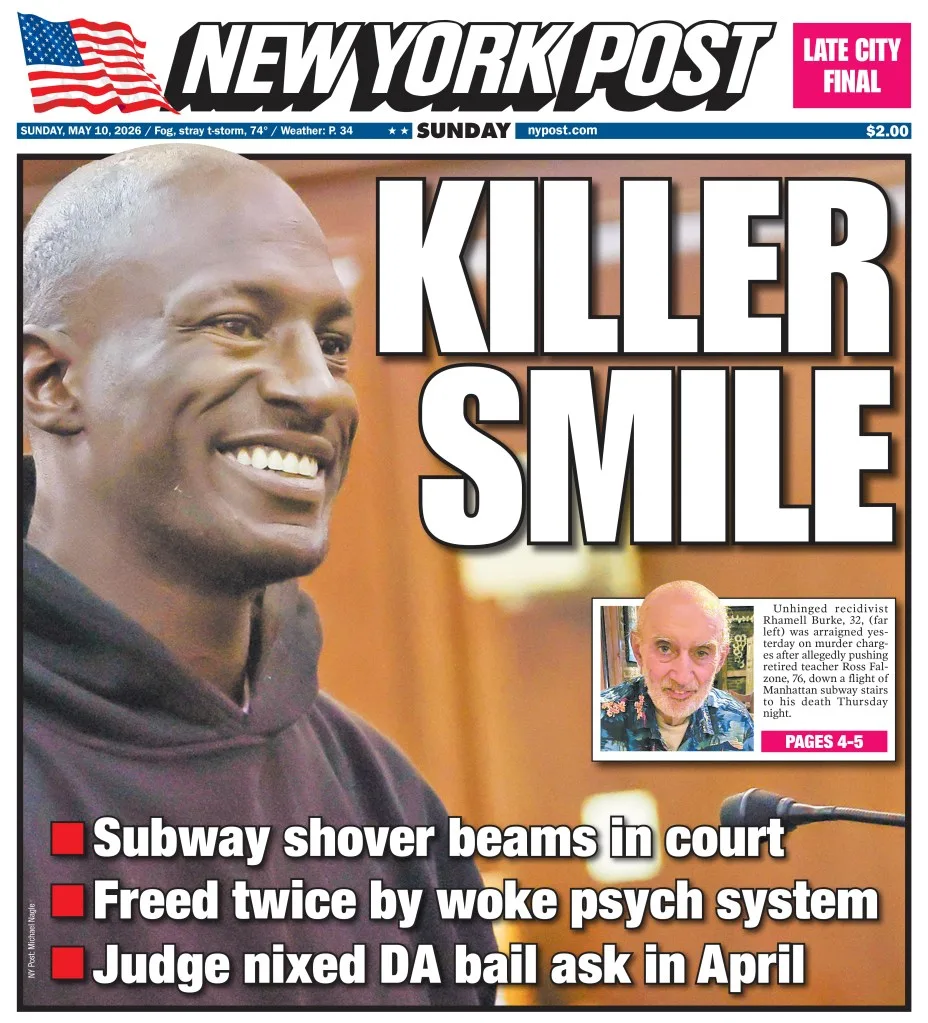
The New York City subway system, often called the lifeblood of the city, has once again become the backdrop for a senseless tragedy that has reignited a fierce debate over public safety and criminal justice reform. On Saturday, Rhamell Burke, the man accused of fatally shoving a beloved retired teacher onto the tracks, made his first court appearance in Manhattan Criminal Court.
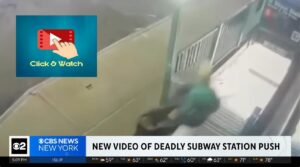
Click here to watch the pushing footage (GRAPHIC)
What should have been a somber proceeding was marked by a chilling display of indifference: Burke, facing second-degree murder charges, was seen flashing a wide smile as he was led into the courtroom—a gesture that has sparked outrage across the five boroughs.
The Incident: The Final Moments of Ross Falzone
The victim, Ross Falzone, was a retired New York City teacher who had spent decades dedicated to the education and mentorship of the city’s youth. His life was cut short in a random, unprovoked attack that underscores the “perceived lawlessness” many commuters fear in 2026.
According to prosecutors, Falzone was standing on the platform when Burke allegedly lunged at him, shoving him into the path of an oncoming train. There was no reported prior interaction between the two men; it was an act of pure, chaotic violence. Falzone’s death is not just a loss for his family, but for the countless former students who viewed him as a pillar of the community.

The Court Appearance: A “Killer Smile”
During his arraignment for Second-Degree Murder, Burke’s behavior was described by observers as “defiant” and “disturbing.”
-
The Visuals: Burke appeared unfazed by the gravity of the situation, smiling at the cameras and the gallery. Legal experts often note that such behavior in a high-stakes arraignment can be a tactical challenge for defense attorneys, as it suggests a lack of remorse that may influence future sentencing phases.
-
The Charges: The Manhattan District Attorney’s office has charged Burke with murder in the second degree, a Class A-I felony in New York. If convicted, he faces a maximum sentence of 25 years to life in prison.
The Architecture of Recidivism: Burke’s Criminal History
One of the most frustrating elements of this case for the public is the revelation of Burke’s recent interactions with the law. Burke is described as a recidivist, with a criminal record that points to a systemic failure in monitoring high-risk individuals.
-
Four Arrests Since February: In the four months leading up to the attack, Burke had been arrested four separate times for various offenses.
-
The Revolving Door: The fact that a man with multiple recent arrests was free to walk onto a subway platform and commit a fatal act has brought the city’s “bail reform” and “mental health intervention” policies back under the microscope.
Pattern of Impulsivity: Parallels in Public Violence
The lack of remorse seen in the Manhattan courtroom mirrors a growing trend of erratic, high-intensity outbursts in commercial and public spaces across the country. This phenomenon of “sudden-onset violence” is explored deeply in our investigative report, The Hot-N-Ready Rampage: Robert Guzman’s Violent Meltdown in Albuquerque. Much like the subway tragedy, the Albuquerque incident involved a sudden shift from routine activity to catastrophic violence—in that case, an employee’s post-shift assault that left a victim with a broken jaw and resulted in an 11-year prison sentence. Both cases highlight the critical need for early intervention and a better understanding of the triggers that lead individuals to commit unprovoked, life-altering acts of aggression.
Subway Safety in 2026: A Compounding Crisis
The death of Ross Falzone is the latest in a string of high-profile subway crimes that have occurred throughout the spring of 2026. While the NYPD has increased “omnipresence” patrols, cases involving “madmen” or individuals with severe untreated mental illness remain the hardest to prevent.
The “Information Gain” for Commuters: Experts suggest that while the statistical likelihood of being a victim of a random shove is low, the psychological impact on the city’s “absolute strength”—its workforce—is immense. When citizens feel unsafe in their daily transit, the economic and social fabric of the city begins to fray.
Frequently Asked Questions (FAQ)
Q1: What exactly is “Second-Degree Murder” in New York? A: In this context, it typically refers to “depraved indifference to human life.” Prosecutors must prove that the defendant’s conduct was so reckless and deficient in a sense of social duty that it created a grave risk of death.
Q2: Was there any motive for the attack? A: Currently, the NYPD and District Attorney report no known motive. The attack appears to be entirely random, which is often the most difficult type of crime to deter through traditional policing.
Q3: What happens next in the Rhamell Burke case? A: Burke is being held without bail. The next step is a grand jury indictment, followed by discovery where the prosecution will present evidence, including subway surveillance footage.
Legal Disclaimer
All defendants are presumed innocent until proven guilty in a court of law. The information provided is based on preliminary court reports and police statements. To view official court dockets and the full list of prior charges against the suspect, [Click Here for the Legal Update].
Editor’s Opinion: The Cost of Inaction
The smile on Rhamell Burke’s face in that courtroom is a haunting symbol of a system that has lost its grip on accountability. Ross Falzone spent his life teaching the next generation about rules, respect, and community. To have that life extinguished by someone who had been arrested four times in as many months is a failure of the state’s most basic duty: protection.
In my work covering the Architecture of Financial Autonomy, I often speak about “Asset Management.” In a city, the greatest asset is the safety of its people. If we continue to allow a “revolving door” for violent recidivists, we aren’t just losing lives; we are losing the trust that allows a city to function. Decisive action—not just in the courtroom, but in how we handle mental health and repeat offenders—is the only way to ensure that “Ross Falzone” is the last name we have to write in a headline like this.

