


In the annals of modern financial fraud, white-collar criminals have utilized everything from complex real estate derivatives to synthetic cryptocurrency tokens to siphon millions from unsuspecting investors. However, a historic judicial ruling handed down in Turkey proved that sometimes, all it takes to execute a $131 million international heist is an internet connection, an aggressive marketing budget, and an app filled with cartoon dairy cows.
Click here to watch his dramatic arrest footage and failed attempt at fleeing
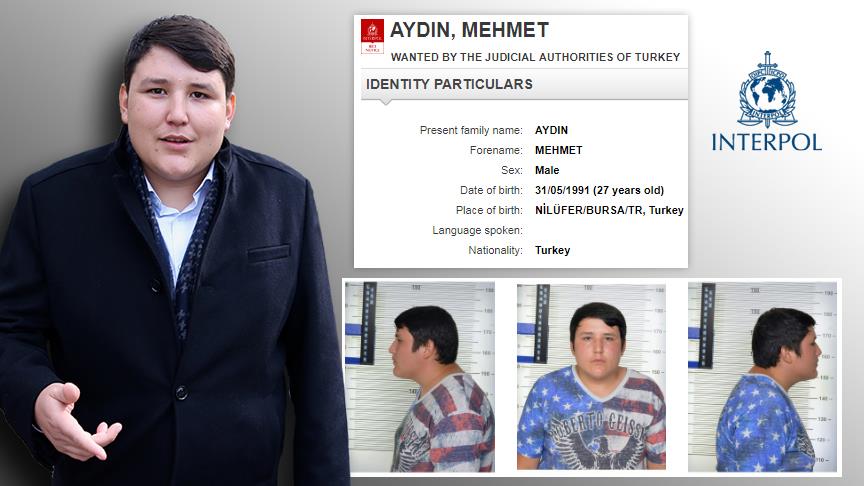
In a case that sounds less like standard financial crime and more like a dystopian satire, a Turkish court officially sentenced 29-year-old former YouTube rapper Mehmet Aydın—and his brother, Fatih Aydın—to an astonishing 45,376 years and six months in prison.
The multi-millennial sentence marks the absolute culmination of the “Çiftlik Bank” (Farm Bank) scandal, an elaborate digital Ponzi scheme that hoodwinked more than 100,000 users into trading their hard-earned life savings for virtual gold, digital livestock, and fictional agricultural yields.
Video Chapter Timestamps
To watch the full investigative video and review the footage surrounding the case, utilize the key checkpoints below:
-
[00:00] — Introduction to the $100M virtual farm animal scandal.
-
[00:52] — Meet Mehmet Aydın: The Turkish dishwasher and YouTube rapper “Egoman.”
-
[01:44] — The launch of Çiftlik Bank and the core gameplay mechanics.
-
[03:07] — How physical show farms and retail storefronts built a perfect illusion.
-
[03:59] — The explosion of users and the scale of the millions deposited.
-
[04:36] — The internal mechanics of how the app functioned as a classic Ponzi scheme.
-
[06:23] — The 2017 payment freeze, user panic, and the initial regulatory crackdowns.
-
[07:11] — The exit heist: Aydın liquidates assets and flees Turkey with the cash.
-
[08:02] — Life on the run: Driving a Ferrari in Uruguay and drawing the attention of Interpol.
-
[10:35] — The 2021 surrender inside the Brazilian consulate and extradition footage.
-
[11:19] — Aydın’s bizarre prison statements comparing his cell to a high-end Airbnb.
-
[12:22] — The “Park Bench” defense and the stacking of individual fraud counts.
-
[13:24] — The final verdict: A Turkish court sentences the brothers to 45,376 years in prison.
The Origin: A Dishwasher’s Multi-Million Dollar App
Before becoming an international fugitive pursued by Interpol, Mehmet Aydın lived a decidedly ordinary life. Working as a humble dishwasher in Bursa, Turkey, Aydın harbored dreams of internet stardom, uploading rap music videos to YouTube under the alias “Egoman.” [00:52]. While his music career failed to gain meaningful traction, Aydın possessed an acute understanding of digital gamification and consumer psychology.
In 2016, Aydın launched Çiftlik Bank [01:44]. To the casual observer, the mobile application appeared to be a standard, localized clone of the wildly popular Facebook game FarmVille. Users navigated a cutesy, pixelated interface featuring cartoon cows, chickens, bees, and sheep [01:52].
The mechanical loop of the application was straightforward:
-
Users deposited real currency to purchase in-game gold.
-
The gold was utilized to buy virtual livestock (cattle, goats, chickens).
-
The app calculated theoretical yields based on the “production” of milk, eggs, and honey.
-
Users could then exchange those virtual proceeds back into real fiat currency [02:10].
Crucially, Aydın didn’t market the platform merely as an interactive game. He pitched it as a revolutionary, tech-driven agricultural investment fund. Çiftlik Bank publicly claimed that every single dollar deposited into the application was directly diverted into funding physical, real-world dairy farms, agricultural infrastructure, and livestock facilities across Turkey [02:35]. In a struggling domestic agricultural market, the premise of digital crowd-funded farming felt incredibly innovative to a population looking to hedge against inflation.
Building the Illusion: Show Farms and Celebrity Endorsements
The brilliant, malicious core of Aydın’s scheme was his realization that digital-only projects are inherently met with public skepticism. To convert online users into high-tier investors, Aydın brought the digital game into the physical world.
The company heavily invested its early influx of capital into building massive, physical “show farms” [03:07]. Everyday citizens could board buses, travel to rural sites, and physically walk through pristine brick-and-mortar facilities filled with living cattle. To further legitimize the operation, Çiftlik Bank opened dedicated brick-and-mortar retail stores across urban centers, selling real dairy products stamped with the corporate logo [03:13].
Combined with massive advertising campaigns featuring premier Turkish television personalities and celebrities publicly endorsing the app [05:42], the psychological trap was flawlessly laid. When an investor could physically see a cow, buy milk from a physical store, and watch their friends withdraw real profits, all doubts vanished. Within 18 months, between 75,000 and 130,000 people poured their life savings into the application, generating a massive cash pool estimated between $131 million and $300 million [03:59].
The Collapse and a Ferrari in Uruguay
Like all Ponzi structures, Çiftlik Bank relied entirely on a constant, exponential influx of new user capital to pay out the dividends of older users [04:36]. By late 2017, the math inevitably caught up with the illusion.
Users attempting to withdraw their accrued profits suddenly faced severe technical delays, frozen accounts, and halting responses from support staff [06:23]. As panic rippled through the community, Turkish regulators stepped in, launching a sweeping investigation into the platform’s banking compliance. Recognizing that the end game had arrived, Aydın pulled off the ultimate financial eject button: he quietly liquidated corporate shares, packed up millions in cash and cryptocurrency, and completely vanished from the country right as the company collapsed overnight [07:11].
For over three years, Aydın lived as a ghost on the global stage, earning the nickname “Tosuncuk” (little chubby boy) in the Turkish press. While thousands of families realized their life savings were gone, rumors placed Aydın living a lavish billionaire lifestyle across South America. The myth became reality when Interpol tracked him down in Uruguay, where the fugitive had inexplicably destroyed his own cover by driving a bright, loud, multi-hundred-thousand-dollar Ferrari through quiet local streets [08:02].
Faced with mounting international pressure, bounty hunters, and an inevitable asset freeze, Aydın pulled off one final surprise in 2021: he walked directly into the Turkish consulate in São Paulo, Brazil, and surrendered to federal authorities [10:35].
The Courtroom Absurdity and the 45,000-Year Sentence
Once extradited back to Turkey, Aydın’s legal defense strategy oscillated between absolute denial and sheer comedy. When prosecutors brought heavy charges against him for using the word “Bank” in his company name without a registered financial license, Aydın explicitly argued in court that the word “bank” in English also translates to a literal park bench, suggesting the public had simply misunderstood his branding [12:22].
Furthermore, while housed in a maximum-security prison facing thousands of individual counts of IT fraud, money laundering, and establishing a criminal organization, Aydın gave media interviews comparing his cell to a luxury accommodation, noting that the food was “a thousand times better” than a standard Turkish university dorm room [11:19].
Ultimately, the Turkish judicial system showed zero appetite for leniency. Because Turkish law allows sentences to run consecutively for each individual count of fraud committed against separate victims, the numbers stacked to an unprecedented astronomical total. In February 2025, the court handed down a definitive verdict, sentencing Mehmet Aydın to 45,376 years and six months in prison [13:24]—ensuring the former dishwasher turned YouTube rapper will spend the rest of his biological existence behind bars.
Editor’s Opinion: The Fatal Allure of the Tangible Lie
From the Desk of the Editor: The Çiftlik Bank disaster serves as a fascinating, terrifying study in human gullibility. For years, the mainstream financial world has warned investors about the dangers of digital assets, web3, and “magic internet money” because they lack physical form. Mehmet Aydın fundamentally inverted this vulnerability. He understood that if you give people a physical cow to look at, a real store to walk into, and a celebrity face to trust, they will completely disable their natural critical thinking skills.
The sheer scale of this 45,000-year sentence is a mechanical necessity of the justice system counting individual victims, but it underscores a deeper cultural warning. We live in an era where complex, hyper-connected platforms allow a single charismatic individual with an uninhibited ego to ruin the lives of a hundred thousand people from a smartphone. True due diligence means looking past the physical props, the glossy app interfaces, and the bold promises of disrupting an industry. If an investment strategy offers massive, guaranteed returns out of thin air, it doesn’t matter if it’s backed by cutting-edge blockchain technology or a cartoon chicken—you are looking at a trap.
Frequently Asked Questions (FAQ)
Who is Mehmet Aydın?
Mehmet Aydın is a 29-year-old Turkish entrepreneur, former dishwasher, and former internet rap artist who created the massive digital Ponzi scheme known as Çiftlik Bank.
How did the Çiftlik Bank scam physically operate?
The platform was a mobile game where users spent real money to purchase virtual livestock. The company claimed these funds were used to build real-world commercial farms in Turkey, promising players a share of the real agricultural profits. In reality, it was a Ponzi scheme using new user cash to pay older users.
Why is the prison sentence so long (45,376 years)?
Under the Turkish penal code, judges can stack sentences consecutively for criminal organizations. Because Aydın was convicted of thousands of individual counts of IT fraud and money laundering across thousands of distinct plaintiffs, the collective sentence mathematically reached over 45,000 years.
How much money was stolen in total?
Official court documents and federal investigations place the total amount of money deposited into the fraudulent system at approximately $131 million, though external estimates regarding the equivalent Turkish Lira valuation suggest the scale could range up to $300 million.
Where was Mehmet Aydın captured?
Aydın was not physically captured by force; after spending more than three years on the run across Uruguay, Ukraine, and Brazil, he voluntarily walked into the Turkish consulate in São Paulo, Brazil, in 2021 and surrendered to authorities due to mounting pressure and asset freezes.
The Evolution of the Digital Heist
The historic scale of the Çiftlik Bank collapse highlights a rapidly accelerating trend in global white-collar crime: the transition from traditional, localized fraud to hyper-scaled, borders-bypassing digital operations. This strategic evolution directly mirrors the complex cyber maneuvers examined in The Digital Ghost of Miami: How Malone Lam Orchestrated a $260 Million Crypto Empire. While Mehmet Aydın utilized the primitive gamification of an internet-based farm simulator to siphon millions from a localized working-class population, Lam leveraged cutting-edge decentralized finance architecture and advanced social engineering tactics to extract a massive fortune from the global cryptocurrency ecosystem. Yet, despite the vast disparity in their technical execution—Aydın working behind a cutesy app interface and Lam manipulating high-tier blockchain protocols—the underlying psychological architecture of both crimes remains identical. Both individuals capitalized on the modern consumer’s desperate desire for explosive, asymmetric financial growth, proving that whether a scheme is built on the physical illusion of real-world livestock or the complex abstraction of digital tokens, the modern fraudster’s greatest asset is always an investor’s uninhibited financial ambition.

