

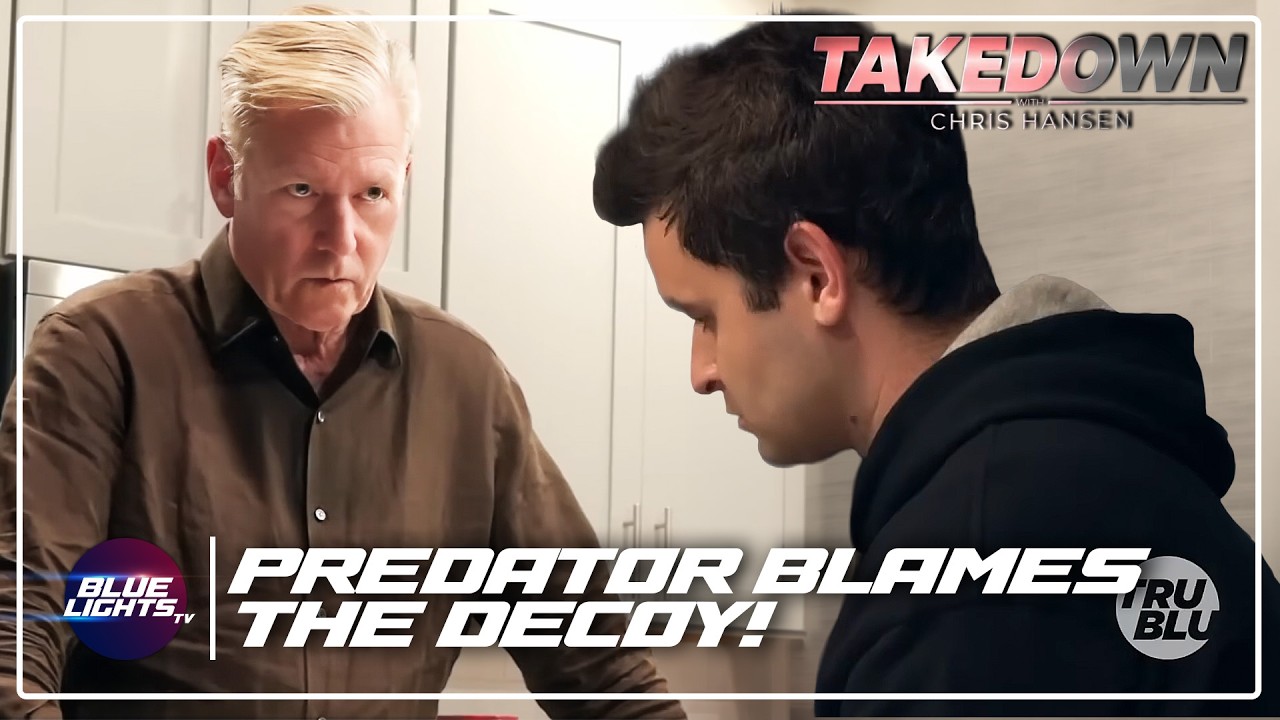
In the landscape of modern digital crime, few operations expose the raw, unfiltered psychology of predatory behavior like a coordinated online child exploitation sting. A striking example of this unfolded in Polk County, Florida, where the Cyber Guardian Task Force, operating alongside veteran journalist Chris Hansen, apprehended 34-year-old Michael.
Click here to watch the dramatic arrest footage
This case serves as an elite masterclass in investigative coordination, statutory boundaries of cybercrimes, and the profound psychological dissonance exhibited by repeat offenders when confronted with reality.
The Anatomy of the Digital Setup
The investigation began when an undercover detective, posing as a 14-year-old boy, initiated contact with an online profile using the pseudonym “Nick MN.” The digital behavior displayed by the target followed a classic, highly dangerous pattern of grooming and rapid escalation.
[Initial Contact] ➔ [Age Reconfirmation] ➔ [Verification via Custom Emojis] ➔ [Explicit Solicitation]
-
The Setup: The target’s profile explicitly stated he was “looking for younger guys.”
-
The Verification Escape: To bypass the target’s suspicion, the undercover operative utilized specific “emo hand sign” emojis requested by Michael to prove authenticity.
-
The Escalation: Once “satisfied,” Michael’s language shifted to explicit sexual solicitation. He detailed an intent to “take the minor’s virginity,” outlining specific instructions regarding the use and non-use of protection.
Michael arranged to travel to the designated sting house via a rideshare service, operating under the false pretense that he was a 24-year-old named “Chris.”
Tactical Shift and the Apprehension
As the target neared the sting house, surveillance units monitored his movements closely. The operational protocol shifted when detectives noted heightened hesitancy from Michael. Sensing potential counter-surveillance or an attempt to flee, the Polk County Cyber Guardian Task Force intercepted his rideshare vehicle just outside the neighborhood perimeter.
Upon physical apprehension and search, law enforcement recovered definitive physical evidence of intent: condoms and lubricant.
Despite Michael’s subsequent claims that he was merely “going for a walk,” the physical possession of these items completely undermined any narrative of innocent or casual behavior.
The Interrogation: Psychological Defenses and Cognitive Dissonance
When brought into the sting house kitchen for interrogation, Michael exhibited an array of psychological defense mechanisms. His reactions provide deep insight into how predators attempt to rationalize their actions to avoid consequences.
1. Deflection of Blame onto the Decoy
Michael repeatedly attempted to shift accountability to the undercover operative, claiming he was “pressured” into coming over. He argued that the photos sent by the decoy made the individual look like they were “20 or in college,” suggesting the minor was at fault for enticing him.
The Reality: Hansen quickly dismantled this defense by highlighting the statutory reality: the decoy explicitly stated they were 14 years old. In the eyes of the law, a predator cannot claim confusion based on a photograph when the chronological age has been explicitly established and acknowledged in text.
2. The “Roleplay and Fantasy” Rationalization
When confronted with his own explicit messages—including statements like “you’re making my dick hard knowing you’re real”—Michael claimed the entire exchange was merely “roleplaying” and internet fantasy. He assumed the person on the other end was an adult pretending to be a minor.
This defense is incredibly common among digital predators; it attempts to reframe criminal intent as harmless, consensual adult simulation.
3. The “Bank Robber” Analogy and Right Choice Defense
Michael insisted that because he chose to block the user, delete the messages, and order a return rideshare before walking through the front door, he had made a “smart decision” and committed no crime. He presented an analogy:
“If I walk around a bank thinking about robbing it, but I don’t walk inside, am I a bank robber?”
Hansen met this logic with immediate clarity. In physical property crimes, entering the structure is often a requirement for burglary or robbery. However, cyber solicitation laws operate on an entirely different legal framework.
Statutory Reality: Florida’s Cyber Solicitation Laws
Michael’s fundamental misunderstanding of the law centered on his belief that a crime is only completed upon physical contact or entry into the sting house. Under Florida State Statute, the elements of the crime are met long before a suspect reaches the front door.
| Charge | Statutory Element Triggered |
| Computer Solicitation of a Minor | Met the moment explicit sexual communication occurs with an individual believed to be a minor. |
| Traveling to Meet a Minor | Triggered once the suspect takes a definitive physical step (e.g., getting into an Uber, driving) toward the meeting location. |
| Unlawful Use of a Two-Way Device | Triggered by utilizing a mobile phone or internet platform to facilitate a felony. |
By entering the rideshare vehicle and traveling toward the address provided by the decoy, Michael had legally fulfilled the statutory elements of multiple felonies. Turning around at the last minute does not erase the fact that the crimes had already been legally completed.
The Reality of the Repeat Predator
The most alarming revelation of the case emerged during the post-arrest background investigation. Michael was not a first-time offender caught in a momentary lapse of judgment. He was currently out on an $85,000 bond from Bloomington, Minnesota, for identical charges: electronic communication describing sexual conduct with a child and solicitation of a minor.
[Minnesota Arrest] ➔ [Released on $85,000 Bond] ➔ [Travels to Florida] ➔ [Re-engages in Solicitation]
This detail highlights a terrifying reality well-known to law enforcement: the extreme rate of recidivism among digital predators. Despite facing active felony prosecution in his home state, Michael traveled to Florida for an audio-visual technology convention and immediately went back online to target a local child.
Polk County Sheriff Grady Judd offered a sobering perspective on this behavioral pattern:
“Lions don’t change their roar. This guy is a predator… if he’s not locked up in custody, he’s going to have sex with a child if the opportunity presents itself. That’s a guarantee.”
Key Takeaways for Digital Safety
This case highlights critical lessons for law enforcement, judicial systems, and parents alike:
-
The Systemic Failure of Bail: Allowing active, unmonitored digital access to individuals out on bond for child solicitation presents an immediate danger to communities nationwide.
-
Aggressive vs. Passive Behavior: Predators like Michael are highly aggressive; structural interventions (like arrests) often fail as a deterrent if the individual retains access to smart devices.
-
Proactive Interception Works: Digital sting operations remain one of the few highly effective ways to intercept dangerous individuals before an actual child is harmed.
To truly understand how these confrontations unfold, one must look past the shocking television footage and examine the highly structured operational frameworks that make them possible. The logistical choreography—spanning from initial chat room moderation to the physical layout of the target location—serves a strict legal and psychological purpose. For a deeper dive into the tactical strategies that revolutionized modern broadcast journalism and digital law enforcement, see our comprehensive breakdown on The Investigative Anatomy of an Online Sting: Deconstructing the Hansen Phenomenon. By analyzing these foundational methods, it becomes clear why the psychological deflections and desperate excuses witnessed in this specific episode inevitably fail under pressure.
Editor’s Opinion
The psychology of deflection in online predator stings is as fascinating as it is deeply unsettling. In this episode of Takedown, we witness a jarring cognitive dissonance: a suspect cornered by Chris Hansen who actively attempts to shift the moral and legal blame onto the undercover decoy.
This “blame-shifting” isn’t just a panic response; it is a calculated psychological defense mechanism. Predators often compartmentalize their actions, creating a narrative where they are the “victim” of entrapment or a setup, completely ignoring their own months of grooming behavior. From a digital marketing and true crime content perspective, highlighting these specific psychological breakdowns—rather than just the shock value of the arrest—is what elevates an article from standard internet gossip to high-value, compelling commentary that keeps readers analytical and engaged.
Frequently Asked Questions (FAQ)
What is the psychological reason behind a predator blaming a decoy?
Predators often utilize a psychological defense mechanism known as externalization or projection. When caught, the overwhelming panic and threat to their social identity cause them to shift blame outward to avoid confronting their own deviant behavior. Blaming the decoy for “showing up” or “luring them” is an attempt to rewrite the narrative and minimize their personal accountability.
How do modern digital stings avoid the legal defense of entrapment?
To secure a conviction, law enforcement agencies structure stings to avoid entrapment by ensuring the suspect demonstrates pre-disposition. The undercover decoys do not induce or coerce the individual; they simply present an opportunity. If the suspect independently takes active, unprompted steps—such as driving to a designated sting house or sending explicit messages—the entrapment defense fails in court.
Why do some digital stings fail to result in criminal charges?
A digital sting might fail to lead to prosecution due to gaps in chain of custody for digital evidence, jurisdictional conflicts, or issues with the age verification parameters used during the chat. If the legal threshold for intent or solicitation isn’t explicitly met in the recorded logs, prosecutors may determine there is insufficient evidence to guarantee a conviction.
If you are looking to review the exact phrasing and behavioral cues used during the confrontation, you can watch the Takedown With Chris Hansen full episode to see how the suspect attempts to flip the narrative on the internet safety team before law enforcement intervenes.

