

The Globalization of the Sydney Underworld
For years, the violent escalation of the Sydney gangland war has been fought across the suburban streets of New South Wales, driven by shifting alliances, multi-million-dollar drug networks, and fierce tribal rivalries. However, on May 21, 2026, the conflict permanently breached international borders. Lorenzo Lemalu, a 24-year-old identified as a mastermind and senior figure within Sydney’s notorious “Coconut Cartel,” was systematically hunted down and executed outside a seafood restaurant in the heart of downtown Ho Chi Minh City, Vietnam.
Click here for the chilling execution footage
The shocking hit reveals a terrifying reality of modern organized crime: distance is no longer a shield. Underworld figures fleeing Australia to seek refuge or manage operations from Southeast Asia are now being targeted by internationally coordinated hits. Within 72 hours of the fatal ambush, Vietnamese authorities executed a massive, armed dragnet near the Vietnam-Cambodia border, capturing the two suspected contract killers. Stripped of their freedom and broadcast on state television, the suspected hitmen were shown chained to chairs, offering a chilling glimpse into the brutal efficiency of both global contract killings and the foreign justice systems that break them apart.
https://www.youtube.com/watch?v=tgQMpODYIPY
Case Timeline and Tactical Milestones
The execution and the subsequent international manhunt moved with dizzying speed, utilizing advanced tracking technology and massive police mobilization:
[May 14: Suspects Land in Vietnam] ➔ [Days of Recce & Surveillance] ➔ [May 21: Ambush Outside Restaurant] ➔ [Suspects Flee Toward Border] ➔ [1,000 Officers Deployed] ➔ [May 24: Border Takedown] ➔ [Televised Confession]
-
May 14, 2026 – The Insertion: The two hitmen fly into Tân Sơn Nhất International Airport in Ho Chi Minh City using fake passports to mask their true identities.
-
May 15–20, 2026 – The Surveillance Phase: For a full week, the operatives tail, track, and monitor the daily movements of Lorenzo Lemalu and his close associate.
-
May 21, 2026 (10:10 p.m.) – The Execution: As Lemalu and his friends exit a restaurant on Trương Định Street, the hitmen step out from the shadows and open fire with military-grade weapons.
-
May 22, 2026 – The Digital Dragnet: Using advanced digital mapping technology and CCTV networks, the Ho Chi Minh City Police Command Center reconstructs the fugitives’ escape route within 24 hours.
-
May 24, 2026 – The Border Interception: Believing the suspects are heavily armed and ready to fight, a massive force of 1,000 heavily armed officers corners and arrests the men just short of the Cambodian border.
💥 The Hit on Trương Định Street
The target of the operation, Lorenzo Lemalu, was no ordinary tourist. Back in Sydney, Lemalu had allegedly consolidated significant power within the Coconut Cartel after aggressively breaking away from an alliance with the formidable Alameddine crime network. This internal fracturing sparked an underworld war that has left a trail of bodies across Australia. Believing he could find safety or manage his networks away from the reach of New South Wales police, Lemalu had been operating out of Vietnam.
He was fatally mistaken. On Thursday night, as Lemalu and his 27-year-old associate, Sauni Sam, wrapped up a dinner gathering, the trap snapped shut. Two men approached the group outside the seafood restaurant and unleashed a barrage of gunfire from military-grade firearms. Lemalu was struck twice at point-blank range, dying instantly on the pavement, while Sauni Sam was rushed to an intensive care unit with catastrophic, life-threatening wounds.


The shooters fled the bloodbath on foot, immediately executing a pre-planned escape protocol. They retreated to an apartment building in Long Bình Ward to ditch their gear before hiring a regional passenger transport driver to shuttle them toward Tay Ninh Province, eyeing a clean escape into the lawless border zones of Cambodia.
⛓️ Chained to Chairs: The Confessions and the “Overseas Director”
If the hitmen believed they could slip through the cracks of the Vietnamese legal system, they fundamentally miscalculated the resolve of local law enforcement. Because the suspects were known to possess military weaponry and were deemed highly capable of violent resistance, the Ministry of Public Security launched a colossal, synchronized operation involving over 1,000 officers. The dragnet successfully pinched the fugitives in a rural area right near the border.
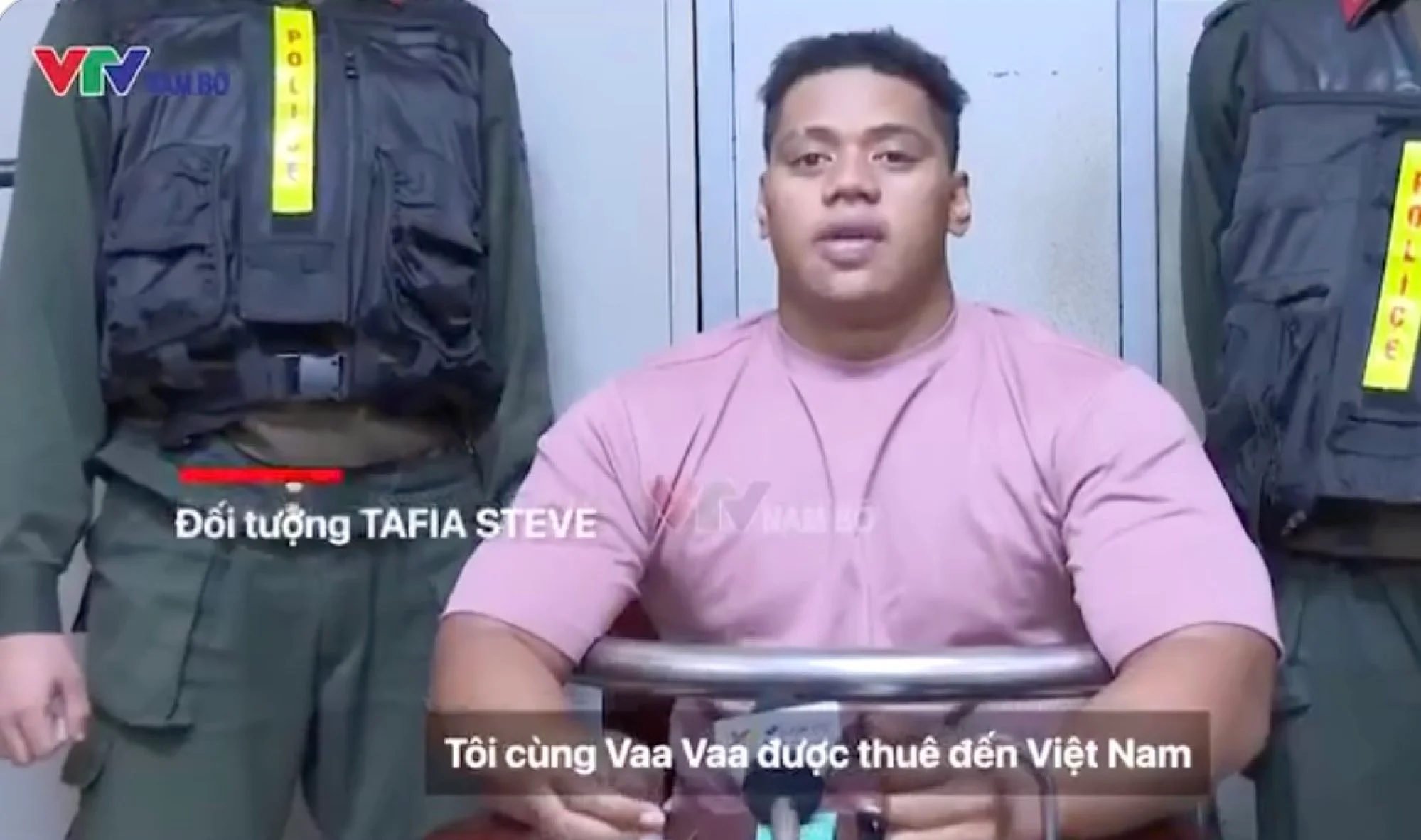
The suspects were identified as Samoan nationals Joseph Vaa (27, also referred to as Vaa Vaa) and Steve Tofa (23, also reported as Steve Tafia). Footage released by state television channel VTV9 sent shockwaves through international media: the two physically imposing men were shown handcuffed, wearing black hoods, and chained to wooden chairs in a bleak interrogation room.
Under intense interrogation, the veneer of the hardened contract killer completely dissolved. Vaa Vaa openly admitted to being the principal triggerman who executed Lemalu, stating on camera: “Together with Steve, I came to Vietnam and I was the person who directly used the gun to shoot and kill someone… I deeply regret what I have done.” His accomplice, Tofa—an aspiring bodybuilder back in Apia—looked visibly terrified as he confessed they had been hired by a shadowy mastermind operating completely abroad. Tofa directly warned other international criminals: “I want to advise anyone thinking of coming to Vietnam to commit crimes to give up immediately because Vietnamese police will certainly arrest you.”
🖋️ Editor’s Opinion: The Brutal Reality of Foreign Justice
There is a profound, dark irony in the fate of Steve Tafia and Vaa Vaa. These men were hired as muscle to project the ultimate image of lethal power—the “slayer” archetype of the underworld—sent across the ocean to eliminate a rival boss. Yet, the moment they crossed paths with the raw, uncompromising machinery of a foreign communist state, that illusion of criminal dominance evaporated.
In Australia or the West, high-profile gangland suspects are afforded months of legal maneuvering, bail applications, and cushioned procedural rights before they ever have to face a camera or a jury. In Vietnam, there is no such luxury. Within days of their crime, these men were publicly paraded in chains, reading scripted confessions to state media while locked to furniture.
The Vietnamese Ministry of Public Security has sent an unshakeable message to global syndicates: your local turf wars will not be tolerated on our soil. The local driver and seven other Vietnamese nationals who assisted their flight are also facing severe charges for concealing crimes and facilitating illegal border crossings. Back in Sydney, police are currently on high alert, bracing for a wave of brutal retaliatory violence as the Coconut Cartel reels from the loss of its mastermind. But for the two hitmen sitting in a maximum-security cell in Ho Chi Minh City, the corporate gang bosses who funded their trip from abroad are gone, and they are left facing the very real possibility of a firing squad.
❓ Frequently Asked Questions
Q1: Why did the hitmen choose to target Lemalu in Vietnam instead of Australia?
Lorenzo Lemalu had heavily distanced himself from core Sydney factions and was operating internationally to evade Australian police scrutiny and direct rival contact. Organized crime syndicates often wait for targets to travel to countries where they assume security architecture is more relaxed, making them softer targets outside their fortified home turf.
Q2: What firearms were used in the Ho Chi Minh City execution?
Vietnamese forensic investigators confirmed that the hitmen utilized “military-grade firearms” to carry out the prompt execution outside the Cee’f seafood restaurant. The weapons were smuggled or procured specifically for the hit to guarantee a lethal outcome.
Q3: What penalty do Vaa Vaa and Steve Tafia face under Vietnamese law?
Vietnam maintains some of the strictest criminal codes in the world regarding premeditated murder and the illegal use of military weapons. Because they acted as professional contract killers under direct orders from an overseas entity, both Samoan nationals are facing formal murder charges that carry a maximum penalty of capital punishment by lethal injection.
Q4. What Was the Motive for the Execution?
The motive behind the assassination of Lorenzo Lemalu was a highly coordinated, professional underworld contract killing rooted in an ongoing global gang war.
-
Underworld Fracturing: Back in Sydney, Lemalu had aggressively broken away from an alliance with the formidable Alameddine crime network to consolidate power within a rival syndicate known as the “Coconut Cartel”. This structural split ignited a brutal gangland war across Australia.
-
An Overseas Order: According to Vietnam’s Ministry for Public Security, the two arrested hitmen—Samoan nationals Steve Tafia and Vaa Vaa—were not acting on personal animosity. They explicitly confessed that they traveled to Vietnam and executed the ambush while acting strictly “under the direction of an individual abroad” who orchestrated and funded the hit from overseas.
Q5. What is the Likely Jail Sentence?
For a premeditated contract killing of this magnitude, the suspects are highly unlikely to receive a standard jail sentence. Instead, they are facing the absolute maximum penalty under the law.
-
The Capital Punishment Reality: Vietnam maintains some of the strictest criminal codes in the world regarding premeditated murder and the illegal transit or use of military-grade weapons. Because the hitmen acted as professional mercenaries executing a targeted assassination on foreign soil, they are being prosecuted under capital federal counts.
-
Lethal Injection: Under Vietnamese law, a conviction for an organized contract killing carries a maximum penalty of capital punishment via lethal injection.
-
No Western Clean Exits: Unlike the Australian legal system, where gangland figures face lengthy procedural delays, bail opportunities, and eventual parole, the Vietnamese judicial system moves with swift, uncompromising bureaucracy. Both Vaa Vaa and Tafia have already provided filmed confessions to state media while chained to chairs, meaning their chances of avoiding the highest tier of sentencing are virtually non-existent.
Additionally, the seven Vietnamese nationals who assisted the hitmen by acting as regional drivers or providing safe housing face severe, multi-year prison sentences for concealing crimes and facilitating illegal border crossings.
This rapid, international project execution highlights how multi-million-dollar transnational syndicates now routinely operate with corporate efficiency, treating wetwork contracts as global logistical puzzles. However, while syndicates leverage substantial capital to coordinate high-profile executions across international borders, law enforcement agencies are increasingly turning their focus toward choked financial pipelines rather than just physical enforcement. To understand how task forces are systematically suffocating the corporate structures of organized crime closer to home, read our specialized investigative piece, The Economics of Dismantling Syndicates: A Forensic Look at the NSW Crime Commission’s $1.5M Seizure. Examining the targeted asset seizures and financial tracking methods utilized by domestic authorities provides critical insight into the precise economic warfare necessary to disrupt the overarching networks that funded Lemalu’s killers.

