


I’ve been following the recent Sydney crime spikes, and the latest seizure in Barangaroo caught my eye—not just for the cars, but for the legal precedent it sets.
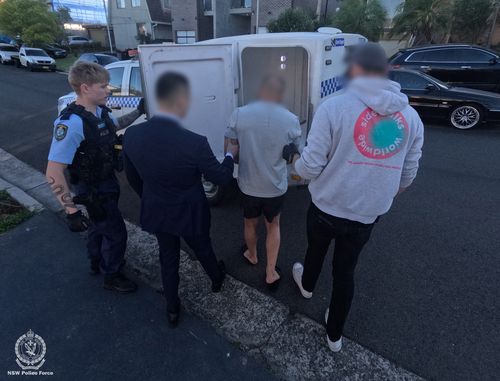
In a coordinated tactical strike across Sydney’s central and southern suburbs, New South Wales authorities recently executed a high-stakes disruption of a suspected organized crime syndicate. While the arrests of six individuals made headlines, the true significance of the operation lies in the seizure of a luxury vehicle fleet valued at over $1.5 million. This move signals a sophisticated shift in law enforcement strategy: the transition from “person-focused” policing to “capital-focused” asset stripping.
The Strategy of “Unexplained Wealth”
The NSW Crime Commission operates under a powerful and controversial legal framework: the Criminal Assets Recovery Act 1990 (NSW). Unlike standard criminal law, which requires a conviction “beyond a reasonable doubt,” certain asset forfeiture proceedings in NSW operate on the civil standard of proof (the balance of probabilities).
The “Follow the Money” Mechanics
Under “Unexplained Wealth” provisions, if an individual’s lifestyle significantly exceeds their reported legal income, the burden of proof effectively shifts. The state can restrain assets—such as the 2013 Rolls-Royce Ghost or the 2024 BMW XM seen in this case—requiring the owners to prove the funds used for the purchase were derived from legitimate sources.
Analytical Insight: By targeting the “symbols of success” (Lamborghinis and high-end jewelry), law enforcement achieves a psychological victory. It de-glamorizes the criminal lifestyle in the public eye while simultaneously removing the working capital required to fund further drug importations or firearm acquisitions.
Breakdown of the Financial Disruption
The recent raids highlight the astronomical profit margins alleged in modern illicit trade. The fleet seized represents a massive “sunk cost” for the syndicate:
| Asset Description | Estimated Market Value | Legal Significance |
|---|---|---|
| 2013 Rolls-Royce Ghost | $600,000 | High-liquidity luxury asset |
| Lamborghini Huracan | $600,000 | Signature “status” vehicle |
| 2024 BMW XM | $300,000 | Evidence of recent, active revenue |
| Encrypted Mobile Devices | Undisclosed | Digital forensic potential |
The inclusion of a 2024 BMW XM is particularly telling. It suggests a network that was not only operational but highly profitable in the current fiscal year, indicating that the police “Strike Force” intervened at the peak of the syndicate’s local expansion.

The Role of Digital Forensics in Syndicate Logistics
Beyond the physical assets, the seizure of encrypted mobile devices represents the most significant long-term threat to the network. In the wake of the “Anom” and “EncroChat” takedowns, Australian authorities have become global leaders in bypassing encrypted communication layers.
Forensic analysis of these devices typically reveals:
- Supply Chain Logistics: Identifying the “Tier 1” importers.
- Money Laundering Nodes: Tracking how cash is converted into luxury assets via “shadow” car dealerships or jewelry brokers.
- Distribution Networks: Mapping the “last-mile” delivery of prohibited substances.
Case Commentary: The Evolution of Deterrence
The efficacy of these seizures lies in their ability to strike at the “ego” of organized crime. Traditionally, a short prison sentence was viewed by high-level syndicate members as an occupational hazard—a period of downtime to be endured before returning to a hidden fortune. However, by stripping away the tangible fruits of their labor before a criminal trial even concludes, the NSW Crime Commission changes the risk-reward ratio entirely. It sends a message to the community that the “glamour” often portrayed in crime culture is an illusion that the state can evaporate overnight.
Furthermore, this case highlights the increasing transparency of the luxury market in Sydney. High-end car dealerships and real estate agencies are under greater scrutiny to perform “Know Your Customer” (KYC) checks. The fact that a syndicate could openly operate with a 2024 BMW XM—a vehicle that draws significant attention—suggests either a brazen disregard for detection or an increasingly complex system of straw-man purchasers. As these civil forfeiture cases move through the courts, they will likely expose the “middle-men” who facilitate the conversion of illicit cash into high-status metal.
Personal Perspective: The End of “High-Reward” Gambling
From a social policy perspective, these raids represent a “zero-tolerance” era for NSW. Historically, organized crime figures viewed a few years in prison as a “business expense.” However, the current “top-down” approach changes the equation.
When the state removes the house, the cars, and the bank accounts, the “reward” for criminal activity is deleted, leaving only the “risk.” For the community, the benefit is twofold: the removal of dangerous substances from the street and the redistribution of seized funds back into the Confiscated Proceeds of Crime Account, which funds future crime prevention programs.
Conclusion: A Tighter Net
The Barangaroo and Sans Souci arrests demonstrate that no suburb is “off-limits” for modern strike forces. As investigative technology and unexplained wealth laws continue to evolve, the “business” of organized crime in Sydney faces an increasingly unviable future. The message from the NSW Crime Commission is clear: if you cannot explain your wealth, you cannot keep it.
Editorial Note: This forensic report is based on media briefings from the NSW Police Force and the NSW Crime Commission. All individuals mentioned are presumed innocent until proven guilty in a court of law. For information on local community safety programs, visit the [NSW Government Justice Portal].
High-pressure tactical operations
State and Federal police have significantly increased the frequency of “strike force” operations. These units are specifically designed to target the logistical hubs of criminal syndicates. By deploying advanced surveillance and intelligence-sharing between agencies like the Australian Federal Police (AFP) and the NSW Police Force, law enforcement is now able to strike multiple locations simultaneously. This prevents “leakage,” where suspects might otherwise be alerted and move assets or destroy evidence.
Legislative teeth and maximum penalties
The crackdown is supported by some of the strictest drug laws in the country. Prosecutors are increasingly seeking the maximum allowable penalties for commercial supply, which can include life imprisonment. This judicial severity serves as a deterrent, signaling that the state no longer views drug trafficking as a high-reward gamble, but as a high-risk path toward total financial and personal ruin.
A community-first mandate
The motivation behind this heightened strictness is rooted in public safety. The drug trade is inextricably linked to violent crime, the illegal firearms market, and the exploitation of vulnerable populations. By aggressively pursuing the wealth—such as the Lamborghini and Rolls-Royce seen in this case—authorities are essentially “de-glamorizing” the criminal lifestyle.
This uncompromising approach sends a clear message: those who profit from the destruction of communities will not only face the full force of the law but will also see their ill-gotten gains used to fund the very systems designed to stop them. As investigative technology continues to evolve, the “net” cast by law enforcement is only growing tighter, leaving fewer places for organized crime to hide.
Legal Disclaimer: The individuals mentioned in this report are presumed innocent until proven guilty in a court of law. All information is based on official media releases from the NSW Police Force and the NSW Crime Commission. This article is for informational purposes only.

