

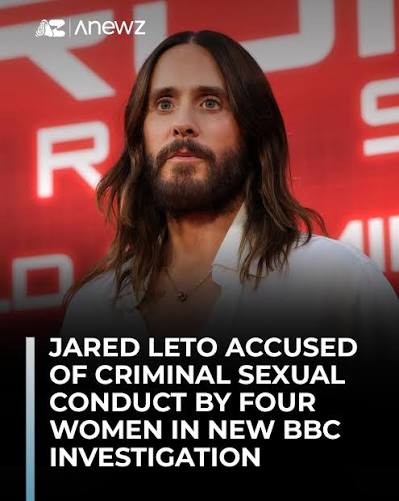
The entertainment industry is once again facing a moment of reckoning. As the curtain rises on the new BBC documentary, Jared Leto: Hollywood’s Dark Secret, the spotlight is turning toward one of cinema’s most enigmatic figures. With multiple women coming forward to allege sexual misconduct during their teenage years, the industry—and the public—must confront uncomfortable truths about power, fame, and the mechanisms of influence that have long shielded those at the top.
https://www.facebook.com/reel/1333558208987941/
The Allegations: A Pattern of Predatory Behavior?
Airing tonight on BBC Three and BBC One, the documentary presents testimony from several women who describe experiences occurring between 2002 and 2016. At the time of these alleged encounters, the accusers were teenagers, while Leto, the Thirty Seconds to Mars frontman and Oscar-winning actor, was in his 30s and 40s.
The breadth of these reports suggests a pattern that spans over a decade. By documenting these accounts, the film moves beyond individual anecdotes to paint a picture of a systemic issue often found in the upper echelons of celebrity culture. When a massive age gap is coupled with the extreme power imbalance inherent in Hollywood—where the allure of proximity to fame acts as a potent tool for access—the potential for exploitation is magnified.
The Architecture of Influence
In the context of the “Total Chassis” philosophy, where we emphasize radical personal responsibility and the maintenance of one’s own integrity, the behavior alleged here represents a catastrophic failure of character. True strength and elite status—whether in fitness or film—carry the weight of responsibility. When that power is weaponized against those who are younger or vulnerable, it isn’t just a personal failing; it is a fundamental collapse of the moral structure required for a sustainable society.
https://www.facebook.com/photo/?fbid=1462167595776912&set=a.646337320693281
The documentary raises a vital question: Why does the structure of fame often provide a veil of protection for predatory behavior? In Hollywood, as in many high-pressure environments, the “system” often rewards charisma and talent while ignoring the shadow cast by an individual’s personal life. The allegations against Leto follow a familiar trajectory in the post-#MeToo era, highlighting how high-status individuals can operate with perceived impunity for years before the collective weight of victim testimony breaks through the silence.
The Role of Accountability in Modern Culture
These revelations are not merely tabloid fodder; they are critical diagnostic data points regarding the health of our culture. When we discuss “architectural control,” we are discussing the capacity to govern one’s actions, impulses, and the impact one has on others. Someone who utilizes their position to engage in misconduct with teenagers is demonstrating a lack of self-regulation that would, in any other context, be seen as a disqualification from mentorship, leadership, or influence.
As the documentary airs, the public reaction will likely be polarized. Devoted fans of Thirty Seconds to Mars and Leto’s film career may struggle to reconcile the art they admire with the individual behind it. However, the maturation of our society depends on our ability to separate the two. We must demand a standard of conduct that is non-negotiable, regardless of the individual’s “Oscar-winning” status or cultural capital.
The Duty of the Observer
For those of us working to build high-standard environments, whether as coaches, mentors, or simply individuals striving for personal excellence, the documentary serves as a stark reminder. We are responsible for the systems we participate in. If we ignore predatory behavior because it occurs within a “successful” or “high-profile” environment, we are complicit in the maintenance of those shadows.
Four women accuse Jared Leto of criminal sexual conduct when they were teenagers
byu/Anchor_Aways intelevision
The transition from a fan to a critical observer is a sign of a society that is finally maturing. By taking these allegations seriously, we are not just seeking justice for the accusers; we are enforcing a standard of human decency that dictates that no amount of fame, talent, or wealth grants a “get out of jail free” card for the violation of personal boundaries.
Moving Forward
As the documentary brings these stories to the forefront, the industry must respond. Will there be investigations? Will there be professional consequences? Or will the cycle of silence continue, protected by the legal and public relations apparatus that so often shields the powerful? The answer will say a great deal about where we currently stand in our collective development.

True resilience and strength are found in the truth. For the women who have stepped forward, sharing their stories is a form of immense psychological and emotional labor. It is our duty, as members of the public, to listen with the gravity that these allegations deserve.
The pattern of exploitation documented in the entertainment industry mirrors other high-profile cases where individuals seek to leverage influence or institutional loopholes to evade accountability. This is starkly illustrated by the recent petition filed by R. Kelly, who has formally appealed to President Trump to commute his 31-year prison sentence for sex trafficking and racketeering. Both scenarios underscore a disturbing tendency for those in positions of power—whether cultural icons or industry titans—to either utilize their status to bypass moral and legal boundaries or, once caught, to search for “shortcuts” in the justice system. Whether through the veil of Hollywood prestige or a desperate bid for presidential clemency, these actions serve as reminders that the path to true accountability is often obstructed by those who believe their stature places them above the fundamental standards of conduct governing the rest of society.
Frequently Asked Questions (FAQ)
Q: What is the new documentary about Jared Leto called? A: The documentary is titled Jared Leto: Hollywood’s Dark Secret.
Q: Where and when can I watch the documentary? A: It airs tonight, July 29, at 9pm on BBC Three and at 10:45pm on BBC One.
Q: What are the main allegations against Jared Leto? A: Multiple women have accused the actor and musician of sexual misconduct. The allegations involve encounters that reportedly took place between 2002 and 2016, when the accusers were teenagers.
Q: Has Jared Leto responded to these allegations? A: As of the time of writing, there has been limited official comment from Leto’s representatives regarding the specific contents of the upcoming BBC documentary.
Q: Why is this documentary considered significant? A: It adds to the ongoing global conversation regarding power dynamics in the entertainment industry and challenges the status quo of how high-profile figures are held accountable for their alleged private actions.

