

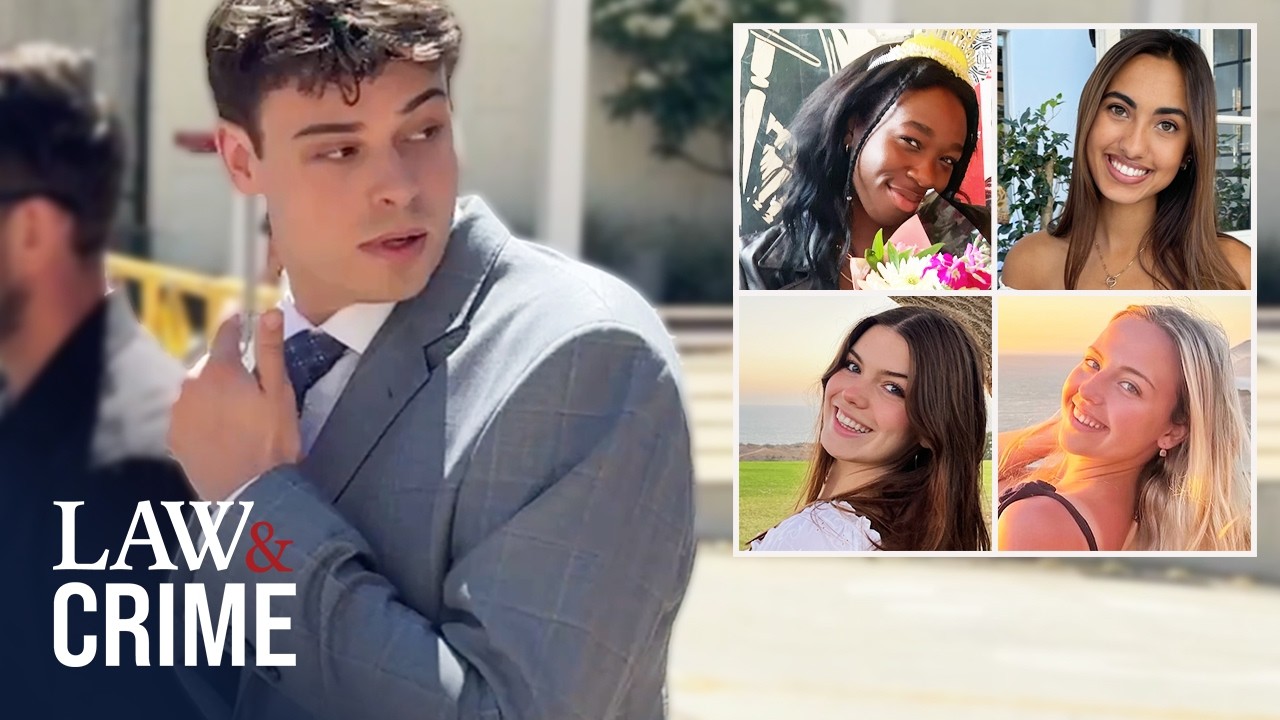
Murder on the PCH? The Explosive Legal Battle Over Fraser Bohm’s Charges
In the realm of criminal law, the line separating a tragic accident from murder is defined by a legal concept known as “implied malice.” This complex standard is now the central battleground in one of California’s most high-profile and heartbreaking legal cases. Fraser Michael Bohm, 24, faces the possibility of decades behind bars following an October 17, 2023, crash on the Pacific Coast Highway (PCH) that claimed the lives of four Pepperdine University students.
https://www.facebook.com/photo/?fbid=1463731522562144&set=a.334066472195327
While the public and the prosecution have swiftly condemned Bohm—who has been dubbed by some in the media as a “rich kid” shielded by wealth—his high-powered defense team is fighting back aggressively. Lead defense attorney Alan Jackson is not just disputing the narrative; he has accused the state of prosecutorial overreach and hiding exculpatory evidence in a desperate bid to make the murder charges stick.
With the trial set for September 8, 2026, the courtroom drama has reached a boiling point. Law&Crime’s Chris Stewart is On the Case, breaking down the explosive claims, the devastating evidence, and the judicial rulings that will shape the fate of Fraser Bohm.
The Prosecution’s Case: 104 MPH and Implied Malice
The facts of the tragedy are universally recognized as horrific. Just before 9:00 p.m., Bohm’s BMW swerved off the westbound lanes of the PCH in Malibu, a notorious stretch of road with a 45 mph speed limit. The vehicle slammed into three parked cars, which were subsequently pushed into four pedestrians standing on the shoulder.
The victims—Niamh Rolston (20), Peyton Stewart (21), Asha Weir (21), and Deslyn Williams (21)—were all seniors at Pepperdine University and Alpha Phi sorority sisters. They were pronounced dead at the scene.
https://www.facebook.com/reel/1029752209658304/?s=single_unit
Prosecutors have charged Bohm with four counts of gross vehicular manslaughter and four counts of second-degree murder. To justify the murder charges, the state relies on the doctrine of implied malice—a conscious disregard for human life. The prosecution alleges that Bohm was traveling up to 104 mph, more than double the legal limit, transforming his vehicle into a lethal weapon. Furthermore, they argue that Bohm subjectively knew the dangers of speeding because a friend of his had previously died in a speed-related collision.
The Defense Strikes Back: Allegations of Hidden Evidence
Bohm’s defense team, led by Alan Jackson—who recently made headlines defending Karen Read in Massachusetts—concedes that Bohm was behind the wheel and caused the fatal accident. They are not fighting the vehicular manslaughter charges. However, they vehemently argue that the state’s murder charges are a gross misapplication of the law.
In a recent motion to dismiss the murder counts, Jackson presented a series of explosive claims aimed at dismantling the prosecution’s narrative of implied malice:
-
The Disputed Phone Data: A key prosecution witness initially testified that Bohm was texting with both thumbs moments before the collision. However, the defense introduced forensic phone data proving that Bohm’s phone had actually been locked with zero user interaction for 15 minutes prior to the crash.
-
The “Deadly Speed” Fallacy: To fight the claim that speeding on the PCH inherently carries a “high degree of probability of death,” Jackson presented a decade of Caltrans and police data. The statistics showed 179 collisions on that specific 0.8-mile stretch of the PCH over 10 years, with zero fatalities other than this specific incident.
-
Contextualizing the Friend’s Death: Jackson also accused the prosecution of withholding a vital police report regarding the prior death of Bohm’s friend. While the state claimed the friend died strictly from speeding, the defense revealed that the primary cause of the friend’s fatal crash was driving under the influence, with a blood alcohol content of 0.12.
-
The Road Rage Theory: Adding another layer of complexity, the defense has previously claimed that Bohm was not joyriding, but rather fleeing from a road-rage incident that forced him to lose control of his vehicle.
Jackson argued to the court that these withheld facts fundamentally compromised the probable cause determination required to elevate the charges to murder. He even compared the severity of the charges to those faced by notorious accused killers like Bryan Kohberger, calling it an unjust parallel.
The Judge’s Ruling: The Case Moves Forward
Despite the defense’s meticulous presentation of data and allegations of prosecutorial misconduct, Los Angeles County Superior Court Judge Thomas Rubinson denied the motion to dismiss.
Judge Rubinson ruled that Bohm’s behavior still met the threshold for a jury to consider implied malice. Addressing the staggering speed of 104 mph in a densely populated 45 mph zone with houses on both sides, the judge stated, “I don’t think anyone could seriously contend that the natural and probable consequences of that conduct… do not involve a high probability of death”.
The ruling ensures that the agonizing debate over intent, negligence, and malice will be decided by a jury. As the Pepperdine community continues to mourn the unimaginable loss of four promising young women who were posthumously awarded their degrees, the legal system prepares for a trial that will test the absolute limits of vehicular homicide law in California.
The devastating reach of reckless behavior and subsequent legal reckoning is further magnified in cases involving catastrophic loss of innocent life, such as the tragic Wilton Manors hit-and-run. Sean Charles Greer was sentenced to 73 years in prison for a horrific collision that shattered three families, claiming the lives of three young children and injuring several others. Driving with a suspended license, Greer sped around a public transit bus, lost control, and drove straight onto the sidewalk where the children were walking before fleeing the scene. Much like other cases where defendants attempt to evade accountability or minimize catastrophic actions, the judiciary delivered an uncompromising message. The lengthy sentence underscores the profound gravity of abandoning victims in the wake of tragedy, ensuring that the perpetrator faces the absolute full weight of the law for shattering multiple families.
Sean Greer Charged In Wilton Manors Crash That Killed Two Children, Injured Four Others
This video provides local news coverage and court details regarding the initial arrest of Sean Charles Greer following the tragic Wilton Manors crash.
Law&Crime’s Chris Stewart On The Case | Video Timestamp Breakdown
-
[00:00 – 02:15] Introduction & The Crash Timeline: Chris Stewart details the tragic night of Oct. 17, 2023, on the Pacific Coast Highway and remembers the four Pepperdine victims.
-
[02:16 – 06:30] Murder vs. Manslaughter: A deep dive into California’s legal definition of “implied malice” and why prosecutors chose to hit Fraser Bohm with second-degree murder charges.
-
[06:31 – 11:45] Alan Jackson’s Explosive Motion: Stewart breaks down the defense’s claims of withheld evidence, analyzing the forensic phone data that contradicts eyewitness testimony about texting.
-
[11:46 – 15:20] The 10-Year Traffic Data: Exploring the Caltrans statistics presented by the defense—179 crashes, zero prior fatalities on that specific stretch of PCH. Does this negate implied malice?
-
[15:21 – 19:10] Judge Rubinson’s Ruling: Analysis of why the judge rejected the defense’s motion to dismiss, focusing on the sheer recklessness of driving 104 mph in a residential 45 mph zone.
-
[19:11 – 23:00] Looking Ahead to the Trial: What to expect on September 8, 2026, and how the alleged “road rage” defense might play out in front of a jury.
Frequently Asked Questions (FAQ)
Q: What exactly is Fraser Bohm charged with?
A: Fraser Michael Bohm is facing four counts of second-degree murder and four counts of vehicular manslaughter with gross negligence.
Q: Who were the victims of the crash?
A: The crash claimed the lives of Niamh Rolston, Peyton Stewart, Asha Weir, and Deslyn Williams. They were all seniors at Pepperdine University and members of the Alpha Phi sorority.
Q: Why is the defense trying to dismiss the murder charges?
A: Defense attorney Alan Jackson argues that the prosecution’s case relies on a misapplication of the law. He claims that speeding alone does not prove “implied malice” (a conscious disregard for human life) and alleges that prosecutors withheld exculpatory evidence, such as locked phone data and context regarding a prior fatal crash involving Bohm’s friend.
Q: Was Fraser Bohm under the influence of alcohol or drugs?
A: No. The defense has emphasized—and the prosecution has not disputed—that Bohm was neither intoxicated nor driving under the influence at the time of the collision.
Q: When will the trial take place?
A: The trial is currently scheduled to begin on September 8, 2026.

