

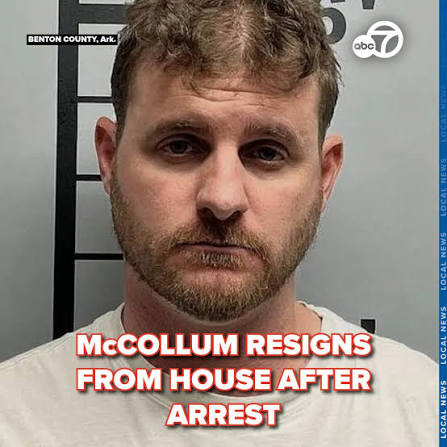
The landscape of Arkansas politics shifted abruptly this week as the state House of Representatives confirmed the resignation of Republican State Representative Austin McCollum. The announcement, made by House Speaker Brian Evans, came only days after McCollum was taken into custody at his Bentonville home following a harrowing series of events that have left the community and his political peers stunned.
For many, McCollum represented a fixture in Benton County politics, having held his seat in the state House since 2017. However, the charges currently levied against him suggest a reality far removed from the halls of legislation. This case serves as a somber reminder that domestic violence does not discriminate by profession, status, or public standing.
The Charges: An Incident of Brutal Violence
According to investigators, the incident took place in the early hours of a Saturday morning. What began as a domestic argument allegedly escalated into a scene of extreme violence. Law enforcement reports indicate that McCollum punched his wife in the face and proceeded to slam her head against the ground.
The severity of the actions led to immediate criminal charges, including:
-
Aggravated Assault: Reflecting the dangerous nature of the physical confrontation.
-
Domestic Battering: A serious charge addressing the bodily harm inflicted during a domestic dispute.
-
False Imprisonment: An additional charge suggesting the victim was unable to freely leave the situation during the assault.
These charges paint a picture of a volatile and dangerous encounter. The legal process will now move forward to determine the extent of these actions in a court of law, but the swift nature of McCollum’s resignation suggests that the evidence gathered at the scene was substantial enough to preclude his continuation in public office.
The public outrage can be viewed in the links below
https://www.facebook.com/therobbieharvey/posts/pfbid02ebeYVRkfyivCqsSCmqkW9yhJaTuS8PzSgDMNEKZnGgtusSVmVxQphNeChwrXjsLxl
facebook.com/reel/1075315634827049/?s=single_unit
https://www.facebook.com/photo/?fbid=122107576479402886&set=a.122097337221402886
Political Consequences and the Speaker’s Announcement
House Speaker Brian Evans confirmed the resignation on Wednesday, effectively ending McCollum’s nearly decade-long tenure in the Arkansas state House. In the world of politics, a resignation under these circumstances is often the only viable path to avoid a prolonged, damaging scandal for a political party.
For the people of Benton County, the vacancy leaves a significant gap in representation. Beyond the political vacuum, the situation forces a conversation about accountability among elected officials. When a lawmaker, who is sworn to uphold the laws of the state, is accused of breaking the most fundamental laws protecting human safety, the breach of public trust is profound.
Domestic Violence: Addressing the Blind Spots
The case of Austin McCollum highlights a broader societal struggle. Domestic violence remains a pervasive issue that often hides behind closed doors, even in the homes of the powerful. By examining this case, it is essential to discuss the resources available and the importance of intervention.
The Cycle of Violence
Domestic violence rarely happens in a vacuum. It often involves a cycle of power, control, and escalation. When an incident reaches the level of physical assault—such as punching or slamming a victim—it signifies that the situation has become life-threatening.
Why Public Discourse Matters
When public figures are arrested for such crimes, it pulls the curtain back on an issue that many victims feel they must suffer in silence. It serves as a reminder that:
-
Safety is paramount: No political career or professional status justifies the abuse of a spouse.
-
Accountability is essential: The legal system must treat these charges with the gravity they deserve, regardless of the suspect’s former title.
-
Support systems exist: For those experiencing domestic violence, there are avenues for escape and protection, even when the perpetrator is a person of influence.
Frequently Asked Questions (FAQ)
1. Who is Austin McCollum?
Austin McCollum was a Republican member of the Arkansas state House of Representatives, having served Benton County since 2017 before resigning in the wake of his arrest.
2. Why did Austin McCollum resign?
McCollum resigned following his arrest at his Bentonville home on charges of domestic battery, aggravated assault, and false imprisonment.
3. What were the specific allegations against him?
Investigators allege that during an argument, McCollum physically assaulted his wife, including punching her in the face and slamming her head against the ground.
4. What happens to his seat in the House?
Following his resignation, the seat for his district will be handled according to Arkansas state law, likely leading to a special election or interim appointment processes to ensure the citizens of Benton County remain represented.
5. Where can victims of domestic violence find help?

If you or someone you know is experiencing domestic violence, help is available. Resources such as the National Domestic Violence Hotline (1-800-799-SAFE) provide confidential support, safety planning, and resources for those in danger.
When Personal Scandals Meet Capitol Hill: The Max Miller Investigation
As congressional oversight and personal legal battles collide, public figures frequently find themselves weathering intense institutional and media scrutiny. A parallel political storm emerged surrounding U.S. Representative Max Miller of Ohio, whose acrimonious custody and divorce proceedings involving his ex-wife, Emily Moreno (daughter of U.S. Senator Bernie Moreno), escalated into a full-scale federal inquiry. Following severe accusations encompassing domestic abuse, child endangerment claims, and the inadvertent online exposure of sensitive legal files and family documents by legal counsel, the House Ethics Committee formally launched an investigation into whether the lawmaker violated official codes of conduct. The high-profile fallout—marked by fierce public denials, counter-allegations, and mounting calls for resignation from within his own party—highlights the volatile intersection of personal conduct, digital document safety, and congressional accountability.
Read that related article here: Inside the Max Miller Investigation: Domestic Abuse Allegations, Child Abuse Files, and Leaked Photos
Moving Forward
The resignation of Austin McCollum is the first step in a long legal process. While the political repercussions are clear, the human impact—on his family and the victim—is the true weight of this story. As the judicial system proceeds with the case, the community remains focused on justice and the essential requirement of safety within the home.
In the wake of this news, Benton County faces a transition, but the priority must remain on the healing of the victim and the continued necessity of holding all individuals, regardless of their position, to the standards of law and basic human decency.

