

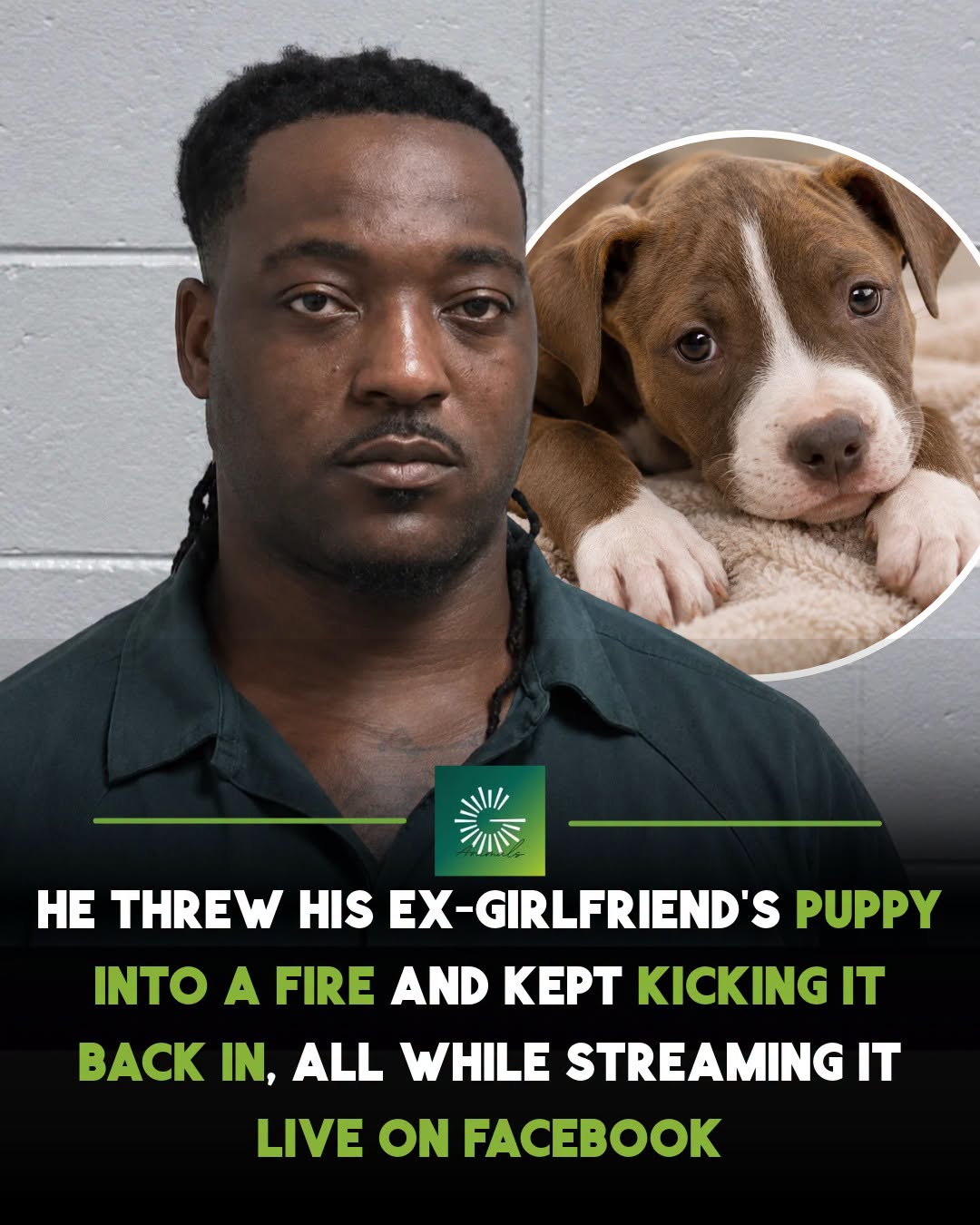
Orangeburg Man Sentenced to 5 Years in Federal Prison for Burning Puppy Alive in South Carolina’s First PACT Act Case
A 30-year-old South Carolina man will spend the next five years behind federal bars without the possibility of parole after pleading guilty to burning a puppy alive in a horrific video broadcast on Facebook Live. The sentencing marks a major legal milestone as the first successful prosecution in the District of South Carolina under the federal Preventing Animal Cruelty and Torture Act (PACT Act).
U.S. Attorney Bryan P. Stirling’s office formally announced the sentence for Desmond Levon Brown of Orangeburg on Thursday, October 15, 2026. U.S. District Judge Mary Geiger Lewis ordered Brown to serve 60 months in federal prison—the statutory maximum under the federal statute—followed by three years of court-ordered supervised release, during which he is strictly barred from owning or possessing any animal.
“Brown’s actions were cruel, heinous and depraved,” said U.S. Attorney Bryan P. Stirling. “The U.S. Attorney’s Office is committed to working with law enforcement to investigate and prosecute animal cruelty in South Carolina.”

throw him in a fire, let’s just hope he get shanked
https://www.facebook.com/DavidJHarrisJr/posts/pfbid02mi5o8gdMgevajff9yeF3urbb86DDgJTLbfovuE6QSoDrYMiwgeiSKG8LadMqb2prl
hope they burn him alive, I hope someone kills the fucking coward in prison,
https://www.facebook.com/nationalanimalnews/posts/pfbid0339PTN9wkTNf5BGotBdBQoJZi7N4YHEAKzQPHnWP1YanQBVf9NMuh578uV6JCwhgRlhttps://www.facebook.com/perravidafb/posts/pfbid02Tvp3sf2TFU4tsYBPQvPsr13dXU8x2yyEqq3ii5g53jLpX8i9crLotp8Xz9gABtpClhttps://www.facebook.com/photo?fbid=122133557139057326&set=a.122104202661057326
https://www.facebook.com/photo/?fbid=1522664089311765&set=a.545515100360007
https://www.facebook.com/photo/?fbid=122173391174958311&set=a.122146220468958311
https://www.facebook.com/photo/?fbid=1658317715666035&set=a.277470147084139
https://www.facebook.com/photo?fbid=1658317715666035&set=a.277470147084139
https://www.facebook.com/photo/?fbid=122124833655422068&set=a.122104138953422068https://www.facebook.com/photo/?fbid=29665698299721112&set=a.158995350818131
https://www.facebook.com/photo/?fbid=122124833655422068&set=a.122104138953422068
https://www.facebook.com/photo?fbid=1642299177348255&set=a.545515100360007
https://www.facebook.com/photo/?fbid=122171594402662714&set=a.122107202240662714
https://www.instagram.com/p/DeuiONsF_xw/
Inside the Investigation: How the Facebook Live Video Exposed the Crime
The federal investigation began on December 18, 2024, when alarmed citizens contacted the Orangeburg County Sheriff’s Office to report a disturbing livestream circulating on Facebook Live. According to federal court filings and law enforcement statements, the footage showed Brown deliberately throwing a defenseless puppy into an active fire and kicking the animal back into the flames when it desperately tried to escape.
Deputies responded to the scene in Orangeburg County and subsequently located the deceased puppy in a wooded area near where the fire had been set. Following his arrest, investigators also obtained recorded jailhouse phone calls in which Brown admitted to his role in the incident.

Because the crime involved the interstate transmission of an animal cruelty depiction via a major social media platform—a core jurisdictional trigger under federal law—the Orangeburg County Sheriff’s Office partnered with the Bureau of Alcohol, Tobacco, Firearms and Explosives (ATF) to build a federal criminal case. Assistant U.S. Attorney Elle E. Klein prosecuted the case on behalf of the government, securing Brown’s guilty plea in April 2026 ahead of his October sentencing.
Orangeburg County Sheriff Leroy Ravenell emphasized the moral weight of the punishment following the hearing, stating, “Hopefully, this sentence will give Brown enough time to realize what he has done, and it weighs on his heart for the rest of his days.”

Click image below for a chance to win 2k a week for 1 week

What Is the Preventing Animal Cruelty and Torture Act (PACT Act)?
For years, federal prosecutors faced steep legal hurdles when pursuing severe animal abuse cases unless the offenders were specifically selling or distributing commercial “crush videos.” That changed in November 2019, when Congress passed and signed into law the Preventing Animal Cruelty and Torture Act (18 U.S.C. § 48)—closing a longstanding loophole in federal criminal statutes.
Under the PACT Act, it is a federal felony for any person to purposely engage in “animal crushing” when the conduct affects interstate or foreign commerce (including filming, livestreaming, or transmitting the abuse over the internet) or occurs on federal property.

How Federal Law Defines “Animal Crushing”
Despite the name, “animal crushing” under 18 U.S.C. § 48 covers a wide spectrum of intentional, extreme physical torture inflicted on living non-human mammals, birds, reptiles, or amphibians. Specifically, the statute criminalizes intentionally subjecting an animal to:
-
Burning or scalding
-
Crushing or stomping
-
Drowning or suffocating
-
Impaling or subjecting the animal to other forms of serious bodily injury
Prior to the PACT Act, perpetrators of extreme animal torture in South Carolina were prosecuted solely under state-level animal cruelty statutes, which often carried shorter sentences or broader parole eligibility. By bringing Brown’s case into federal court, prosecutors ensured he faced strict federal sentencing guidelines and zero eligibility for parole.
Why Federal Prosecution Matters in Severe Animal Cruelty Cases
Law enforcement agencies and forensic psychologists increasingly view extreme animal torture not merely as an isolated offense against a companion animal, but as a critical warning sign of broader violent behavior. Decades of criminological research—including studies tracked by the FBI’s National Incident-Based Reporting System (NIBRS)—demonstrate a strong correlation between intentional animal cruelty and interpersonal violence, including domestic abuse, child abuse, and aggravated assault.
Bringing federal resources from agencies like the ATF and the Department of Justice into local investigations provides three major enforcement advantages:
-
No Parole in the Federal System: Unlike state prison sentences where inmates may become eligible for early parole after serving a fraction of their term, federal inmates must serve at least 85% of their sentence—meaning Desmond Levon Brown will spend nearly the entirety of his five-year term in federal custody.
-
Interstate Digital Jurisdiction: When offenders use platforms like Facebook Live, Instagram, TikTok, or encrypted messaging apps to broadcast abuse, federal prosecutors have clear statutory authority to subpoena digital records, preserve livestream metadata, and file felony charges regardless of state boundaries.
-
Lifetime Accountability and Supervision: Following his 60-month prison term, Brown will remain under federal probation supervision for three years, where possessing a pet or violating court-ordered conditions can immediately send him back to prison.
How to Report Suspected Animal Cruelty or Online Abuse
Federal and local officials emphasized after Brown’s sentencing that public vigilance was instrumental in bringing the case to light. Citizens who witness animal abuse in person or encounter videos depicting animal torture online are urged to take immediate action:
-
Contact Local Law Enforcement: Call your local sheriff’s office or municipal police department immediately if an animal is in imminent danger.
-
Preserve Digital Evidence: If you see animal cruelty on social media or a livestream, record the username, profile URL, timestamp, and platform details before the content is deleted, and report it both to the platform and law enforcement.
-
Report to Federal Authorities: Suspected federal animal welfare violations, dogfighting rings, or online animal torture depictions can be reported directly to the U.S. Department of Justice, the FBI, or the U.S. Department of Agriculture (USDA).
Frequently Asked Questions (FAQ)
Who was sentenced in South Carolina’s first PACT Act case?
Desmond Levon Brown, 30, of Orangeburg, South Carolina, was sentenced on October 15, 2026, to five years in federal prison after pleading guilty to animal crushing for throwing a puppy into a fire and broadcasting the act on Facebook Live in December 2024.
What is the maximum penalty under the federal PACT Act?
Violating the Preventing Animal Cruelty and Torture Act (18 U.S.C. § 48) carries a maximum penalty of up to seven years in federal prison, fines, and supervised release. In Brown’s case, the court imposed a 60-month (five-year) federal prison sentence followed by three years of supervised release.
Is Desmond Levon Brown eligible for parole?
No. Parole was abolished in the federal criminal justice system under the Sentencing Reform Act of 1984. Brown must serve at least 85% of his five-year sentence (roughly four years and three months) before being released to federal supervision.
Will Brown be allowed to own pets after leaving prison?
Under the conditions of his three-year federal supervised release ordered by U.S. District Judge Mary Geiger Lewis, Brown is strictly prohibited from owning or possessing any animal. Violating this condition constitutes a federal supervision violation and can result in additional prison time.
Why did the ATF investigate an animal cruelty case?
The Bureau of Alcohol, Tobacco, Firearms and Explosives (ATF) frequently partners with local sheriff’s offices on cases involving arson, intentional fire-setting, and explosive or incendiary hazards, making the agency a key investigative partner alongside the Orangeburg County Sheriff’s Office.
Orangeburg man sentenced for burning puppy
This news report summarizes the federal sentencing of Desmond Levon Brown and highlights the jail phone admissions and Facebook Live evidence that led to South Carolina’s first PACT Act conviction.

. Read the full legal breakdown, case details, and FAQ.)