

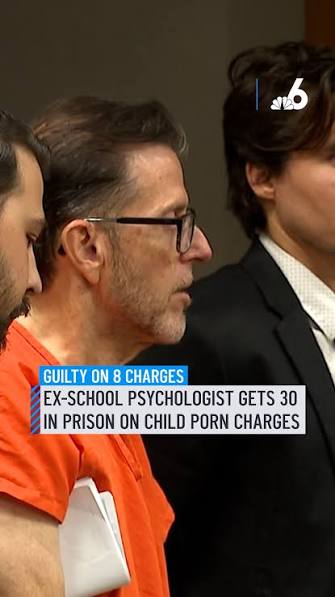
When parents entrust their children to the public education system, they assume that school mental health professionals serve as a frontline defense against harm. That sense of trust was shattered in South Florida following the federal sentencing of a former school psychologist whose clandestine digital activity led to three decades behind bars.
Christian Turner, a former psychologist employed by Miami-Dade County Public Schools, was sentenced to 30 years in federal prison following an extensive law enforcement investigation into the possession and storage of child sexual abuse material (CSAM). The case highlights both the severe breach of professional trust within educational institutions and the role that digital intelligence plays in modern law enforcement operations.
From the Classroom to the Courtroom: The Arrest of Christian Turner
The investigation into Turner began in August 2024, when federal and local law enforcement agencies received a critical cyber tip originating from Meta, the parent company of Instagram. According to court records and investigative reports, automated digital monitoring systems on the platform flagged an account connected to Turner after illegal media involving minors was uploaded.
Upon receiving the CyberTipline report from the National Center for Missing & Exploited Children (NCMEC), specialized Internet Crimes Against Children (ICAC) investigators executed search warrants targeting Turner’s personal devices and digital accounts.
What authorities uncovered on his mobile phone confirmed their worst suspicions. Search warrants revealed multiple video files containing explicit material involving children estimated to be between the ages of eight and 16 years old. Further forensic examination of the device’s file system demonstrated that some of the illicit material had remained stored on his phone for over two years, indicating prolonged and deliberate possession rather than incidental exposure.
https://www.facebook.com/reel/1121453980829893
https://www.facebook.com/photo/?fbid=1118112524122329&set=a.267882085812048
https://www.facebook.com/reel/1766243307944619
The Role of Automated Cyber Tips in Modern Law Enforcement
This case highlights the reliance on technology-driven detection mechanisms to identify online child exploitation. Social media platforms and cloud storage providers use advanced hash-matching technology—such as PhotoDNA—to scan uploaded media against databases of known illicit files.
When a match or suspicious upload occurs:
-
Automated Detection: Platform algorithms flag the media and restrict the user’s account access.
-
NCMEC Referral: The provider submits a CyberTipline report detailing IP addresses, account identifiers, metadata, and timestamps to the National Center for Missing & Exploited Children.
-
Law Enforcement Dispatch: NCMEC routes the report to local ICAC task forces and federal agencies, such as Homeland Security Investigations (HSI) or the FBI, based on geographical jurisdiction.
-
Forensic Execution: Investigators obtain subpoenas for subscriber details and execute search warrants on physical premises to seize electronic hardware for deep digital forensics.
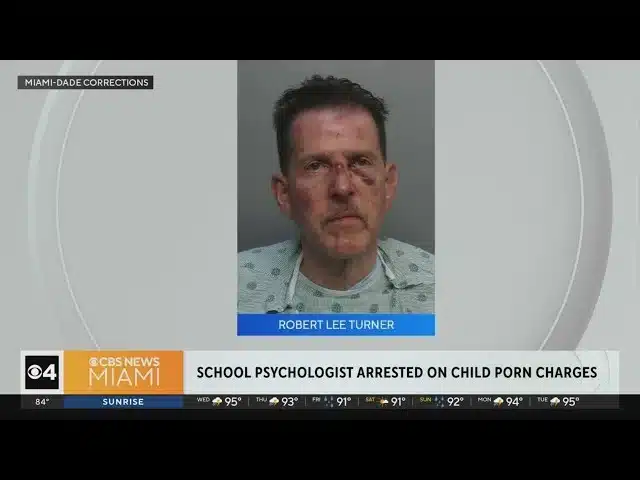
In Turner’s case, the seamless handoff between Instagram’s threat detection protocols and local law enforcement enabled investigators to build an undeniable forensic record that led directly to his arrest and conviction.
Institutional Fallout and Student Safeguards
The conviction of an educational psychologist raises serious concerns regarding internal oversight within public school districts. As a school psychologist, Turner held a position of authority, giving him direct access to vulnerable students, confidential records, and specialized behavioral programs.
Miami-Dade County Public Schools—the third-largest school district in the United States—maintains strict background screening policies for all instructional and support personnel. However, standard background checks primarily identify prior criminal convictions or pending charges; they cannot predict unrecorded illicit behavior occurring on personal, encrypted, or private digital devices.
Following high-profile cases involving school personnel, educational administrative bodies typically undergo comprehensive audits of their staff oversight protocols. District administrators routinely emphasize the following safety measures:
-
Mandatory Reporting Training: Annual re-certification for all educational personnel regarding indicators of abuse, neglect, and exploitation.
-
Strict Digital Device Policies: Firewalls and monitoring software applied to all district-issued hardware, network access points, and student database portals.
-
Student Counseling Support: Deploying crisis intervention teams and specialized counselors to affected schools to support families and address community concerns.
Understanding the 30-Year Federal Sentence
Federal judges evaluate several aggravating factors when determining sentences in child exploitation cases. Under federal sentencing guidelines, mandatory minimums and statutory maximums are heavily influenced by the volume of material, the age of the victims depicted, the duration of possession, and the defendant’s position of trust.
In Turner’s case, several elements contributed to the severe 30-year prison sentence:
-
Position of Trust: Defendants who work in roles directly serving children—such as teachers, pediatricians, coaches, or psychologists—face significant sentencing enhancements due to the societal duty tied to their professional credentials.
-
Age of Victims: The presence of media depicting children as young as eight years old triggers mandatory sentencing enhancements under federal statutes.
-
Duration of Possession: Forensic proof showing that illegal content was retained on personal devices for more than two years demonstrated intent, habituation, and active maintenance of the material.
A 30-year federal sentence carries no possibility of parole, as the federal prison system abolished parole for offenses committed after November 1987. Inmates must serve at least 85% of their sentence assuming maximum credit for good behavior. Upon release, Turner will be subject to strict conditions of lifetime supervised release and mandatory registration as a sex offender.
Parallel Reckonings: The Case of Actor and Filmmaker Noel Clarke
The abuse of authority within trusted institutions is not limited to educational systems; it extends heavily into high-profile entertainment and public leadership roles. Parallel legal developments in the UK highlight similar systemic reckonings involving public figures who hold influence over others. Actor and filmmaker Noel Clarke—best known for writing and starring in Kidulthood and his recurring role in Doctor Who—was formally charged by the Crown Prosecution Service (CPS) with six sexual offences. The charges, which stem from allegations made by five women regarding incidents between 2007 and 2016, include two counts of sexual assault, three counts of voyeurism, and one count of exposure. Much like Turner’s position as a school psychologist provided a shield of authority, figures in media and arts often wield professional influence that delays formal exposure. As both cases proceed through their respective judicial systems, they underscore a broader global shift toward enforcing criminal accountability regardless of a perpetrator’s community standing, credentials, or public profile.
Frequently Asked Questions (FAQ)
What triggered the initial investigation into Christian Turner?
The investigation was initiated after Instagram’s parent company, Meta, issued a CyberTipline report to the National Center for Missing & Exploited Children (NCMEC) regarding child sexual abuse material uploaded through an account linked to Turner.
How old were the victims depicted in the media found on Turner’s device?
Digital forensics revealed that the media seized from Turner’s phone depicted children ranging between eight and 16 years of age.
Did the crimes occur on Miami-Dade Public Schools property?
Investigative reports focused on media found on Turner’s personal mobile phone and accounts. Authorities routinely conduct forensic sweeps on district-issued devices whenever a school employee is arrested under these circumstances.
Is parole an option for a 30-year federal prison sentence?
No. There is no parole in the federal court system. Defendants sentenced to federal prison must serve a minimum of 85% of their total sentence before becoming eligible for supervised release.
Summary
The 30-year sentencing of former Miami-Dade Schools psychologist Christian Turner serves as a stark reminder of the continuous effort required to combat child exploitation. Through tech-driven reporting pipelines like NCMEC CyberTiplines and decisive federal law enforcement action, individuals who collect or distribute illicit material are increasingly brought to justice regardless of their professional standing or community stature.

