

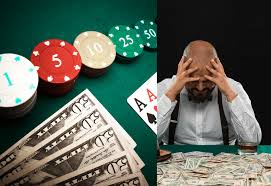
For many, a Saturday afternoon spent wagering on a football match or a night at the casino is viewed as harmless recreation—a hobby akin to watching a film or attending a sporting event. However, beneath the neon lights and the sleek interfaces of mobile betting apps lies a sophisticated psychological trap. Gambling is not merely a game of chance or a risky attempt to generate wealth; it is a high-stakes exploitation of the human brain’s reward system.
In the modern era, gambling has been engineered to hijack dopamine receptors, creating a neurological loop as powerful and destructive as chemical substance abuse. According to Professor David Nutt, a leading global authority on addiction, “Gambling addiction is not a failure of will. It is a brain disorder, which is preyed upon by the gambling industry.” Once an individual crosses the threshold into addiction, the brain’s neural pathways are altered so fundamentally that “stopping” requires more than just resolve—it requires a total recalibration of the biological self.
Defining the Trap: The Mechanics of the Wager
At its core, gambling is the act of risking an asset of value—almost always currency—on an event with an uncertain outcome, driven by the hope of securing a larger reward. While the mathematical reality is always weighted in favor of “the house,” the human brain is easily seduced by the potential for a windfall.
Consider the “James” scenario: A bettor places $100 on a specific football score with the potential to win $5,000. To the rational mind, the 50:1 odds represent a high probability of loss. However, the addicted brain ignores the $100 deficit and focuses entirely on the $5,000 gain. This “attentional bias” is the first step toward a lifelong cycle of chasing losses.
:max_bytes(150000):strip_icc():focal(573x0:575x2)/Fontainebleau-las-vegas-winning-machine-120325-fa48fee0e85a4052a5c00b7f1b204102.jpg)
-
Modern Methods: The Digitization of Addiction
In the past, gambling required physical presence at a racetrack or a casino. Today, the industry has migrated into the pockets of billions.
-
Casino Ecosystems: Casinos are masterclasses in environmental psychology. The absence of clocks, the lack of windows, the infusion of oxygen, and the constant sensory stimulation of bells and lights are designed to induce a “dissociative state” where time and money lose their meaning.
-
Electronic Gaming Machines (The “Pokies”): Statistics indicate that slot machines are the most addictive form of gambling. Their high-speed nature and “near-miss” programming ensure that the brain stays in a state of constant arousal.
-
Sports Betting: The rise of mobile apps has turned every sporting event into a 24/7 casino. Many bettors believe that their “expertise” in a sport gives them an edge, but this is an “illusion of control.” No amount of statistical analysis can account for the inherent randomness of athletic performance.
-
The “New Frontiers”: Crypto-casinos and speculative day-trading (specifically “meme coins”) have introduced younger demographics to gambling under the guise of “investing.” These high-volatility environments trigger the same addictive pathways as a traditional roulette wheel.
The Neurobiology of the “Hit”: Gambling vs. Narcotics
The reason the gambling and illegal drug industries are both multi-billion dollar titans is that they occupy the same real estate in the human brain. Chronic gambling activates the ventral striatum and the prefrontal cortex in ways nearly identical to the consumption of cocaine or MDMA.
A particularly insidious feature of gambling is the “Near-Miss Effect.” When a slot machine shows two out of three matching symbols, the brain does not register this as a “loss.” Instead, it triggers a dopamine spike almost as large as a “win.” This trickery keeps the gambler entrained, convinced that the big payout is “just around the corner.”
This leads to the Gambler’s Fallacy: the cognitive distortion that if an event (like a loss) happens more frequently than normal during a given period, it will happen less frequently in the future. The brain falsely believes it is “due” for a win, leading the addict to liquidate assets to fund what they believe is a statistical certainty.
-
The Financial Toll: A Life in the Red
The financial consequences of gambling addiction are rarely limited to the money in one’s wallet. They ripple outward, destroying the “economic floor” of an individual’s life.
-
Compounding Debt: The average gambling addict carries between $40,000 and $70,000 in debt, with a median figure of $65,800. Much of this is high-interest credit card debt or “payday loans” used to chase losses.
-
Asset Liquidation: In advanced stages of addiction, individuals often experience “foreclosure” on homes, repossession of vehicles, and the total depletion of retirement savings (401ks or superannuation).
-
The Productivity Drain: Beyond the cash lost, the opportunity cost is staggering. Thousands of hours are spent in a state of “brain fog” or anxiety, leading to poor work performance and, eventually, job loss.
The Societal and Personal Fallout
The devastation of gambling is not a solo experience; it is a “contagion” that affects families and communities. It is scientifically proven that gambling disorder is heavily co-morbid with:
-
Substance Abuse: The “highs” and “lows” of betting often lead to self-medication with alcohol or stimulants.
-
Psychological Erosion: Rates of depression and chronic anxiety are significantly higher in gamblers, often leading to a “vicious cycle” where the individual gambles to escape the sadness caused by previous gambling losses.
-
Legal Jeopardy: When legitimate funds vanish, many resort to “white-collar” or “blue-collar” crimes—theft, embezzlement, or fraud—to maintain their habit, leading to incarceration.
T
Pathways to Recovery
If you recognize these patterns in yourself or a loved one, it is imperative to understand that recovery is a medical and psychological process, not just a matter of “trying harder.”
Global Support Resources:
-
United States: Call or text 1-800-GAMBLER (1-800-426-2537) for the National Council on Problem Gambling.
-
United Kingdom: Contact GamCare at 0808 8020 133.
-
Australia/Global: Seek out local chapters of Gamblers Anonymous (GA) or specialized cognitive-behavioral therapy (CBT) designed to “rewire” the reward system.
Final Perspective
Gambling is a road that leads to a destination of diminishing returns. The “Physical Armor” you build through fitness and the “Financial Capital” you build through work are the only true protections against the volatility of life. Don’t trade your future for a hit of dopamine that will never be enough.
Expert Analysis: Is the “Illusion of Control” keeping you in the game? Let us know your thoughts on how the industry targets vulnerable demographics in the comments below.

