

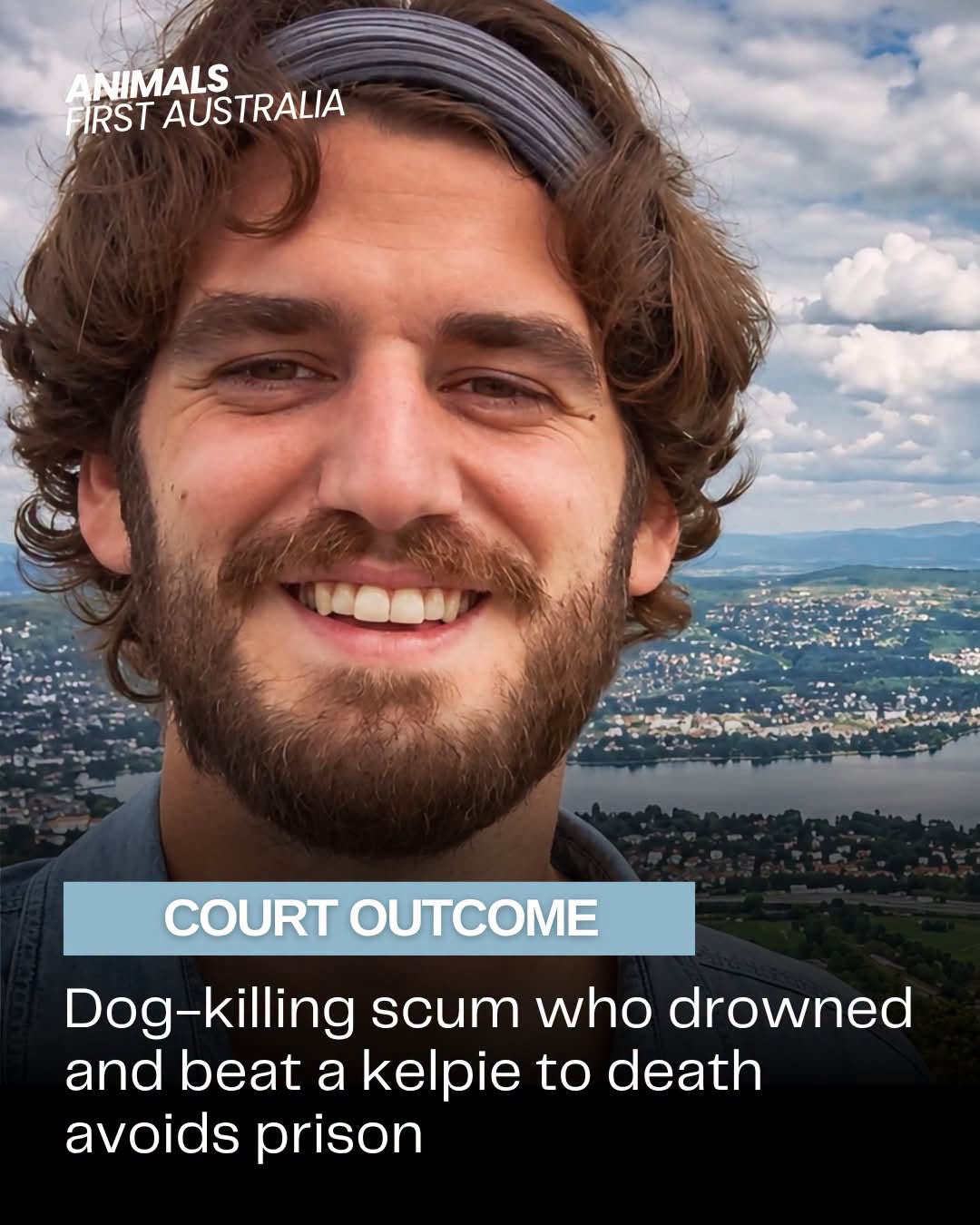
Warning: This article contains graphic details of extreme animal cruelty that readers may find distressing.
A 31-year-old British backpacker has avoided immediate imprisonment after being sentenced for what legal authorities and police prosecutors described as one of the most severe and harrowing cases of animal cruelty ever processed in Western Australia’s Goldfields region.
Bradley Gavin Knoesen stood before Kalgoorlie Magistrates Court following an agonizing incident in the suburb of Hannans that resulted in the death of a one-year-old pet kelpie named Faith. Despite police prosecutors emphasizing the prolonged, horrific nature of the violence, Magistrate Donna Webb delivered a 12-month suspended prison sentence.
Because Knoesen spent over a month remanded in custody at Kalgoorlie following his late-September arrest, his release from prison triggers immediate scrutiny regarding his visa status, with Federal authorities expected to deport the UK national under character provisions of the Migration Act.
Click image below for a chance to win 2k a week for 1 week

https://www.facebook.com/photo/?fbid=1126417936819847&set=a.126858983442419
https://www.facebook.com/photo/?fbid=29508567602081346&set=a.461320287232797
https://www.facebook.com/photo?fbid=1126417936819847&set=a.126858983442419

Details of the Incident in Kalgoorlie-Boulder
The court heard terrifying evidence detailing the events of September 23. Police prosecutors outlined that Knoesen, who arrived in Australia on a working holiday visa earlier in the year and held a FIFO shift role in the Goldfields area, had consumed an excessive amount of alcohol at a residential property in Hannans.
According to police facts presented during hearings:
-
Initial Submersion: Knoesen seized the young kelpie and carried her to an outdoor swimming pool, submerging her underwater repeatedly. Although another individual at the property attempted to intervene and resuscitate the struggling dog, Knoesen resumed the attack.
-
Physical Assault: The violent episode escalated when Knoesen used a heavy glass bottle to strike the animal across the head, inflicting catastrophic injuries.
-
Disposal of the Body: Knoesen subsequently attached the deceased kelpie to his motorcycle and dragged the body through bushland near the Kalgoorlie Golf Course.
Police officers tracked the motorcycle trails through the terrain, discovering the animal’s remains and taking Knoesen into custody days later.
Court Proceedings and the Legal Defense Strategy
During initial bail applications, police prosecutors strongly opposed Knoesen’s release, arguing that the offender posed a significant flight risk with virtually no permanent ties to Western Australia. Magistrate Donna Webb initially refused bail, labeling the accused actions “hideous” and noting that immediate, lengthy incarceration was a probable outcome given the severity of the offense.
Throughout the proceedings, Knoesen’s defense team presented arguments aimed at mitigating his sentence:
-
Alcohol-Induced Impairment: Defense lawyers pointed out that Knoesen was severely intoxicated at the time of the event, claiming he had little recollection of the horrific escalation.
-
Out of Character Claims: Counsel asserted the act was “completely out of character” for Knoesen, attempting to paint the 31-year-old as a lifelong “dog lover” whose behavior broke down under extreme alcohol consumption.
-
Time Already Served: Having remained in custody since September 28, Knoesen had spent significant time behind bars prior to final sentencing.
Magistrate Webb ultimately handed down a 12-month term of imprisonment, fully suspended.
Public Backlash and Animal Protection Concerns in Western Australia
The decision to grant a suspended sentence to an individual convicted of an exceptionally violent animal killing sparked instant outrage across local Western Australian communities, pet advocacy groups, and social platforms.
Critics have voiced deep frustration with the application of Western Australia’s Animal Welfare Act 2002, arguing that despite maximum statutory penalties allowing up to 5 years imprisonment and fines reaching $50,000 for aggravated cruelty, judges and magistrates rarely issue full custodial terms.
Community members argue that suspended sentences fail to offer a sufficient deterrent to perpetrators of domestic animal violence. Legal commentators, however, note that a 12-month suspended sentence carries automatic, life-altering administrative consequences for foreign nationals in Australia.
Visa Cancellation and Mandatory Deportation Framework
While Knoesen avoids spending additional months inside an Australian state correctional facility, his legal troubles inside the country are effectively at an end due to federal immigration frameworks:
-
Section 501 Character Test: Under Section 501 of the Australian Migration Act 1958, any temporary visa holder who receives a custodial sentence of 12 months or more—even if that sentence is suspended—fails the mandatory character test.
-
Australian Border Force Intervention: The Department of Home Affairs routinely revokes temporary working visas under these mandatory threshold rules.
-
Deportation Proceedings: Knoesen is expected to be transferred straight from court oversight into immigration detention pending formal deportation back to the United Kingdom. Once deported under character provisions, he faces a permanent ban from re-entering Australia.
Legal Precedents and Judicial Inconsistency in WA
The decision to suspend Knoesen’s sentence highlights growing scrutiny over judicial inconsistency when applying Western Australia’s Animal Welfare Act 2002. Legal comparisons are frequently drawn to severe historical cases in the state, such as Terry Thurling, Man Who Beat Dog with Golf Club So Severely It Had to Be Put Down Jailed 10 Months. In that sentencing benchmark, judicial authorities demonstrated a willingness to impose immediate, un-suspended custodial terms for severe domestic animal abuse, noting under oath:
“The community expects the courts to denounce this type of horrific violence against defenceless animals with immediate terms of imprisonment that reflect genuine deterrence.”
The contrast between Thurling’s 10-month immediate jail term for weaponized animal assault and Knoesen’s fully suspended 12-month sentence for a prolonged multi-stage attack has reignited debate among legal commentators. Critics contend that allowing severe offenders like Knoesen to avoid serving dedicated prison time undermines established judicial precedents, sending mixed signals about how Western Australian courts measure animal suffering and community deterrence.
Frequently Asked Questions (FAQ)
What was Bradley Gavin Knoesen charged with?
He was charged with animal cruelty offenses under Western Australia’s Animal Welfare Act 2002 following the violent death of a one-year-old kelpie named Faith in Kalgoorlie.
Why did Bradley Gavin Knoesen avoid staying in prison?
The court imposed a 12-month prison sentence but chose to suspend it entirely. Factors such as his lack of prior criminal record, time spent in custody on remand since late September, and his defense’s submission regarding alcohol impairment influenced the magistrate’s decision.
Will Bradley Gavin Knoesen be deported from Australia?
Yes. Receiving a 12-month suspended prison sentence triggers automatic character review under Australia’s Migration Act, making deportation back to the UK the standard administrative outcome for temporary visa holders.
Where did the incident take place?
The crime occurred at a residential property in Hannans, a suburb of Kalgoorlie-Boulder in Western Australia’s Goldfields region.

