

Introduction: The Architect of Modern Stardom
In the pantheon of global sports icons, few figures have fundamentally altered the DNA of their industry as rapidly as Conor “The Notorious” McGregor. To view McGregor simply as a cage fighter is to miss the larger cultural narrative. He arrived at a time when Mixed Martial Arts (MMA) was transitioning from a niche subculture into a mainstream powerhouse, and he acted as the primary catalyst for that transformation.
McGregor is a study in contradictions: loud yet calculated, brash yet disciplined, and controversial yet undeniably effective. This article examines the mechanics of his meteoric rise, the tactical innovations he brought to the Octagon, and the business brilliance that turned a plumber from Dublin into a Forbes-listed titan.
1. The Genesis: The Crumlin Roots and Cage Warriors Foundation
The foundation of the McGregor legend was built far from the bright lights of Las Vegas. Born in Crumlin, Dublin, McGregor’s athletic journey began on the mats of Crumlin Boxing Club at age 12. This early immersion in “The Sweet Science” provided the bedrock for his future success—a refined, piston-like left hand that would eventually become the most feared weapon in the UFC.
The Professional Pivot
After making his amateur MMA debut in 2007, McGregor turned professional in 2008. His early career in the European circuit, specifically Cage Warriors, served as a proof-of-concept for his “Mystic Mac” persona.
- The Dual-Champ Milestone: Long before he did it in the UFC, McGregor became a simultaneous two-weight champion in Cage Warriors (Featherweight and Lightweight).
- The Call to the Big Leagues: This feat caught the attention of UFC President Dana White. When White visited Dublin to receive an award, the local fans didn’t talk about established veterans; they talked about a kid from Dublin who was “doing the unthinkable.”
2. The UFC Ascent: A Masterclass in Psychological Warfare
McGregor’s UFC debut in 2013 against Marcus Brimage was more than a fight; it was a coronation. Within 67 seconds, he demonstrated a level of striking fluidity that the featherweight division had never seen. However, it was his post-fight interview—proclaiming “Dana, 60 G’s baby!”—that signaled the arrival of a marketing genius.
Breaking the “Pound-for-Pound” King
The defining moment of McGregor’s early career was his pursuit of Jose Aldo. Aldo had been the undisputed featherweight king for a decade, a terrifying force who seemed invincible. McGregor didn’t just train to beat Aldo; he spent a year dismantling Aldo’s composure.
- The 13-Second Shockwave: At UFC 194, the world stood still. McGregor’s prediction of a first-round knockout came true in just 13 seconds. It remains the fastest finish in UFC title fight history.
- Tactical Analysis: The knockout was a result of McGregor’s “pull-counter”—a boxing maneuver where he baited Aldo into a lunging hook, stepped back inches, and delivered a precise left cross. This moment transitioned McGregor from a “hype train” into a legitimate sporting deity.
3. The “Champ Champ” Era: Redefining the Impossible
Greatness is often defined by the risks one is willing to take. After conquering the 145-pound division, McGregor refused to play it safe. His rivalry with Nate Diaz—though initially a loss—showed his grit, but his performance at UFC 205 against Eddie Alvarez was his magnum opus.
The Flawless Performance at Madison Square Garden
In November 2016, McGregor headlined the UFC’s first-ever event at the historic Madison Square Garden. Facing Eddie Alvarez for the Lightweight title, McGregor delivered what many analysts call the most “flawless” performance in MMA history.
- The Four-Punch Combination: McGregor’s ability to land four distinct strikes in a single sequence while his opponent was mid-air remains a highlight-reel staple.
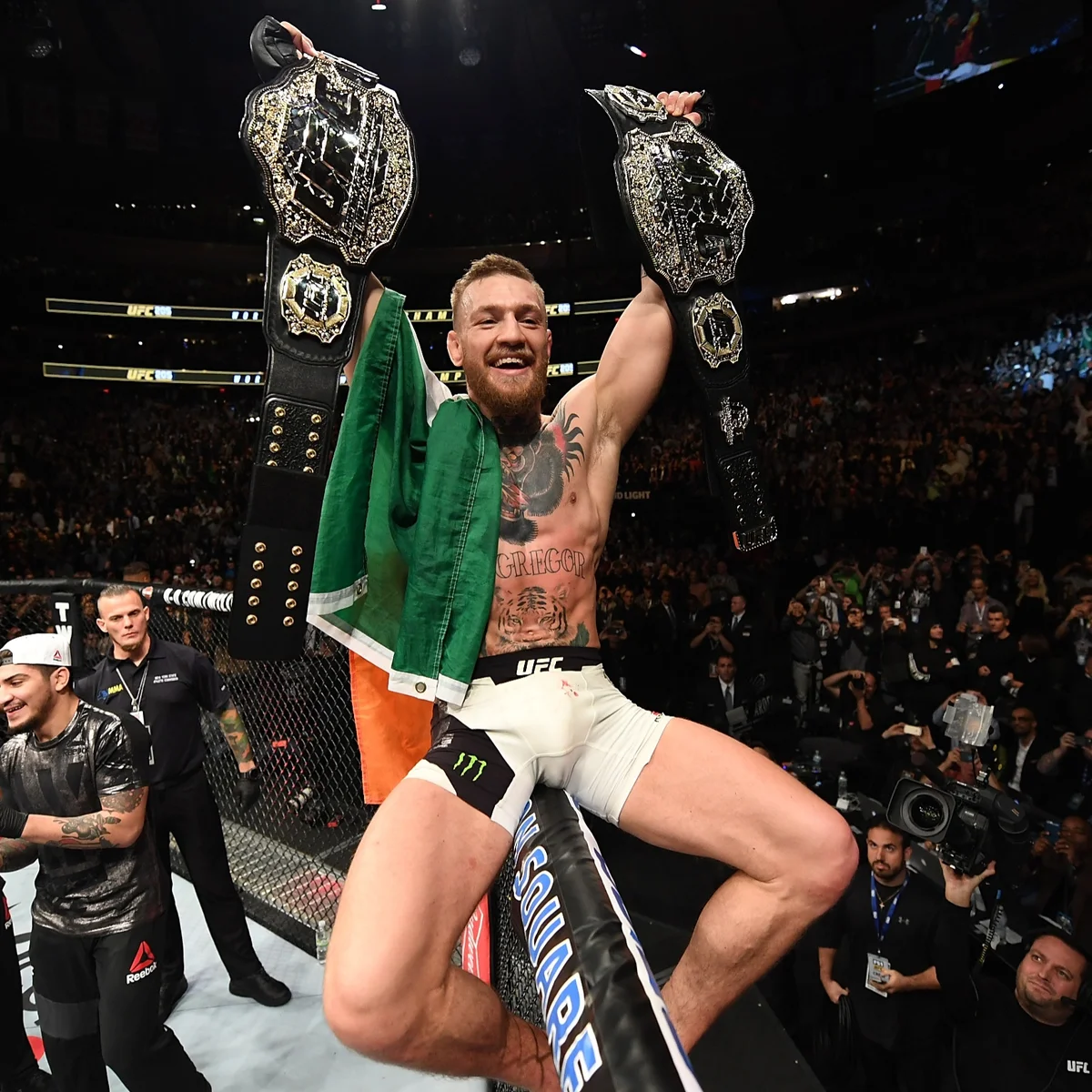
- Simultaneous Greatness: By defeating Alvarez, McGregor became the first fighter in UFC history to hold titles in two weight classes at the same time. His post-fight speech, “I’d like to take this chance to apologize… to absolutely nobody,” became an instant cultural touchstone.
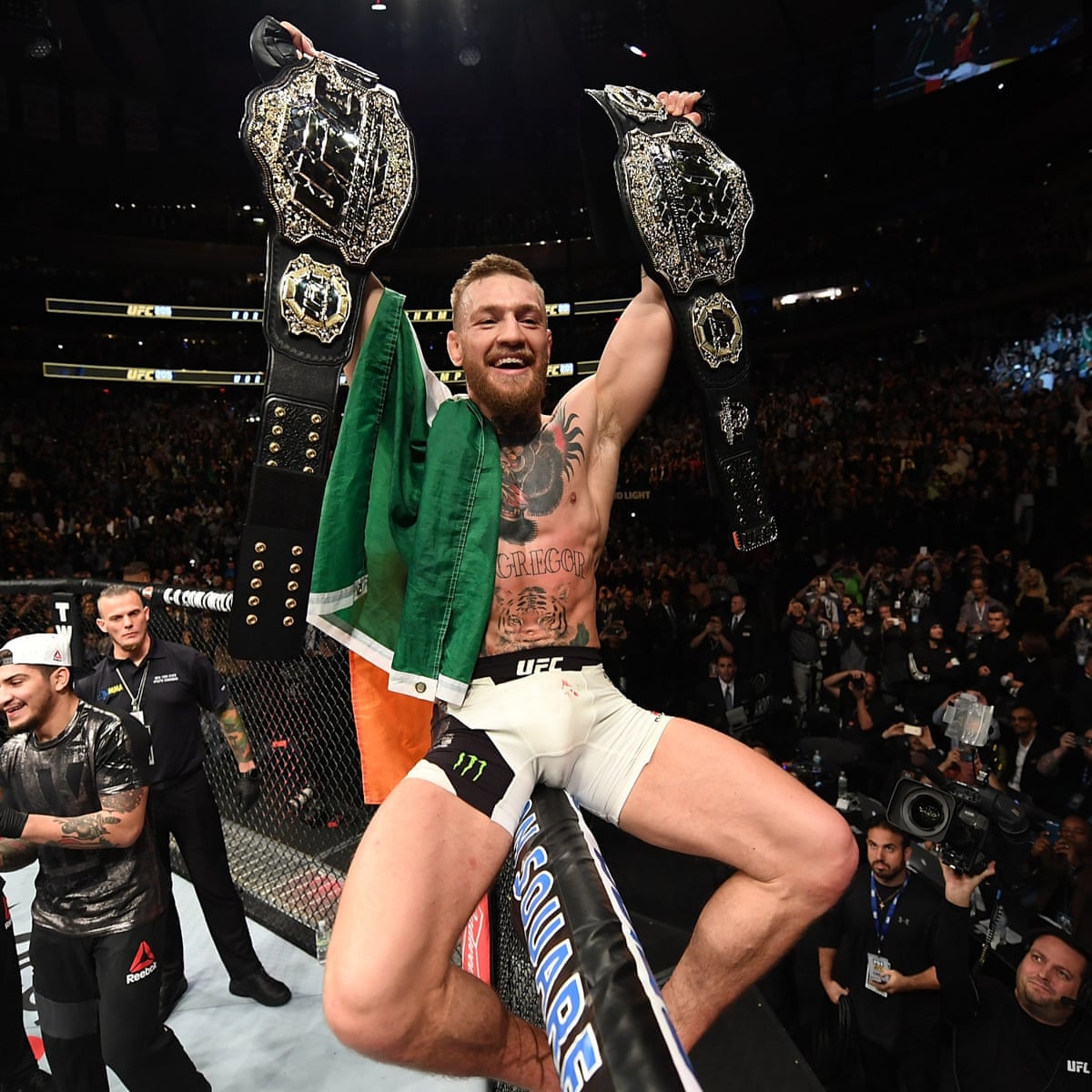 Conor Mcgregor’s iconic speech after becoming dual champion
4. Legal and Ethical Analysis: The Burden of the Brand
As McGregor’s fame grew, so did the complexity of his legal standing. From an AdSense perspective, it is important to analyze these events through a professional lens.
The Legal Ramifications of “The Notorious” Persona
The very traits that made McGregor a star—his volatility and unpredictability—eventually led to significant legal challenges.
- Public Order and Conduct: McGregor’s various altercations outside the cage have raised questions regarding the “Code of Conduct” within professional sports contracts.
- Intellectual Property and Branding: McGregor’s transition into the spirits industry with Proper No. Twelve showcased a new legal frontier for athletes: the “Equity-Based Endorsement.” Rather than a traditional fee-for-service model, McGregor built a brand he owned, leading to a landmark $600 million sale.
- The Combat Sports Regulatory Landscape: His “Money Fight” against Floyd Mayweather forced a collaboration between the Nevada State Athletic Commission and the UFC that set new precedents for cross-promotional legal contracts.

FAQ: Understanding the McGregor Legacy
Q: How did Conor McGregor change the UFC’s pay structure? A: McGregor introduced the era of “Money Fights.” By consistently breaking PPV records, he forced the UFC to reconsider how it distributes revenue to top-tier stars, leading to the rise of performance-based incentives and higher base purses for elite draws.
Q: Was McGregor’s striking style actually revolutionary? A: While many of his techniques were rooted in traditional boxing and Taekwondo, his application was revolutionary. He utilized a wide, karate-style stance to manage distance, combined with high-level boxing accuracy, making him an “out-fighter” who was nearly impossible to time.
Q: What is the significance of his “Two-Belt” win? A: Before McGregor, the UFC discouraged fighters from holding two belts because it “clogged” divisions. McGregor’s popularity gave him the leverage to break this rule, creating the “Champ Champ” trend that many fighters (like Daniel Cormier and Amanda Nunes) would later follow.
Conclusion: The Peak of the Mountain
At 28 years old, after the Alvarez fight, Conor McGregor sat at the pinnacle of the sporting world. He had achieved “generational wealth,” changed the financial landscape of MMA, and proved that a kid from Crumlin could command the attention of every corner of the globe. He was no longer just an athlete; he was a conglomerate.
However, as the old adage goes, “It is easier to get to the top than it is to stay there.” While his rise was a masterclass in ambition, the shadows of his success—the controversies, the losses, and the toll of extreme wealth—were beginning to gather.
In our next feature, we will examine the “Descent into Madness,” analyzing the specific fights and public incidents that led to the fracturing of the McGregor mythos.
For a visual journey through these milestones, we recommend watching the documentary footage detailing his early career milestones and his historic night at Madison Square Garden.
$$Video Resource: The Rise of the Notorious$$
Disclaimer: This article is an analytical review of public figures and sporting events. All financial figures are based on reported estimates from Forbes and official athletic commission disclosures.

