

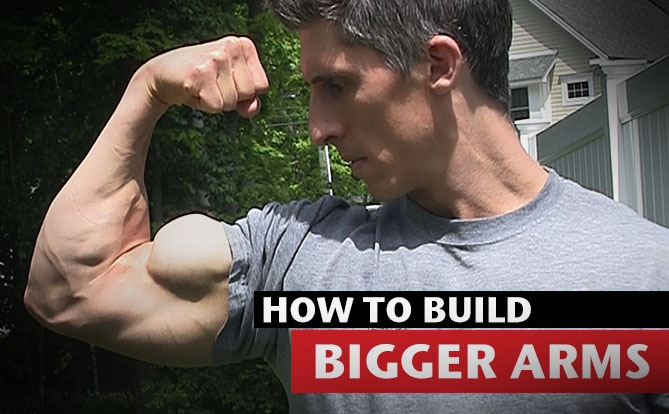
In the pursuit of an aesthetic physique, upper-arm development is often the primary focus for strength athletes. However, achieving significant hypertrophy in the arms requires more than high-volume isolation work. It necessitates a strategic understanding of muscle architecture, the physics of resistance, and the physiological requirements of tissue repair.
This analysis explores the three-dimensional approach to arm growth, focusing on the triceps’ contribution to mass, the biceps’ peak development, and the systemic principles that drive muscle protein synthesis.
1. The Triceps Brachii: The Foundation of Arm Volume
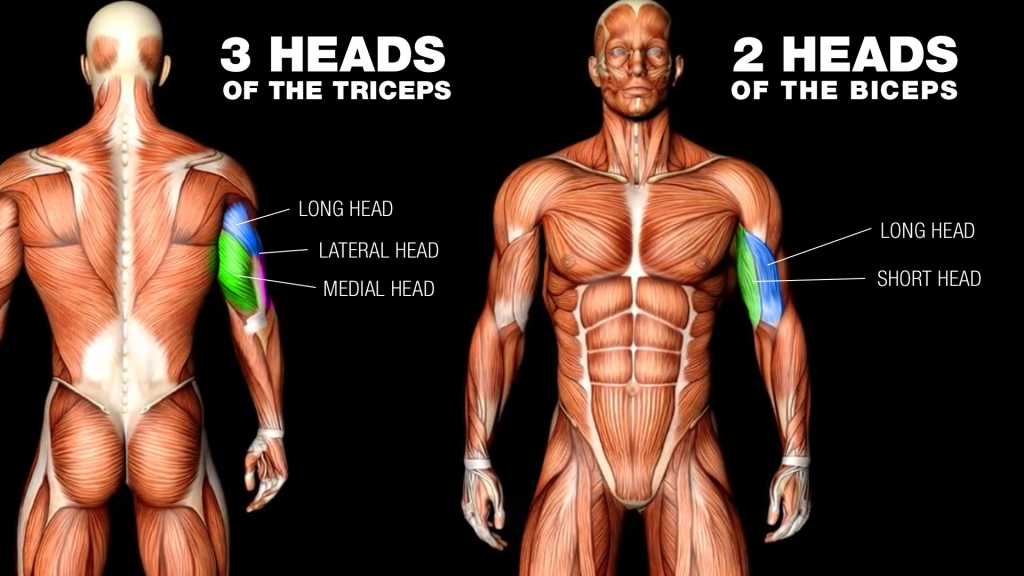
A common misconception among novice lifters is that the biceps are the primary driver of arm size. In reality, the Triceps Brachii accounts for approximately 65% to 70% of the total mass of the upper arm. To build formidable “guns,” one must prioritize the three distinct heads of the triceps: the long, lateral, and medial heads.
The Anatomy of the Triceps
| Muscle Head | Primary Function | Best Movement for Isolation |
| Long Head | Elbow extension & shoulder adduction. | Overhead Extensions (stretch-mediated hypertrophy). |
| Lateral Head | Powerful elbow extension (the “horseshoe” look). | Rope Pushdowns or Weighted Dips. |
| Medial Head | Stabilization and extension. | Reverse Grip Pushdowns or Close Grip Bench. |

To maximize the long head—which carries the most mass—exercises must be performed with the arms in an overhead position. This places the muscle in a “stretched” state, which research suggests is a primary driver for mechanical tension and subsequent growth.
2. Biceps Brachii: Peak vs. Thickness
The Biceps Brachii consists of two heads: the long head (outer) and the short head (inner). Achieving a “peaked” look requires specific manipulation of grip width and shoulder positioning to alter the tension across these heads.
-
Targeting the Long Head (The Peak): Using a narrow grip on a barbell or performing Incline Dumbbell Curls places the biceps in a disadvantaged position, forcing the outer head to work harder.
-
Targeting the Short Head (Width): A wider-than-shoulder-width grip on a preacher bench emphasizes the inner bicep, contributing to the “thickness” of the arm when viewed from the front.
-
The Brachialis: Often neglected, the brachialis sits underneath the biceps. Developing this muscle through Hammer Curls (neutral grip) pushes the biceps upward, effectively increasing the arm’s circumference.

3. The Principle of Mechanical Tension and Progressive Overload
Hypertrophy is a biological adaptation to stress. To force the body to build more muscle tissue, you must adhere to the Progressive Overload Principle. This involves consistently increasing the demands on the musculoskeletal system to prevent plateaus.
Methods of Overloading the Arms
-
Load Progression: Increasing the weight while maintaining strict form to ensure the target muscle—not momentum—is moving the load.
-
Volume Accumulation: Increasing the total sets and repetitions over a training cycle to increase “Time Under Tension” (TUT).
-
Metabolic Stress: Reducing rest periods (30–60 seconds) to create an accumulation of metabolites (lactate), which triggers a hormonal response conducive to growth.
4. The Role of Compound Movements in Arm Mass
While isolation exercises are essential for shaping, Compound Movements allow for the greatest mechanical tension due to the heavy loads used.
-
Close Grip Bench Press: A staple for triceps thickness, allowing for significant neurological drive and heavy weight.
-
Weighted Dips: An unmatched movement for overall upper body density; keeping the torso upright shifts the emphasis from the pectorals to the triceps.
-
Weighted Pull-ups (Underhand): Often overlooked as a bicep movement, underhand pull-ups allow you to load the biceps with significantly more weight than a standard curl.
5. Sample Hypertrophy Routine: The “Advanced Arm Protocol”
This routine is designed for an intermediate lifter focusing on both mechanical tension and metabolic stress.
Phase 1: Heavy Compound (Mechanical Tension)
-
Close Grip Barbell Bench Press: 4 sets of 6-8 reps (Rest 2 mins)
-
Weighted Underhand Pull-ups: 3 sets of 8-10 reps (Rest 2 mins)
-
Phase 2: Isolation & Peak Contraction
-
Preacher Curls (Short Head Focus): 3 sets of 10-12 reps (Squeeze at the top)
-
Overhead Dumbbell Extensions (Long Head Focus): 3 sets of 12-15 reps
-
Dumbbell Hammer Curls: 3 sets of 10-12 reps (Strict form, no swinging)
Phase 3: Metabolic Finisher
-
Triceps Rope Pushdowns: 3 sets of 20 reps (Focus on the burn/pump)
-
Reverse Barbell Wrist Curls: 3 sets of 15 reps (Forearm development)
6. Nutrition, Recovery, and the Anabolic Window
Training is the stimulus; recovery is the growth. Without a caloric surplus and adequate protein intake (typically 1.6g to 2.2g of protein per kg of body weight), the body cannot repair the micro-trauma caused during training.
Furthermore, Sleep (7–9 hours) is the period when the majority of Growth Hormone (GH) is secreted. Overtraining the arms (training them every day) will lead to systemic fatigue and potentially tendinitis. For optimal results, train arms no more than twice per week, allowing at least 48–72 hours of recovery between sessions.
Video Analysis: The Science of “Perfect” Arm Growth
In the provided technical breakdown by Jeremy Ethier, the focus shifts from simply “lifting heavy” to optimizing biomechanical leverage. Ethier emphasizes several high-value takeaways that are essential for breaking through growth plateaus:
-
The Stretch-Mediated Hypertrophy Factor: The video demonstrates why the Incline Dumbbell Curl is superior for targeting the long head of the biceps. By sitting at an incline, the arms are positioned behind the body, placing the biceps in a fully stretched position—a state proven to trigger higher rates of muscle protein synthesis.
-
Elbow Stability in Triceps Extensions: A critical “form fix” mentioned is the stabilization of the humerus (upper arm bone). During cable pushdowns, allowing the elbows to drift forward engages the lats and shoulders, effectively “stealing” the tension from the triceps. Keeping the elbows pinned to the ribcage ensures the medial and lateral heads of the triceps are under constant mechanical tension.
-
Mind-Muscle Connection via “Pinky Rotation”: A subtle but effective tip for bicep peaks is the outward rotation of the pinky finger during the concentric (lifting) phase of a dumbbell curl. This forces maximum supination, ensuring the short head of the biceps is fully contracted at the top of the movement.
Scientific References & Clinical Validation
To ensure maximum transparency and technical accuracy, the training methodologies outlined in this guide are supported by the following peer-reviewed research:
1. On the Efficacy of the Incline Dumbbell Curl (Long Head Activation)
-
Study: Oliveira, L. F., et al. (2009). “Effect of the shoulder position on the biceps brachii emg in different dumbbell curl exercises.” * Key Finding: This study utilized electromyography (EMG) to measure muscle activation. It confirmed that the Incline Dumbbell Curl significantly increases the stretch on the long head of the biceps by keeping the shoulder in an extended position. This validates the claim that incline variations are superior for targeting the “peak” of the bicep.
2. On Stretch-Mediated Hypertrophy in Overhead Extensions
-
-
Study: Maeo, S., et al. (2022). “Triceps brachii hypertrophy is substantially greater after elbow extension training performed in the overhead versus neutral arm position.”
-
Key Finding: This recent, high-impact study published in the European Journal of Sport Science found that Overhead Triceps Extensions resulted in significantly greater muscle growth (hypertrophy) compared to neutral-arm pushdowns. The researchers concluded that training the triceps at a long muscle length (the “stretch”) is a more potent stimulus for fiber recruitment.
-
3. On the Mechanisms of Hypertrophy and Mechanical Tension
-
Study: Schoenfeld, B. J. (2010). “The mechanisms of muscle hypertrophy and their application to resistance training.”
-
Key Finding: Published in the Journal of Strength and Conditioning Research, this seminal paper outlines how Mechanical Tension—achieved through progressive overload and compound movements like the Close Grip Bench Press—is the primary driver of muscle growth. It provides the physiological basis for why heavy compound lifting must be the foundation of any arm-building program.
Disclaimer: Before beginning any new exercise program, consult with a qualified healthcare professional. This content is for educational purposes and assumes a baseline level of physical health.

