

Introduction: The Price of Absolute Vigilance
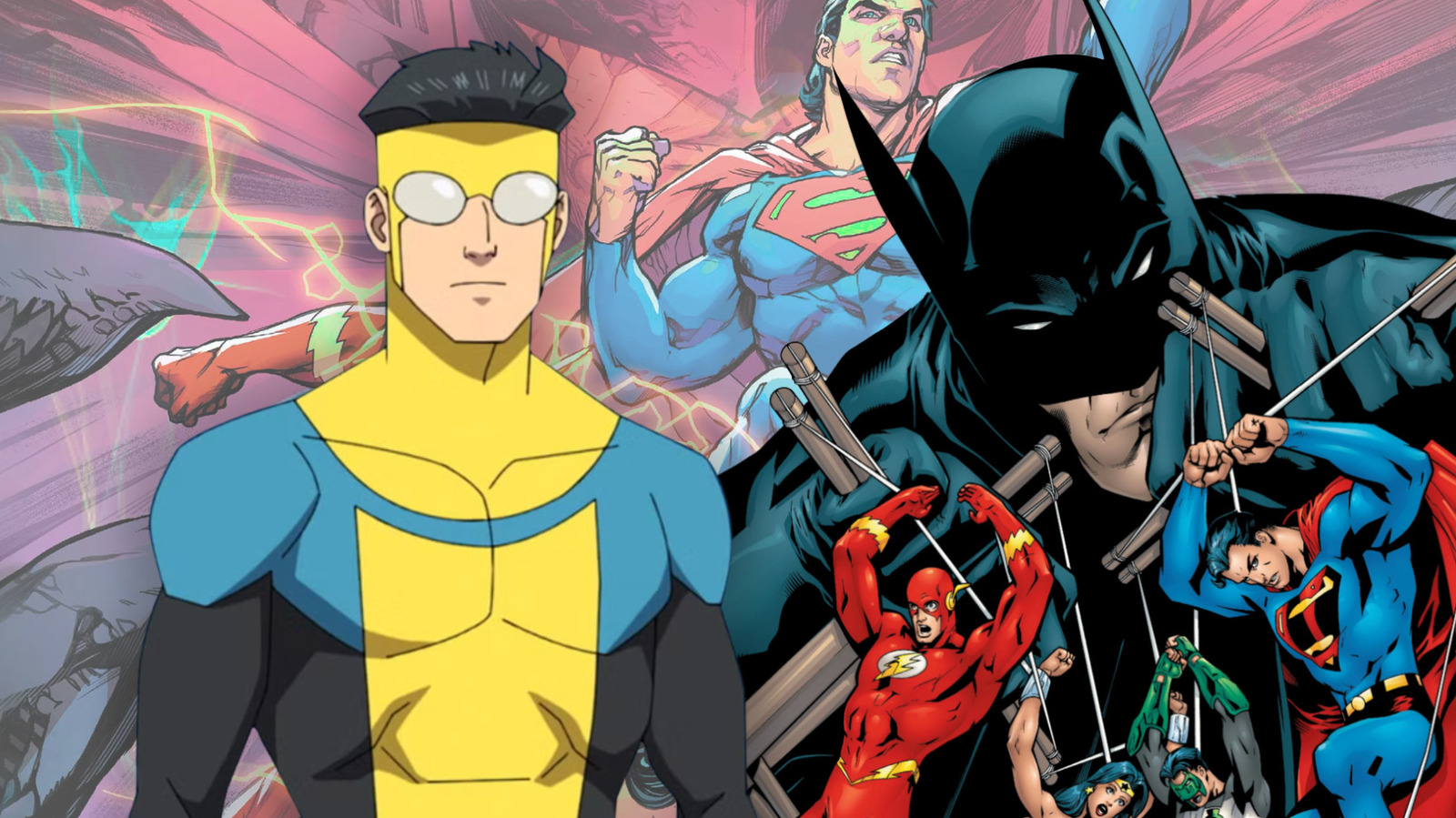
Specifically, the narrative arc involving Cecil Stedman (Walton Goggins) and Mark Grayson (Steven Yeun) has begun to mirror one of the most polarizing storylines in DC Comics history: Mark Waid’s “Tower of Babel.” By exploring the fallout of secret weapons designed to neutralize “friends,” Invincible is tackling the deep-seated paranoia that defines the “Prep Time” archetype—a trope made famous by the Dark Knight himself.
2. Drawing Parallels: The Legacy of “Tower of Babel”
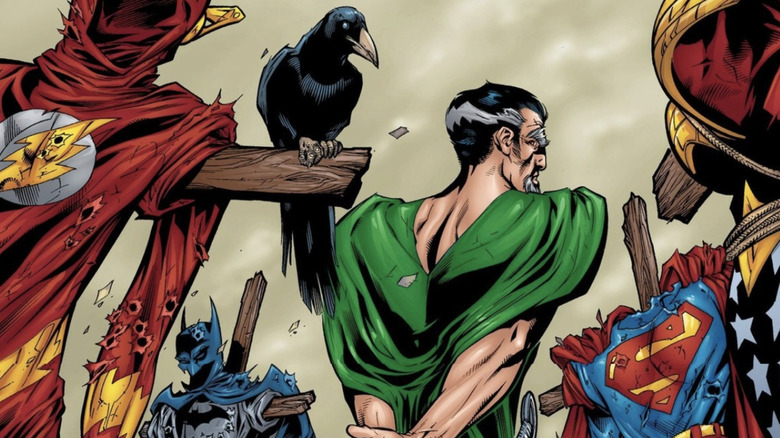
To understand the gravity of Cecil’s actions, one must look back to the year 2000, when JLA issues #43-46 introduced the “Tower of Babel” storyline. Written by Mark Waid, this arc revealed that Batman had meticulously documented the weaknesses of every Justice League member and devised specific, lethal ways to neutralize them.
The Mastermind’s Hubris
In the DC storyline, Ra’s al Ghul steals these plans and uses them to systematically take down the League. Wonder Woman is trapped in a virtual reality loop of endless combat; Martian Manhunter is covered in atmospheric phosphorus that causes him to burst into flames upon contact with air; and Superman is exposed to Red Kryptonite that makes his skin transparent and his powers uncontrollable.
The genius of Waid’s writing was not in the “coolness” of the gadgets, but in the emotional devastation. Like the Guardians in Invincible, the Justice League wasn’t angry that the plans existed—they were heartbroken that a “brother” had crafted them in the shadows of their shared victories.
From “Prep Time” to Paranoia
The “Tower of Babel” arc cemented the “Batman with Prep Time” meme, but it also served as a critique of the character. It suggested that Batman’s foresight was actually a symptom of his trauma. Invincible Season 4 adopts this critique, applying it to Cecil Stedman. Cecil doesn’t have a tragic origin story involving a dark alley, but he has the trauma of a world nearly conquered by a Viltrumite. His “Tower of Babel” is the GDA headquarters.
3. The Batman Influence in the Invincible Multiverse
While Invincible primarily parodies Superman (Omni-Man) and Spider-Man (Mark’s early struggles), the Batman influence is deeply baked into its DNA.
The Darkwing Legacy
The most direct parody is Darkwing, a member of the original Guardians who utilized gadgets and a shadowy aesthetic. His death at the hands of Omni-Man in the series premiere served as a grim reminder: in the Invincible world, “Prep Time” usually isn’t enough to survive a Viltrumite’s speed.
The Season 2 Meta-Crossover
Mark actually encountered a Batman-equivalent in the Season 2 finale, “I Thought You Were Stronger,” while traveling through dimensions. While copyright laws prevented a name-drop, the presence of a hero in a bat-themed cape confirmed that the concept of the “Caped Crusader” exists within the cultural consciousness of the show’s creators. By Season 4, this influence has shifted from a visual parody to a structural narrative theme centered on Cecil’s “contingency” philosophy.

4. Legal and Ethical Analysis: Superhero Oversight and Liability
The conflict between Cecil and Mark raises fascinating legal questions regarding the regulation of “Living Weapons of Mass Destruction.”
The Doctrine of Sovereign Immunity
Cecil Stedman operates under the authority of the Global Defense Agency, a government entity. Legally, Cecil’s contingency plans could be argued as a “necessary exercise of national security.” In many jurisdictions, government officials are protected by sovereign immunity when making decisions aimed at preventing catastrophic public harm. However, the secret implantation of a device in a private citizen (Mark) without informed consent borders on a violation of bodily autonomy and potential “Cruel and Unusual Punishment” under constitutional frameworks.
Tort Liability and the “Duty of Care”
If Cecil’s plans were ever stolen—as Batman’s were in “Tower of Babel”—the GDA could face massive tort liability. If a third party uses a government-created “hero-killer” weapon to cause collateral damage, the agency could be held liable for “negligent entrustment” or “failure to secure hazardous materials.” The legal argument for Mark Grayson is that he is a volunteer, not a piece of government hardware, making Cecil’s “upgrades” a breach of the fundamental legal contract between the state and the individual.

5. FAQ: Understanding the Invincible vs. Batman Connection
Q: Is Cecil Stedman actually evil? A: Not in the traditional sense. Cecil is a “gray” character. His goal is the survival of humanity at any cost. Unlike a villain, he doesn’t want power for himself; he wants a world that isn’t at the mercy of super-powered beings.
Q: Does Mark Grayson ever forgive Cecil? A: In the comics, the relationship between Mark and Cecil remains fraught with tension. While they occasionally work together out of necessity, the trust is never fully restored, mirroring the long-term rift between Batman and the Justice League.
Q: Are there other “Tower of Babel” references in Invincible? A: Yes. The character of Robot (Rex) often engages in long-term contingency planning that goes even further than Cecil’s, eventually leading to a massive shift in the world’s geopolitical structure.
Q: How does the show differ from the comics regarding these plans? A: The show places a much heavier emphasis on the emotional weight of Cecil’s betrayal, using Walton Goggins’ performance to highlight the weariness and cold logic of the character.
Conclusion: The Finality of the Secret
The ultimate lesson of both “Tower of Babel” and Invincible Season 4 is that secrets are the most effective poison for any alliance. While Cecil Stedman’s contingency plans may be “logical” from a defense standpoint, they ignore the human element of heroism. By treating his allies like ticking time bombs, Cecil ensures that when the “big threat” finally arrives, he may find himself standing alone in his high-tech bunker.
As Season 4 progresses, the question won’t be whether Cecil can stop a rogue hero, but whether he has already destroyed the very world he was trying to protect by killing the trust that held it together.

