

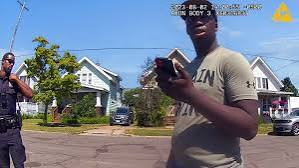
There is a distinct brand of hubris native to teenage offenders who find themselves sitting inside a police interrogation room. Unaware of the decades of psychological research, tactical training, and structural advantages stacked heavily against them, they often step into the room believing they can simply talk their way out of a murder charge. They view the interrogation not as a legal vulnerability, but as a chessboard where they can outmaneuver the detectives.
When a teenage suspect attempts to outsmart the police, they typically lean on a predictable trifecta: over-explaining a fabricated timeline, mimicking the body language of an innocent person, and attempting to establish a friendly, cooperative rapport with their interrogators. What they fail to realize is that every defensive mechanism they deploy leaves a digital and behavioral footprint that veteran investigators are trained to dismantle.
This deep-dive analysis unpacks the critical phases of a high-stakes interrogation, breaking down how an overconfident teenage suspect’s carefully constructed facade completely implodes under steady, methodical pressure.
The Video Breakdown & Timeline Analysis
To truly understand how this tactical chess match plays out, we must examine the specific shifts in behavior, tone, and strategy across the timeline of the interrogation.
00:00 – 08:30 | The Mask of Absolute Cooperation
The initial stage of the interrogation is defined by a heavy display of helpfulness from the suspect. At this point, the teen killer believes they are completely steering the ship. They volunteer highly specific details about their day, offer up complex timelines without being prompted, and actively smile or use open hand gestures to convey transparency.
In criminal psychology, this is known as over-accommodation. An innocent person typically answers questions directly and briefly because they do not feel the psychological need to engineer a narrative. The guilty suspect, however, treats the blank canvas of the timeline as an opportunity to build a protective wall of words. Detectives during this phase purposely play dumb, leaning back, nodding, and allowing the suspect to lock themselves into a rigid timeline that will later be cross-referenced against digital evidence.
08:31 – 18:45 | The Introduction of the Parallax Friction
The atmosphere in the room shifts noticeably as detectives introduce the first wave of subtle contradictions. Instead of calling the suspect a liar outright, the interrogators present small pieces of objective data—such as cell phone tower pings or CCTV footage—that don’t align with the suspect’s story.
Watch the suspect’s micro-expressions during this window. The casual, relaxed posture begins to stiffen. The feet, which were previously kicked out or relaxed, pull back beneath the chair—a primitive biological response to prepare for flight or defense. The suspect begins to use qualifying language (“To the best of my knowledge,” “As far as I can remember”) to build an escape hatch for their previous statements.
18:46 – 32:15 | The Deflection Mechanism & Aggressive Denial
When passive contradictions fail to break the suspect, the interrogation enters a confrontational phase. The detectives directly challenge the suspect’s integrity. The teenage suspect, realizing their intellect has failed to charm the room, transitions rapidly from cooperative friendliness to defensive outrage.
[ Calm Cooperation ] ──> [ Subtle Stiffening ] ──> [ Aggressive Deflection ] ──> [ Total Collapse ]
During this block, the suspect attempts to flip the script by attacking the detectives’ motives or expressing deep moral offense that they could even be considered a suspect. This defensive posture is often accompanied by rapid blinking, throat clearing, and sudden thirst—physiological indicators of a massive spike in autonomic nervous system arousal caused by extreme stress.
32:16 – End | The Matrix Collapses into Confession
The final block of the interrogation illustrates the psychological breakdown of the suspect’s ego. The realization sets in that the police possess concrete evidence that cannot be argued away. The overconfident teenager who walked into the room believing they could outtalk the law completely deflates. The shoulders slump forward, eye contact drops permanently to the floor, and the voice drops to a low, defeated murmur as the truth is finally extracted.
The Fatal Strategic Flaws of the Teenage Suspect
The failure of the teenage suspect to outsmart the police stems from three fundamental flaws in their understanding of criminal investigations.
1. The Myth of the Perfect Alibi
An engineered alibi is almost always too perfect. Teenage suspects often construct timelines that are packed with highly specific, memorable landmarks designed to prove they were elsewhere. They will recall the exact minute they looked at a clock or a highly specific interaction with a stranger. Real human memory doesn’t work this way under normal conditions; innocent memory is notoriously fragmented and imprecise. When a suspect presents a flawless, hyper-detailed chronology, it signals to detectives that the narrative was rehearsed.
2. Misjudging the “Good Cop” Trap
When detectives treat a young suspect with kindness, respect, and validation early in an interview, it is rarely out of genuine sympathy. It is a calculated investigative technique designed to lower the suspect’s defensive barriers. The teenage suspect misinterprets this professional empathy as proof that the police believe their story, causing them to talk more freely and inadvertently drop critical inconsistencies that seal their fate.
3. Underestimating the Digital Footprint
In the modern era, an oral alibi is completely useless unless it aligns perfectly with digital forensic realities. A suspect can stand in an interrogation room and passionately declare their innocence for hours, but a single automated license plate reader snapshot, a Snapchat geolocation tag, or an automated cell tower ping will instantly demolish hours of verbal fabrication.
Structural Summary of Interrogation Traps
| Interrogation Phase | Suspect’s Strategy | Police Counter-Strategy | Behavioral Tell |
| Phase 1: Baseline | High cooperation, over-explaining details. | Active listening, building false comfort. | Rapid, unstructured speech patterns. |
| Phase 2: Friction | Modifying details, using qualifying phrases. | Introducing minor digital contradictions. | Feet pulling under chair, heavy swallowing. |
| Phase 3: Confrontation | Aggressive denial, moral outrage. | Direct structural accusations. | Micro-expressions of anger, avoiding eye contact. |
| Phase 4: Resolution | Complete narrative collapse. | Offering psychological face-saving excuses. | Slumped posture, low vocal volume. |
The True Crime Takeaway: An interrogation room is a highly controlled environment engineered to strip away psychological defenses. The moment a suspect enters the room intending to “outsmart” the investigators, they have already lost the battle. The only tool that consistently defeats police interrogation strategy is the absolute invocation of the right to remain silent.
Frequently Asked Questions
Why do police let suspects lie for so long before confronting them?
Detectives allow suspects to tell extensive lies to establish a clear, binding baseline. The more details a suspect invents, the more points of vulnerability they create in their own story. Once the police gather enough false statements, they can systematically destroy the suspect’s credibility using independent forensic evidence.
What is the “Dagestani Handcuff” of interrogation rooms?
While the term originally refers to a dominant physical wrestling position, metaphorically in an interrogation room, it represents the technique of trapping a suspect within their own contradictory statements until they have no psychological or logical space left to move or defend themselves.
Can a suspect’s body language alone convict them?
No. Body language, micro-expressions, and physiological changes are not admissible as direct evidence of guilt in a court of law. Instead, investigators use these behavioral indicators as diagnostic roadmaps to determine where a suspect is hiding information, helping them direct their questions toward the evidence that will secure a conviction.
This analysis explores the psychological breakdown shown in the video Teen Killer Tries Outsmarting The Police, giving true crime enthusiasts a clear view of how real criminal interrogations progress past a suspect’s initial lies.
The calculated hubris of an offender attempting to manipulate a narrative doesn’t just happen within the four walls of an interrogation room—it often begins directly at the scene of the crime. This exact pattern of overconfident deception was on full display in the case detailed in Blazing Smokescreen: How a Suspicious House Fire Ended in Cold-Blooded Murder, where a suspect weaponized arson in a desperate attempt to cover up a lethal assault. Just like the teenager who builds a hyper-detailed, verbal wall of lies to throw off investigators, the perpetrator of the house fire believed that the sheer chaos of a burning building would destroy the physical evidence and permanently blind the forensic team. In both instances, the criminals severely underestimated the modern analytical tools available to law enforcement, proving that whether a killer relies on a fabricated alibi or a literal smoke screen, the underlying psychological cracks remain identical.

