
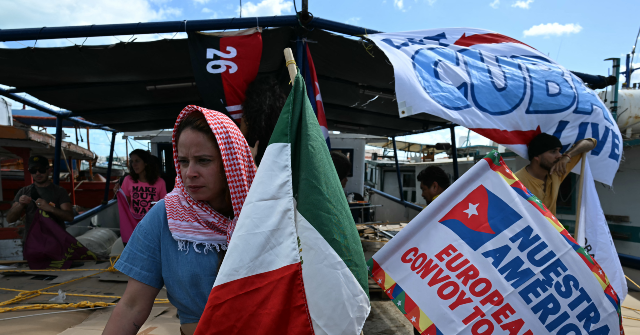
The arrival of the “Nuestra America Convoy” in Havana represents a significant moment in the long-standing ideological tug-of-war between the United States and the Cuban government. Comprising approximately 500 activists, politicians, and media personalities from 30 different nations, the convoy is ostensibly a humanitarian mission. However, its composition—including high-profile figures such as former UK Labour leader Jeremy Corbyn, Spanish politician Pablo Iglesias, and streamer Hasan Piker—suggests a deeply coordinated effort to challenge U.S. foreign policy on the global stage.
1. The Context: A Regime in Economic Peril
The timing of this “act of solidarity” is not coincidental. Cuba is currently grappling with one of its most severe economic crises since the “Special Period” of the 1990s. For decades, the island nation relied on a vital energy-for-doctors exchange with Venezuela. However, following the arrest of Venezuelan leader Nicolás Maduro in early January, that lifeline has effectively vanished.
Without Venezuelan oil and financial subsidies, the Cuban regime, led by figurehead President Miguel Díaz-Canel, has faced widespread power outages and food shortages. The convoy organizers argue that these hardships are the direct result of the “strangling” effects of U.S. sanctions, specifically those intensified during the Trump administration. Conversely, critics of the regime point to sixty-seven years of centralized economic planning and systemic repression as the primary drivers of the nation’s “abject misery.”
2. High-Profile Participants and the ‘Propaganda’ Narrative
The presence of Western influencers and politicians serves a dual purpose: providing physical aid and generating digital optics. Among the notable attendees:
- Jeremy Corbyn: The former British Labour leader has a long history of supporting socialist movements in Latin America. His participation lends a veneer of traditional parliamentary legitimacy to the event.
- Hasan Piker: A prominent Twitch streamer known for his far-left commentary. Piker’s involvement is a strategic attempt to engage younger, digitally native audiences with the anti-sanctions narrative.
- Manolo De Los Santos: As the Executive Director of the People’s Forum, De Los Santos has been linked by various investigative reports to groups funded by tech mogul Neville Roy Singham, whose organizations have been scrutinized for ties to Chinese Communist Party (CCP) propaganda efforts.
The convoy claims to have raised $500,000 for medical equipment and solar panels, intended to bypass the “embargo” that they claim prevents hospitals from functioning. The Cuban government has enthusiastically embraced the group, with Díaz-Canel praising their “generous selflessness.”
3. Legal and Ethical Analysis: Sanctions and Sovereignty
The legal framework surrounding the U.S. embargo (the bloqueo) is complex, involving both executive orders and statutory law (the Helms-Burton Act).
I. The Humanitarian Exception
Under U.S. law, specifically the Office of Foreign Assets Control (OFAC) regulations, there are general licenses for the export of food and medicine to Cuba. Proponents of the convoy argue that while these exceptions exist on paper, “over-compliance” by international banks makes it practically impossible for the Cuban government to process payments. The legal argument presented by activists like David Adler and Senator Clara López is that these unilateral sanctions violate the United Nations Charter and constitute a form of “collective punishment.”
II. Foreign Influence and Compliance
From a U.S. legal perspective, organizations like the People’s Forum must navigate the Foreign Agents Registration Act (FARA) if they are acting at the behest of a foreign principal. While the convoy frames itself as a grassroots humanitarian effort, the involvement of individuals tied to foreign-funded entities raises questions about the transparency of the funding sources and the potential for the aid to be used as a tool for state-sponsored propaganda.
III. The ‘Aggressor’ Rhetoric
The legal tension is further heightened by the rhetoric of the Cuban state. Following recent comments from Donald Trump indicating a renewed focus on Cuba, Díaz-Canel has used the presence of the international convoy to bolster his domestic image of “unbreakable resistance.” From an international law perspective, this sets the stage for a potential escalation in hostilities, with the convoy serving as a “human shield” of sorts for the regime’s political narrative.
4. The Economic Reality of 20 Tons of Aid
While 20 tons of aid sounds substantial, economists note that for a nation of 11 million people, such contributions are largely symbolic. The total value of the aid—estimated at $500,000 in equipment—is a fraction of what is required to stabilize the Cuban power grid or healthcare system.
The real value for the Havana regime lies in the messaging. By hosting figures like Corbyn and Iglesias, the regime can argue to its citizens that the world is on their side against “Yankee imperialism.” This narrative is essential for maintaining control during periods of extreme domestic unrest, such as the protests seen in July 2021.
5. Frequently Asked Questions (FAQ)
Q: What is the ‘Nuestra America Convoy’? A: It is an international group of leftist activists and politicians traveling to Cuba to deliver aid and protest U.S. sanctions.
Q: Does the U.S. embargo actually stop medicine from entering Cuba? A: Legally, the U.S. allows for the sale and donation of medicine and food. However, sanctions on the Cuban banking system can make it difficult for the government to execute these purchases, a phenomenon known as “de-risking.”
Q: Who is funding the convoy? A: Organizers claim the funds were raised through grassroots donations in the U.S. and Europe. However, organizations involved, such as the People’s Forum, have historically received significant funding from wealthy donors like Neville Roy Singham.
Q: Why is the Convoy arriving now? A: Cuba is in a state of economic emergency following the collapse of support from the Venezuelan regime. The Convoy provides a timely political distraction and a small amount of material relief.
6. Conclusion: A Divided Hemisphere
The Nuestra America Convoy highlights the deep ideological fissures that remain in the Western Hemisphere. To its supporters, it is a brave stand against a “deadly” embargo. To its critics, it is a “propaganda tour” that provides a moral lifeline to a repressive regime while ignoring the lack of democratic freedoms for the Cuban people.
As the U.S. prepares for a potential shift in its Caribbean strategy, the actions of high-profile Western leftists in Havana will continue to be a point of contention. Whether this “start of a major global mobilization” leads to a change in policy or simply serves to further polarize the debate remains to be seen.

