

Introduction: The Public Outrage Over a Smirking Verdict
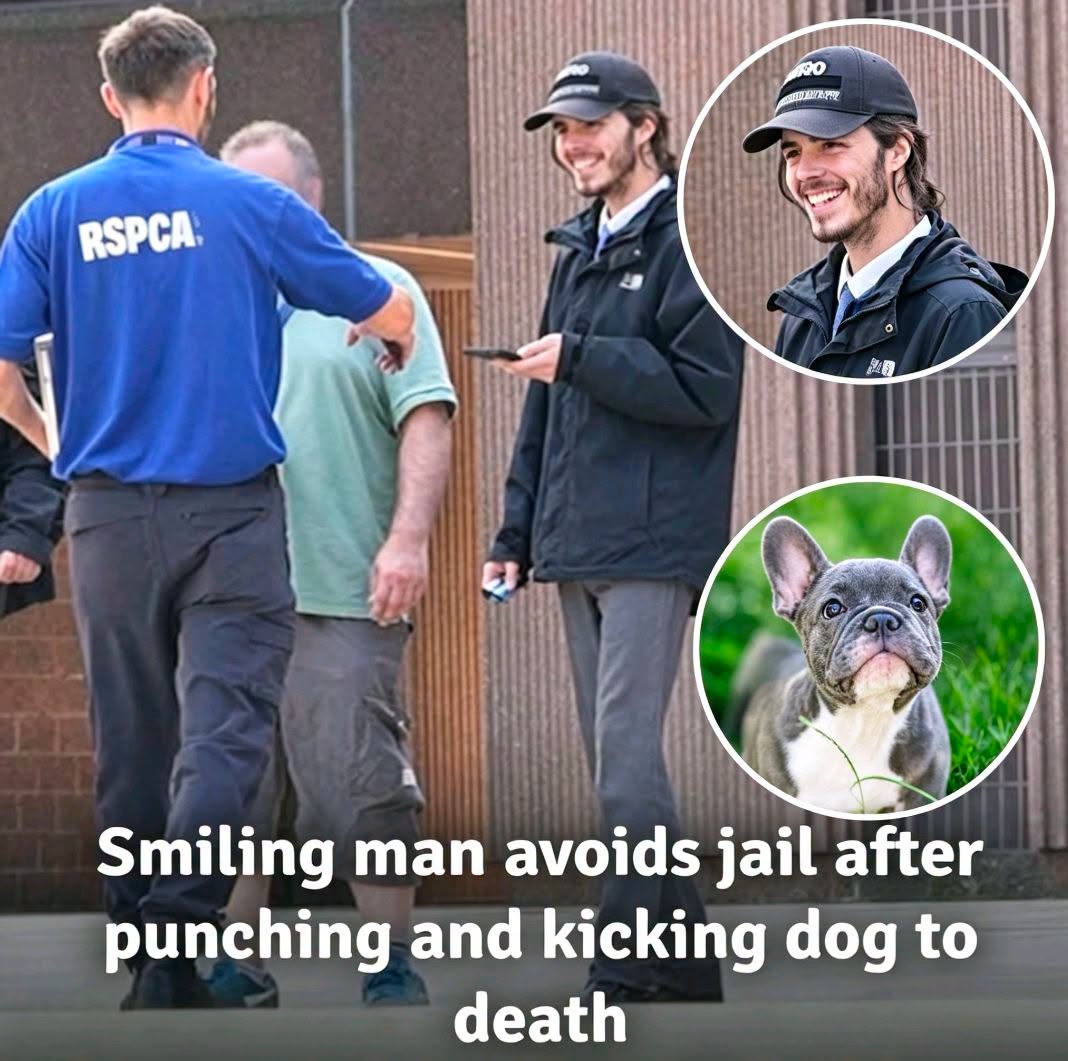
The boundary between legal justice and public morality is rarely as starkly defined as it is in cases of severe animal cruelty. When details emerged from the court hearing regarding the horrific death of a French bulldog named Buddy, the public reaction was instant, visceral, and deeply divided. At the center of the storm is Luke Walker, a 23-year-old who walked out of court with a smile on his face after avoiding immediate jail time for an act of violence that cost a defenseless animal its life.
https://www.facebook.com/photo/?fbid=1522460569916303&set=a.602528495242853
This article examines the unsettling facts of the case, the arguments presented in court, the complex intersection of mental health and criminal accountability, and why the final verdict has sparked nationwide outrage.

https://www.facebook.com/photo/?fbid=2506056736565504&set=a.103950876776114
The Fatal Incident: The Tragic Death of Buddy the French Bulldog
Every instance of animal abuse carries a tragic narrative, but the details surrounding the death of Buddy the French bulldog are particularly harrowing. Luke Walker had been entrusted with the care of the canine companion. According to statements presented during the legal proceedings, the arrangement was initially intended to be mutually beneficial. Walker, who had been grappling with ongoing, persistent mental health difficulties, believed that looking after a pet would provide him with emotional support, routine, and a therapeutic outlet.
Instead, the situation dissolved into catastrophic violence. The court heard how Walker launched a brutal, unprovoked assault on the small dog, punching and kicking Buddy repeatedly. The sheer force of the physical trauma inflicted on the defenseless animal proved fatal. Vet reports and forensic evidence detailed the extensive suffering Buddy endured before succumbing to his injuries—a reality that prosecutors emphasized underscored the severe gravity of the offense.
The Courtroom Scene: A Display of Defiance That Sparked Fury
While the details of the crime itself shocked the public, it was Walker’s post-verdict behavior that turned localized anger into widespread fury. Upon learning that his custodial sentence would be suspended—meaning he would not be stepping inside a prison cell—Walker’s demeanor drew sharp criticism from onlookers and media alike.
Witnesses outside the courtroom observed the 23-year-old puffing on a vape, visibly relaxed, and grinning broadly as he walked free from the building. To onlookers, animal rights advocates, and the public tracking the case online, the display was perceived as a blatant lack of remorse. The image of an individual smiling just moments after being legally scrutinized for beating a family pet to death has reignited intense debates regarding the leniency of modern sentencing guidelines for animal abuse.
https://www.facebook.com/reel/1557547435744357

The Defense Arguments: Weighing Mental Health Against Accountability
To understand how the court arrived at a suspended sentence rather than immediate imprisonment, one must look at the legal framework surrounding mitigating factors. Under current sentencing guidelines, judges are required to weigh the severity of the crime against the personal circumstances, culpability, and rehabilitation potential of the offender.
Walker’s defense team heavily emphasized his documented mental health struggles. The argument posited several key pillars:
-
Diminished Capacity: At the time of the incident, Walker was experiencing a severe psychological crisis, impairing his emotional regulation and impulse control.
-
Lack of Prior Intent: The dog was originally brought into his life as a tool for healing, suggesting the violence was an isolated, volatile breakdown rather than a premeditated act of cruelty.
-
Rehabilitation Over Retribution: The defense argued that sending a young man with severe psychological vulnerabilities into a volatile prison environment would worsen his condition, whereas a community-based suspended sentence would mandate mental health intervention.
The judge ultimately accepted these arguments, ruling that while the threshold for a custodial sentence had轉 crossed, the execution of that prison sentence could be suspended in favor of strict community supervision, rehabilitation requirements, and a lifetime ban on owning animals.
Public Backlash: Demanding Stricter Sentences for Animal Abuse
The decision to spare Walker from behind bars has been met with fierce condemnation from animal welfare organizations and the general public. Critics argue that sentences like these fail to act as an effective deterrent against animal cruelty, leaving vulnerable pets at risk.
Historically, animal abuse laws have faced criticism for treating pets more like property than sentient beings capable of experiencing profound fear and pain. While recent legislative updates across various jurisdictions have technically raised the maximum penalties for the worst cases of animal abuse to five years in prison, the reality is that the maximum penalty is rarely enforced.
Online petitions and local protests surrounding the Walker verdict highlight a growing societal demand: that severe, fatal violence against animals should carry mandatory, immediate prison sentences, regardless of mitigating psychological factors.
The Broader Legal Precedent: The Danger of Minimizing Violence
This case brings a highly sensitive topic to the forefront: how the justice system balances mental health advocacy with public safety and personal accountability.
Sociologists and criminologists have long documented “The Link”—the strong correlation between animal abuse and broader interpersonal violence. While many individuals suffer from severe anxiety, depression, or complex psychological conditions without ever harming a living creature, a small subset manifests distress through externalized aggression.
Legal experts argue that while mental health support is crucial, using it as a primary mechanism to avoid incarceration for fatal violence sets a troubling precedent. It creates a narrative where the suffering of the victim—in this case, a helpless dog—is structurally minimized by the emotional history of the perpetrator.
FAQ: Understanding the Luke Walker Case
Why didn’t Luke Walker go to prison?
The judge opted to suspend Walker’s prison sentence due to significant mitigating factors presented by the defense, primarily his documented, ongoing mental health struggles. A suspended sentence means the offender will not go to prison as long as they comply with specific court orders, such as community service, rehabilitation programs, and avoiding further legal offenses.
https://www.facebook.com/irishmirror/posts/pfbid032TTSirCbkYq5QTWxmkhqd8fWEnP7tJ5y3oYess5rHj3tDFLVVWfQ1FbZzLBp86fBl
Can Luke Walker ever own a pet again?
As part of his sentencing, the court imposed a lifetime ban on owning, keeping, or caring for any animals. Violating this ban is a separate criminal offense that would trigger the immediate activation of his suspended prison sentence.
What is the maximum penalty for animal cruelty?
In recent years, laws have been updated to allow a maximum penalty of up to five years in prison for the most egregious acts of animal cruelty. However, judges retain full discretion to lower sentences or suspend them based on the specific age, history, and psychological state of the defendant.
What has the public reaction been to the verdict?
The public reaction has been overwhelmingly negative. The combination of the brutal nature of Buddy’s death and Walker’s visibly cheerful demeanor upon leaving the court has led to widespread demands for stricter sentencing laws and immediate jail time for fatal animal abuse.
https://www.facebook.com/photo/?fbid=1486769580157803&set=a.866853988816035

