

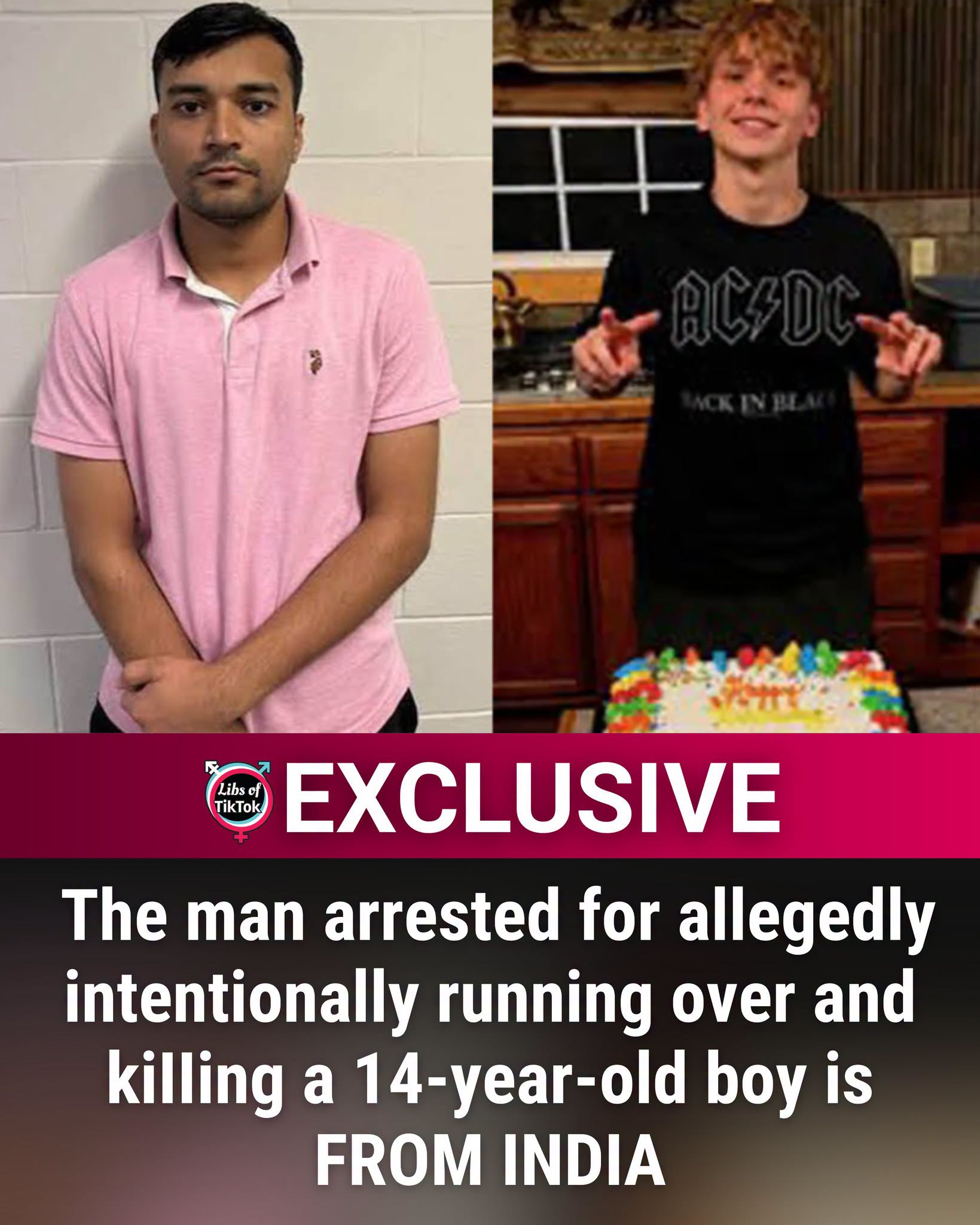
An escalating confrontation between a local merchant and a young cyclist has reached a tragic and severe legal turning point. Police have formally upgraded charges against a business proprietor accused of pursuing a teenager riding an electric bike and striking him with a vehicle, elevating the case from dangerous driving offences to outright murder.
Click image below for a chance to win 2k a week for 1 week

The incident—which began as an alleged minor shoplifting dispute or property altercation—has reignited intense national debate surrounding the legal boundaries of self-defence, property protection, and citizen’s arrests. What began as a brief physical pursuit ended in a fatal crash that law enforcement officials allege was an intentional and unlawful act of lethal force.
The Incident: From Minor Dispute to Fatal Pursuit
According to police statements and preliminary court documents, the chain of events was set in motion during regular business hours when a confrontation occurred inside or directly outside the owner’s retail premises. Authorities allege the teenager departed the scene on a high-powered electric bicycle shortly after the initial dispute.
Rather than relying solely on emergency services, the store owner reportedly entered a private motor vehicle to locate and pursue the teen through surrounding suburban streets. Witnesses described seeing a mid-sized passenger vehicle traveling at elevated speeds close behind the electric bicycle through residential corridors.

Timeline of Events (Police Allegations):
[Initial Altercation] ➔ [Teen Departs on E-Bike] ➔ [Owner Pursues in Vehicle] ➔ [Fatal Collision] ➔ [Upgraded Murder Charge]
The chase concluded several blocks away when the merchant’s vehicle collided directly with the rear of the e-bike. Emergency responders arrived within minutes, but the teenager suffered non-survivable injuries and was pronounced dead at the scene.
Investigators initially held the shopkeeper under motor vehicle collision charges while collision-reconstruction experts analyzed skid marks, vehicle telemetry, CCTV footage, and eyewitness accounts. Following a detailed investigation, prosecutors determined that the driver’s actions demonstrated intent or reckless indifference to human life, justifying the upgraded charge of murder.
https://www.facebook.com/photo?fbid=1100780119223667&set=a.153424523959236
https://www.facebook.com/photo/?fbid=29068673416085583&set=a.1162768480436118
https://www.facebook.com/photo/?fbid=1430025152585747&set=a.434057518849187
https://www.facebook.com/photo/?fbid=1652478313137996&set=a.508336507552188
https://www.facebook.com/photo/?fbid=2308677776609031&set=a.665751954234963
https://www.facebook.com/photo/?fbid=1092592400070584&set=a.179325108063989
https://www.facebook.com/photo/?fbid=1748228663974036&set=a.640939781369602
https://www.facebook.com/photo?fbid=1564743832364122&set=a.608463471325501

Legal Analysis: Citizen’s Arrest vs. Unlawful Retaliation
This case highlights a critical boundary in criminal jurisprudence: the distinction between lawful apprehension and excessive or unlawful retaliation.
While business owners routinely face frustration over property crime, shoplifting, and anti-social behavior, statutory laws in most jurisdictions impose strict restrictions on how far a private citizen can go to protect property or detain a suspect.
| Legal Concept | Permissible Scope | Unlawful Overreach |
| Protecting Property | Using reasonable, non-lethal physical barrier methods. | Deploying deadly force (such as a motor vehicle) to retrieve minor property. |
| Citizen’s Arrest | Detaining a suspect on-scene using proportional force until police arrive. | Initiating a high-speed vehicle pursuit through public roads. |
| Self-Defence | Proportional response to an immediate, imminent threat of bodily harm. | Following an fleeing individual who no longer poses a direct threat. |
Legal scholars note that using a motor vehicle—a machine weighing over a tonne—to strike a light vehicle like a bicycle or scooter almost universally meets the threshold for extreme violence. Once a suspect flees the immediate premises and no longer poses a direct physical threat to anyone on-site, the legal justification for self-defence or immediate physical restraint ceases to apply.
The visceral horror of losing a child to sudden, preventable vehicular violence mirrors the raw emotional devastation that frequently grips communities during public tragedies. Much like the harrowing footage captured in “Heartbreak on Camera: The Devastating Moment a Father Learns His 13-Year-Old Was Killed by a Drunk Driver”, where a parent’s grief is laid bare in an instant, family members and onlookers in West Melbourne were left shattered as details of the fatal pursuit emerged. As one observer reflected in the viral broadcast coverage of sudden loss:
“You never expect a routine morning to end with a life cut short on the asphalt… to see a father broken in real time on camera puts a face on a tragedy that words alone can’t describe.”
Community Impact and Public Reaction
The tragic fatality and subsequent murder charge have divided public reaction while raising urgent safety questions for local communities:
-
Merchant Frustrations: Local business groups acknowledge the immense stress and financial toll of rising petty theft and property damage, but leaders uniformly emphasize that violence is never an acceptable solution.
-
Vehicle Safety & E-Bikes: The incident underscores the severe vulnerability of e-bike riders when sharing roadways with motor vehicles, particularly in high-stress or road-rage situations.
-
Law Enforcement Directives: Police spokespersons have repeatedly reminded the public never to take the law into their own hands or engage in vehicle pursuits.
“We understand the frustrations surrounding property crime,” a police spokesperson noted during a media briefing. “However, the protection of human life far outweighs any piece of retail inventory. Pursuing individuals in a motor vehicle creates an extreme risk to the public and will be met with the full force of the law.”
What Happens Next in Court?
With murder charges formally laid, the defendant faces a complex legal battle ahead. Key developments expected over the coming months include:
-
Bail Application: Given the severity of a murder charge, securing bail will present a formidable legal hurdle, requiring defense attorneys to demonstrate exceptional circumstances or a low flight risk.
-
Forensic Evidence Review: Investigators will submit detailed collision reconstruction data, analyzing brake application timing, vehicle speed, and impact trajectories to determine whether the collision was intentional, reckless, or accidental.
-
Committed for Trial: The case will proceed through preliminary hearings to determine if sufficient evidence exists to stand trial in the Higher/Supreme Court jurisdiction.
As the legal proceedings unfold, this case serves as a solemn reminder of how quickly a localized conflict can escalate into loss of life and life-altering legal consequences.

Frequently Asked Questions (FAQ)
Can a store owner legally chase someone who steals from their shop?
In most jurisdictions, a store owner or employee may attempt a reasonable, non-violent citizen’s arrest on their premises if they directly witness a crime. However, initiating a dangerous chase—especially using a motor vehicle—exceeds reasonable force and exposes the pursuer to severe criminal liability.
Why was the charge upgraded from dangerous driving to murder?
Charges are upgraded when investigators uncover evidence indicating intent to cause serious bodily harm or murder, or a conscious disregard for human life (reckless indifference). In motor vehicle cases, telemetry, lack of braking evidence, or deliberate steering into a target can justify an upgrade to murder.
What is the difference between manslaughter and murder in pursuit cases?
Manslaughter generally involves unlawful killing without prior intent (such as criminal negligence or an unlawful dangerous act). Murder implies malice aforethought, deliberate intent to cause death or grievous bodily harm, or extreme reckless indifference to human life during an intentional act.
Does a motor vehicle count as a deadly weapon?
Yes. Courts consistently treat motor vehicles as potentially lethal weapons when used intentionally or recklessly to strike pedestrians, cyclists, or other motorists.
1. What are the chances he avoids prison?
Extremely low. The legal odds are heavily stacked against Patel avoiding severe prison time.
Under Florida criminal law, avoiding prison in a second-degree murder charge usually requires either a complete acquittal at trial, a successful self-defense (“Stand Your Ground”) motion, or a jury finding him guilty only of a lesser non-violent misdemeanor.
-
“Stand Your Ground” / Self-Defense Defense Won’t Apply: Under Florida law (Fla. Stat. § 776.012), deadly force can only be used if a person reasonably believes it is necessary to prevent imminent death or great bodily harm. Because Russey was fleeing on an e-bike, away from the store, and posed no immediate physical threat to Patel inside his vehicle, self-defense is legally non-viable.
-
No Legal Right to Use Deadly Force for Property: Under Florida law, private citizens cannot deploy deadly force (such as running someone down with a car) solely to protect or retrieve stolen property.
-
Hit-and-Run Actions Destroy Credibility: Leaving a 14-year-old in a ditch for nearly an hour without calling 911 or rendering aid demonstrates what prosecutors will argue is “depraved mind” (reckless indifference to human life), which fulfills the legal standard for Second-Degree Murder in Florida.
2. When is sentencing?
Sentencing is likely 1 to 2 years away.
Because Patel was rearrested on October 18, 2026, and is currently held without bond at the Brevard County Jail, the legal proceedings have only just begun:
-
Initial Court Appearances & Arraignment: Scheduled for mid-November 2026, where the State Attorney’s Office (18th Judicial Circuit) will formally file the indictment.
-
Pre-Trial Discovery Phase: This typically takes 9 to 18 months, as defense attorneys and prosecutors review vehicle telemetry, CCTV, crash reconstruction data, and medical examiner reports.
-
Trial & Sentencing Window: A high-profile murder trial of this magnitude usually goes to trial in late 2027 or early 2028. If convicted (or if he accepts a plea deal), sentencing occurs roughly 30 to 60 days following the verdict.
3. How did he expect to get away with it?
According to police affidavits, Patel appears to have believed he could sever the connection between his initial 911 call reporting a burglary and the hit-and-run crash down the street.
-
The Cover-Up Attempt: Patel called 911 at 4:21 a.m. to report his shattered store door. After chasing and hitting Russey half a mile away on Cocoanut Grove Avenue, he turned his car around, returned to the store, and spoke directly with responding officers—deliberately withholding that he had just struck the teenager.
-
Hoping the Scene Wouldn’t Be Linked Immediately: Patel likely assumed officers searching the area would treat the injured teen as an unrelated hit-and-run by an unknown motorist.
-
How the Plan Collapsed: Police quickly noticed fresh, severe front-end damage on Patel’s personal vehicle while at the store. When confronted with surveillance telemetry and vehicle damage during questioning, Patel admitted he tracked down the teenager out of anger.
4. What is his most likely prison sentence?
In Florida, Second-Degree Murder (Fla. Stat. § 782.04) is a First-Degree Felony punishable by up to life in prison.
Under the Florida Criminal Punishment Code guidelines:
-
Minimum Mandatory: The statutory minimum sentence for second-degree murder is 16.75 years (201 months) in state prison without a plea agreement.
-
Likely Sentence Range (If Convicted at Trial): 25 years to Life Imprisonment.
-
Aggravating Factors: The victim was a 14-year-old minor, the weapon used was a 3,000lb vehicle, and Patel fled the scene without calling for emergency medical help while the teen lay dying in a ditch.
-
-
Likely Plea Deal Range: If Patel’s defense team negotiates a plea deal (e.g., pleading guilty to Manslaughter or reduced Second-Degree Murder to avoid a life sentence), he would realistically look at 15 to 25 years in state prison.

