

I. The Trajectory of a Contemporary Fallout
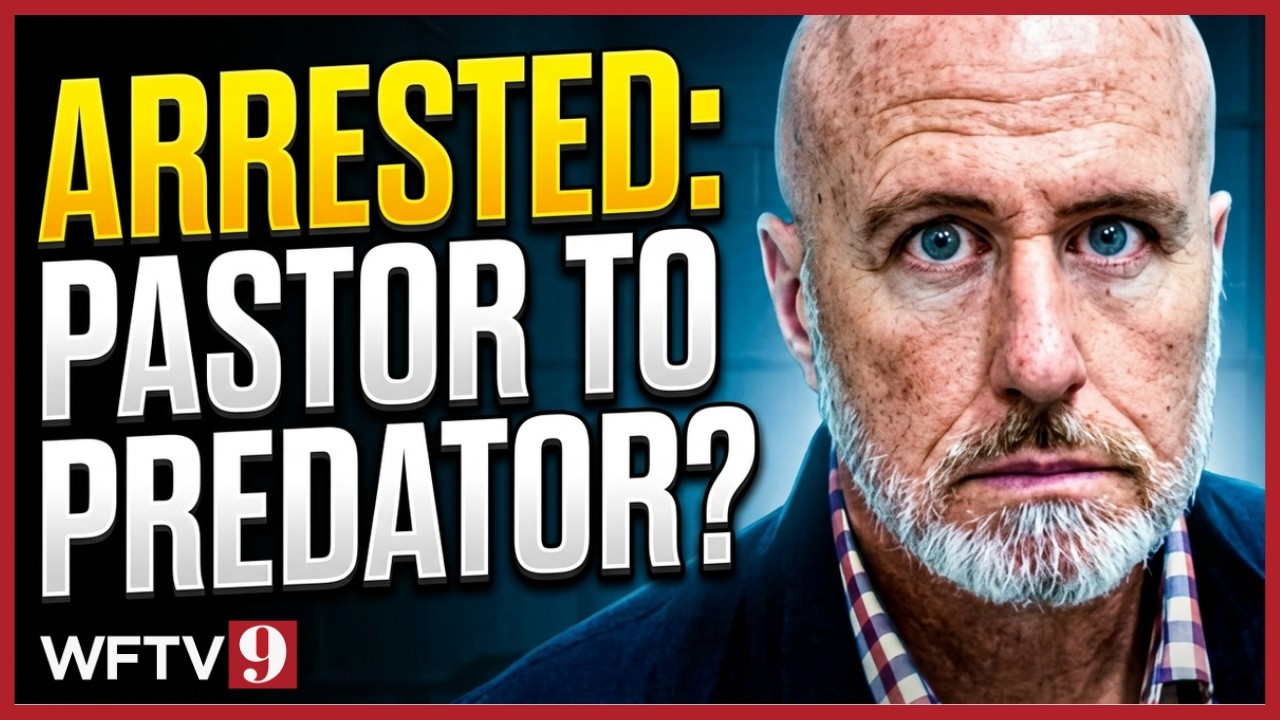
The operational framework of modern cyber-crimes units relies heavily on digital invisibility to intercept online bad actors. In May 2026, the intersection of specialized law enforcement tactics and prominent public evangelical figures culminated in a historic arrest in Central Florida. Alan Manning Chambers, 56, an influential figure within the national “ex-gay” conversion therapy movement and a former executive director of the now-defunct Exodus International ministry, was arrested and formally charged by the Orange County Sheriff’s Office. Chambers faces three separate third-degree felony charges stemming from an online undercover operation: Solicitation of a Minor via Computer, Transmission of Material Harmful to Minors, and Unlawful Use of a Two-Way Communication Device [07:23].
Click here to watch his dramatic arrest footage
The operational details compiled by Florida law enforcement highlight a highly digital sting paradigm. Beginning in February 2026, detectives launched an encrypted investigation monitoring accounts suspected of seeking out minors for illicit meetings [02:12]. Operating a covert account under specific protocols, an undercover cyber-crimes investigator initiated contact with a digital profile identifying itself as “John David,” who claimed to be the Chief Executive Officer of an upscale metropolitan fashion enterprise. Law enforcement officials later established through precise IP address tracking, subscription ledger metadata, and subsequent physical staging that the persona was entirely operated by Chambers, who served as a prominent retail operations vice president on Park Avenue in Winter Park, Florida [02:28].
II. Affidavits, Timelines, and Encrypted Tracking
The criminal affidavit detailing the interaction maps out a structural progression from casual social media contact to an explicit rendezvous blueprint. According to investigative files, the primary contact began on the multimedia application Snapchat before being deliberately migrated to the encrypted platform Telegram by the user persona [02:36]. Throughout the logs spanning March and April 2026, the undercover detective explicitly and repeatedly stated that he was a 14-year-old boy. Despite this explicit parameters of age, Chambers continuously pursued digital intimacy and behavioral escalation.
The timeline detailed in the court filings establishes a continuous, escalating log of electronic communication:
| Date (2026) | Alleged Communications & Logs | Investigative Significance & Milestones |
| February | Initial engagement initiated on Snapchat under the pseudonym “John David” [02:12]. | Establishment of active digital nexus; target profile positions itself as a corporate executive. |
| March 7 | User expresses intense physical attraction, queries target regarding loss of virginity [03:21]. | Statutory initiation of online solicitation parameters; documentation of predatory framework. |
| March 9 | Offers to personally visit the target to provide close physical care and “make love” [03:40]. | Evidentiary demonstration of intent to transition relationship from digital to physical medium. |
| March 10 | User purges local conversation string; transmits unredacted, explicit self-photographs [03:55]. | Fulfillment of statutory elements regarding transmission of harmful material to minors. |
| April 10–12 | Direct directives issued to order an Uber to a coordinate near Winter Park business office [04:17]. | Overt staging steps toward a physical rendezvous; corroboration of precise work location. |
| May 19 | Tactical interception executed; target undergoes field interrogation and custodial intake [05:41]. | Formal identification, confirmation of profile ownership, and execution of search warrants. |
The state’s evidence features concrete identifiers that undermined any defense of anonymity. Seeking to verify the operator behind the keyboard, investigators served search warrants and subpoenas for the core accounts and primary IP nodes [05:20]. The documentation confirmed that the primary Google account was registered under Chambers’ legal name, while connected Google Pay assets explicitly linked back to his residential address and spouse [05:27]. When tactical teams intercepted Chambers on May 19, he confirmed ownership of the specific Telegram and Snapchat handles, and admitted he was fully aware he was communicating with a 14-year-old child [06:11].
III. The Statutory Framework and Defense Strategies
From a strict defense perspective, navigating an internet sting case involving an undercover officer poses significant challenges. In Florida, each of the third-degree felonies levied against Chambers carries a maximum penalty of up to 5 years in state prison [09:22]. Because the prosecution can seek consecutive rather than concurrent sentencing structures, Chambers faces a substantial maximum exposure profile of 15 years within the Department of Corrections. Furthermore, a conviction under these statutes carries a mandatory, lifelong classification as a registered sexual offender, resulting in total social and professional exclusion.
Legal Analyst Insight: “The primary line of defense in sting cases typically centers heavily on attacking the statutory element of intent. The defense will argue the digital chatter was merely a localized fantasy or aspirational text rather than a real plan to act. However, that framework falls apart when the defendant takes concrete, objective steps toward a physical meeting. Chambers didn’t just type messages; he provided a physical location, set direct dates, and gave transportation instructions.”
As legal analysts note, defense counsel will likely attempt to suppress the highly damaging statements Chambers made directly to major crimes investigators during his initial field interrogation [18:25]. If the defense can argue that Chambers was subjected to a custodial interrogation prior to being fully advised of his Miranda protections, they might successfully exclude his admissions of account ownership and age awareness. However, even if the verbal confessions are suppressed, the state’s forensic trail—comprising IP address matchings, digital device handshakes, and unredacted self-portraits—provides a formidable hurdle for any defense team to overcome at trial.
IV. Editor’s Opinion: The Anatomy of Institutional Duplicity
The prosecution of Alan Chambers will undoubtedly be processed by the public as a study in profound psychological hypocrisy. For decades, Chambers operated at the absolute pinnacle of evangelical conversion therapy culture, serving as the face of an organization that preached that homosexual desire was a spiritual affliction that could be actively prayed away. The revelation that Chambers was covertly using encrypted channels to solicit what he believed to be a young teenage boy highlights the dark reality of public moral crusades.
Sociologically, this case exposes the deep psychological damage caused by conversion therapy. For years, critics and medical professionals have warned that trying to suppress core human identity creates severe trauma. Chambers’ own historical social media commentary—where he openly admitted to “wrestling with all things god, gay, and church” [14:06]—reveals a man trapped inside a prison of his own making. Yet, our empathy for an individual’s personal struggles must end completely when those struggles cross the line into predatory behavior targeting children [16:17].

This case should serve as a definitive wake-up call regarding the systemic nature of digital grooming. Predators are not isolated caricatures; they are frequently well-dressed, affluent professionals who are highly respected within their local business districts and communities [01:19]. The Orange County Sheriff’s Office deserves immense credit for their meticulous approach to this investigation. As this case heads to court, the justice system must send an unmistakable message: no amount of status, religious history, or community influence will insulate a predator from the full consequences of trying to exploit a child.
This total fracture of public and institutional trust closely mirrors another deeply unsettling case from the medical sector: The Betrayal of Trust: Former Metro Detroit Medical Resident Pleads Guilty to Federal Child Pornography Charges. In that landmark federal prosecution, a trusted pediatric medical professional leveraged his clean corporate credentials and professional status to hide unspeakable digital exploitation. Whether operating under the guise of an upscale Park Avenue fashion executive, a highly revered community pastor, or a licensed clinical resident, the psychological profile of these offenders remains consistent. They actively seek out positions of immense social authority, using their perceived prestige as an armor of respectability to insulate themselves from suspicion while engaging in targeted predatory behavior against the most vulnerable segments of society.
❓ Frequently Asked Questions
Q1: What are the specific charges currently pending against Alan Chambers? Alan Chambers has been formally charged in Orange County, Florida, with three separate third-degree felonies: Solicitation of a Minor via Computer, Transmission of Material Harmful to Minors, and Unlawful Use of a Two-Way Communication Device [09:32].
Q2: Did Alan Chambers actually meet or harm an actual child in this case? No. The person Chambers was communicating with was an undercover cyber-crimes detective posing as a 14-year-old boy [02:36]. Under Florida law, soliciting an undercover officer posing as a child carries the same felony weight as soliciting an actual minor.
Q3: What was Exodus International, and what was Chambers’ role in it? Exodus International was one of the world’s largest conversion therapy ministries, promoting the idea that individuals could change their sexual orientation through prayer and counseling. Alan Chambers served as its president until its closure in 2013, at which point he apologized for the harm the organization had caused [11:06].

