

The landscape of American public education relies entirely on a foundational, unspoken contract: parents entrust educators not only with the academic and creative development of their children, but with their absolute physical and psychological safety. When an educator violates that trust, the institutional fallout is immediate, severe, and deeply damaging to the surrounding community.
Click here to watch his arrest footage
This harsh reality gripped the town of White House, Tennessee, following the arrest of a prominent high school faculty member. The intersection of public authority, mandatory reporting laws, and the criminal justice system has sparked an intensive legal proceeding and left a local school district scrambling to address a profound breach of professional ethics.
The Arrest: Allegations Within the Music Department
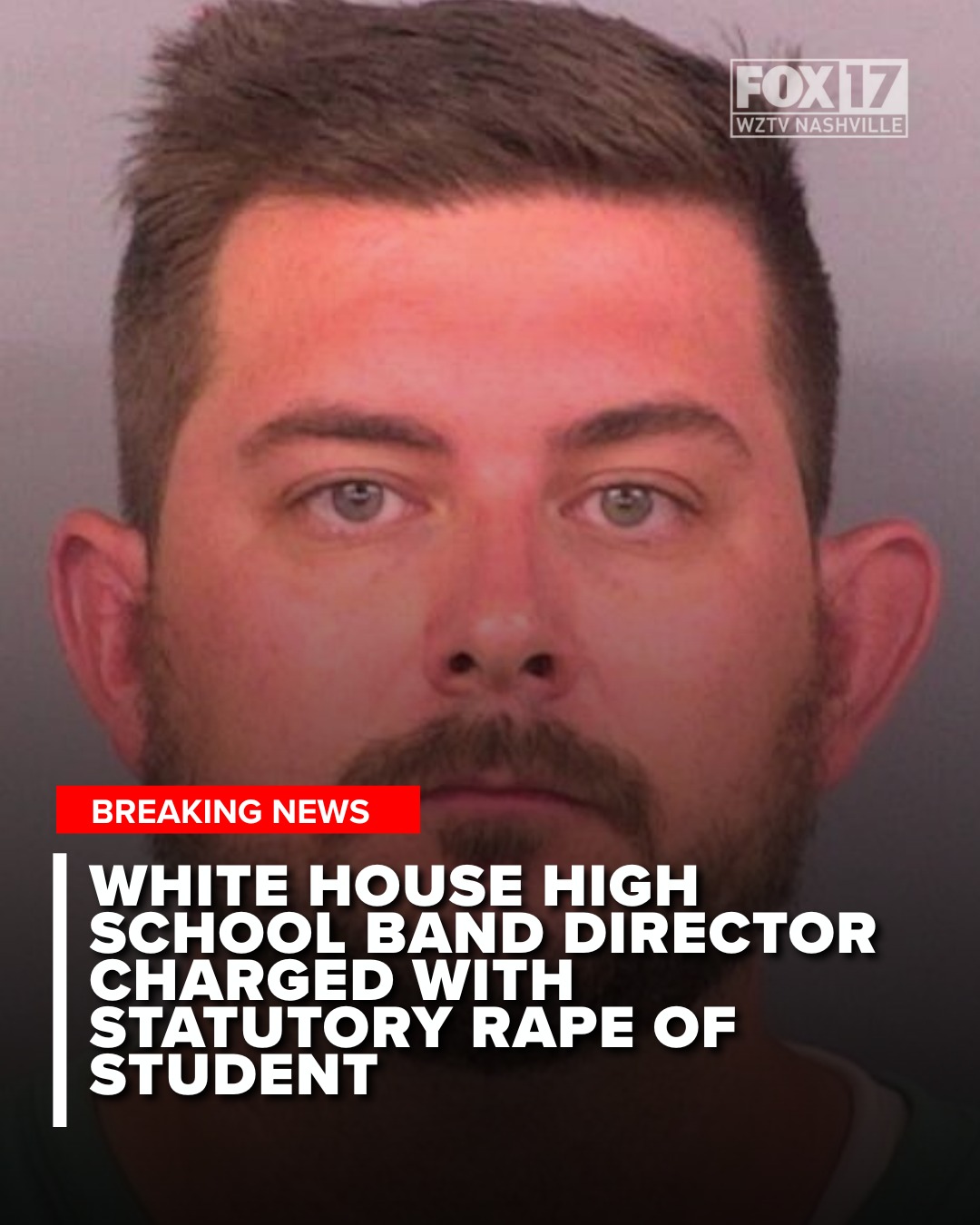
In late May 2026, the Sumner County Sheriff’s Office executed an arrest warrant for 27-year-old Dalton Hawkins, the Director of Bands at White House High School. Hawkins, a visible and influential figure within the school’s extracurricular ecosystem, was taken into custody by sheriff’s deputies immediately after law enforcement and district officials became aware of an alleged inappropriate relationship between the educator and a student.
Following a preliminary investigation by detectives, Hawkins was formally booked into the Sumner County Jail. The gravity of the allegations is reflected directly in the severe financial conditions set for his release.
Suspect: Dalton Hawkins, 27
Position: Band Director, White House High School
Charges: Statutory Rape
Confinement Location: Sumner County Jail, TN
Bail Amount: $600,000
According to Sumner County court records and statements from district administrators, the investigation began swiftly after an initial report was flagged to school leadership. In compliance with Tennessee’s strict mandatory reporting statutes regarding child abuse and the exploitation of minors, school officials immediately deferred the matter to local law enforcement, leading to Hawkins’ prompt removal from campus and subsequent booking.
The Institutional Fallout: Crisis Management in Sumner County
The reaction from the Sumner County Schools district administration was definitive. Because a high school band director occupies a unique position of authority—often spending extended hours with students during after-school rehearsals, weekend competitions, and travel events—the potential for an unchecked abuse of power is a primary concern for risk management and student welfare teams.
Upon confirmation of the criminal charges, district officials immediately terminated Hawkins’ employment and barred him from all school property. School administrators issued correspondences to parents and the broader White House community, emphasizing that the district maintains a zero-tolerance policy regarding any conduct that compromises student safety.
Behind the scenes, the high school initiated its crisis management protocols, making grief counselors and mental health professionals available to students, particularly those within the band program who worked closely under Hawkins’ direction. Extracurricular leaders face the complex task of stabilizing the music department, reassuring anxious parents, and rebuilding an environment of safety and transparency for the student body.
The Legal Landscape of Statutory Rape in Tennessee
The criminal charge filed against Hawkins—statutory rape—is a highly severe offense under the Tennessee Code Annotated (T.C.A. § 39-13-506). In Tennessee, statutory rape occurs when an adult engages in sexual penetration with a minor where there is a significant age disparity, regardless of any claim of “consent” by the minor, as the law deems minors legally incapable of consenting to sexual relationships with adults.
Because Hawkins was an employee of the school district and held a direct position of authority over the student body, the legal ramifications are compounded. Under state sentencing guidelines:
-
Classification: Statutory rape is generally prosecuted as a Class E felony in Tennessee, carrying a baseline penalty of 1 to 6 years in state prison per count for a standard offender.
-
Aggravating Factors: When a position of public trust, employment, or authority is utilized to facilitate the offense, prosecutors routinely seek enhanced sentencing variations, maximum statutory penalties, and consecutive structural counts.
-
The $600,000 Bond: The exceptionally high bail amount of $600,000 signifies that the court views the defendant as either a potential flight risk, a risk to the community, or that the nature of the specific evidence gathered by the Sumner County Sheriff’s Office is extraordinarily severe.
If convicted, Hawkins faces mandatory prison time, the permanent revocation of his educator license, and the lifelong collateral consequence of registering as a classified sex offender, which imposes strict residential and employment restrictions.
The Psychological Mechanics of Grooming and Authority
To understand why cases involving high school band directors, coaches, and teachers are so uniquely destructive, it is necessary to examine the psychological dynamics of authority within an educational setting. Extracurricular directors often cultivate intense loyalty and admiration from their students. Music programs, by their nature, require vulnerability, creative expression, and hundreds of hours of collective dedication.
Predatory educators frequently exploit this environment through a process known psychologically as “grooming.” This behavior typically manifests in distinct, calculated phases:
-
Favoritism: Selecting a specific student for special roles, extra attention, or advanced responsibilities within the ensemble.
-
Boundary Blurring: Transitioning the professional teacher-student relationship into personal territory via private text messages, social media interactions, or late-night discussions under the guise of mentorship.
-
Isolation: Creating scenarios where the student is physically or emotionally isolated from their peer group and parents, establishing the educator as the primary source of validation.
When these boundaries are breached, the psychological trauma inflicted upon the victim can cause severe, long-term harm, including chronic depression, anxiety, a distorted understanding of interpersonal boundaries, and a profound cynicism toward authority figures.
Moving Forward: Strengthening District Safeguards
The arrest of Dalton Hawkins serves as a stark reminder to school districts nationwide that electronic surveillance, strict boundary policies, and ongoing administrative oversight are vital to protecting student populations. Modern educational risk management dictates that text communications between staff and students must strictly occur through approved, transparent school applications rather than private personal numbers or encrypted social media platforms.
As the legal process transitions to a Sumner County courtroom, the community of White House faces the difficult task of healing. While the justice system focuses on the adjudication of the felony charges against Hawkins, the educational community must refocus its energy on supporting the affected student, restoring structural integrity to its arts programs, and ensuring that the safety of the student body remains an absolute, uncompromised priority.
Frequently Asked Questions (FAQ)
Who is Dalton Hawkins? Dalton Hawkins is the 27-year-old former Director of Bands at White House High School in Sumner County, Tennessee.
What are the specific charges against him? Hawkins has been arrested and formally charged with statutory rape following an investigation by the Sumner County Sheriff’s Office.
What is his current legal status? Hawkins is currently being held in custody at the Sumner County Jail on a $600,000 bond pending his initial court appearances.
How did the school district respond to the allegations? Sumner County Schools immediately terminated Hawkins’ employment, banned him from all district property, cooperated fully with law enforcement, and deployed counseling resources to support the student body.
The Rise of Digital Stings: From High School Bands to Campus Politics
The rapid downfall of Dalton Hawkins highlights a shifting landscape in how predatory behavior is uncovered, where digital footprints frequently outpace traditional police work. This dynamic was mirrored perfectly just days prior in South Florida, a case detailed in the viral report “Caught on Grindr: How ‘561 Predator Catchers’ Brought Down a University Politician.” On May 26, 2026, Christian “CJ” Walden—the newly elected Boca Raton House of Representatives Ways and Means Chair for Florida Atlantic University’s Student Government—was arrested in a Delray Beach Home Depot parking lot. Much like Hawkins, Walden was a rising public figure who allegedly utilized a digital platform to solicit a minor. However, while Hawkins was captured through an administrative referral to the sheriff’s office, Walden was brought down by an independent civilian advocate group that intercepted him on the LGBTQ+ dating application, Grindr.
Whether dealing with a 27-year-old high school band director in Tennessee or a 21-year-old campus politician in Florida, these parallel investigations demonstrate a stark reality: public positions of leadership no longer shield individuals from modern digital accountability, as both formal law enforcement dragnets and grassroots vigilante groups continue to close the gap on predatory behavior.
FAU student government member charged after 561 Predator Catchers confrontation in Delray
This news broadcast provides essential regional context, illustrating how independent digital stings are actively reshaping the apprehension of high-profile suspects across the country.

