

In a fast-paced world where efficiency is the ultimate currency, “convenience food” has become the default fuel for the modern worker. At first glance, the trade-off seems logical: you save time on meal preparation and save money on the “cheap” dollar menu. However, much like a high-interest payday loan, the regular consumption of junk food carries a hidden rate of negative compounding interest. While the physical consequences—like a widening waistline—are visible in the mirror, the most devastating damage occurs where you can’t see it: in your cognitive function, your mental health, and your long-term financial security.
This article explores the systemic impact of ultra-processed diets and why prioritizing nutrition is perhaps the most significant financial and psychological investment you can make for your future self.

1. The Physiological Tax: The Internal Cost of Poor Nutrition
The impact of a junk food diet is often discussed in terms of “calories in vs. calories out.” This is a dangerous oversimplification. Nutrition is information; it tells your cells how to behave. When you feed your body highly processed chemicals, refined sugars, and inflammatory oils, you are sending a signal of distress.
Metabolic Dysfunction and Insulin Resistance: The Hidden Medical Debt
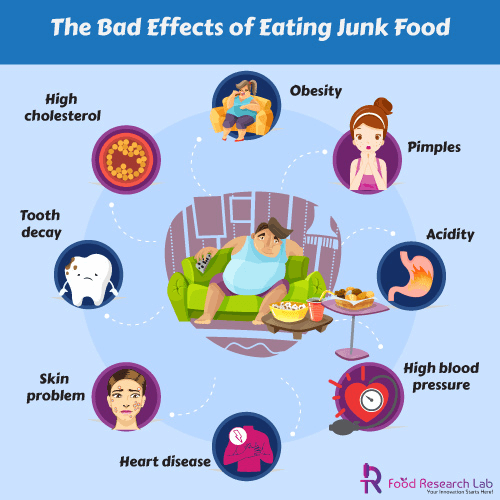
Regular consumption of sugary snacks and refined carbohydrates leads to chronic spikes in blood glucose. Over time, this forces the pancreas to overproduce insulin, eventually leading to Insulin Resistance. This condition is the precursor to Type 2 Diabetes, particularly when combined with a sedentary lifestyle and conditions like PCOS.
From a practical perspective, managing diabetes is an expensive, life-long burden. Medications like Metformin, DPP-4 inhibitors, or sulfonureas are not merely healthcare costs; they are a tax on your lifestyle that could have been avoided through preventive nutrition.
Systemic Inflammation and Joint Health: Paying the Price of Chronic Pain
Many junk foods are high in trans fats and industrial seed oils. These substances are highly pro-inflammatory. Chronic systemic inflammation doesn’t just damage your heart; it leads to severe joint pain and decreased mobility. When your body is in a constant state of “fire,” your ability to work and maintain a high quality of life diminishes, creating a downward spiral of physical decline.
2. The Mental Health Crisis: How Junk Food Hijacks the Brain
The “Gut-Brain Axis” is one of the most critical discoveries in modern medicine. We now know that the majority of our serotonin (the “feel-good” hormone) is produced in the gut. If your gut microbiome is fueled by preservatives and sugar, your mental health will inevitably pay the price.
The Dopamine Trap and Anxiety: The Neurochemical Cycle of Addiction
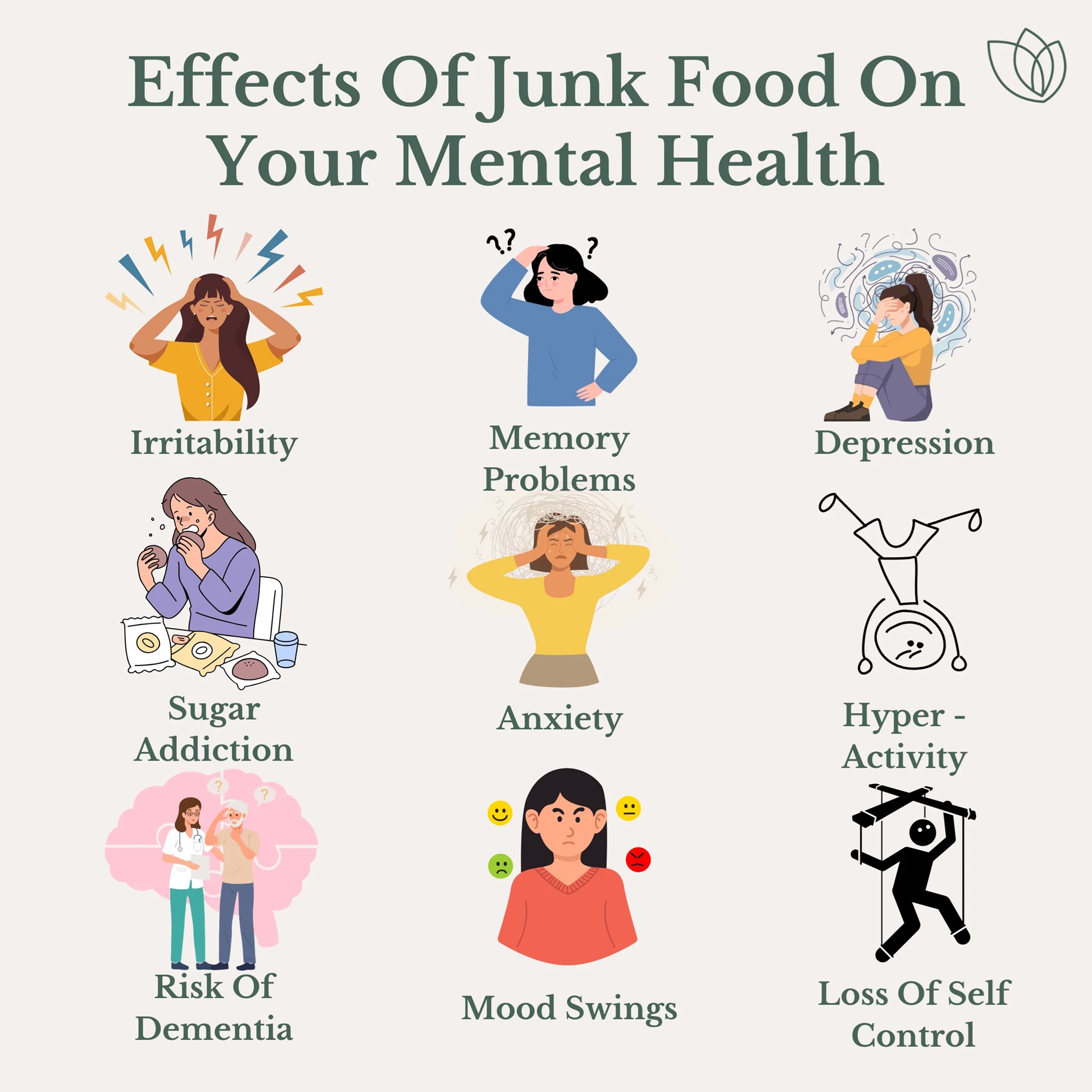
Ultra-processed foods are engineered to be “hyper-palatable.” They trigger a massive dopamine release in the brain’s reward center, similar to the neurochemical response of gambling.
- The Spike: A temporary “high” or comfort.
- The Crash: Rapid decline in blood sugar followed by irritability, anxiety, and depressive symptoms. This cycle creates a form of food addiction, where you eat not to nourish yourself, but to escape the low feeling caused by your previous meal.
Brain Fog and Cognitive Decline: The Cost of Impaired Productivity
“Brain fog”—characterized by poor concentration and memory lapses—is often a direct result of neuroinflammation and sugar crashes. In a competitive economy, your “edge” is your ability to think clearly. By consuming junk food, you are effectively handicapping your most valuable asset: your mind.

3. The Financial Fallacy: The Myth of the “Cheap” Meal
While a single burger might appear cheaper than a steak, a forensic analysis of a “junk food lifestyle” reveals a staggering long-term deficit.
The Unit Cost of Satiety: Why Cheap Calories are Expensive
When you buy processed food, you are paying for packaging, marketing, and processing—not nutrients.
- The Comparison: Staples like rice, oats, and dried beans provide significantly more “satiety per dollar.”
- The Addiction Tax: Because junk food is designed to be non-satiating (low in fiber), you require more of it to feel full, leading to frequent, expensive spending cycles.
The “Hidden Leaks” in Your Budget: Tracing the Financial Erosion
- The “Add-on” Effect: A $2 burger rarely stays $2 once you add soda, fries, or delivery fees.
- Lowered Productivity: Frequent fatigue and “sick days” due to poor immunity lead to lost wages and stalled career growth.
- Dental Liabilities: High-sugar diets are the primary driver of cavities and gum disease, which result in astronomical out-of-pocket costs later in life.
4. Legal and Long-term Economic Analysis
From a liability perspective, your health profile is an ongoing assessment of your future value and risk.
- Insurance Premiums: The Rising Cost of Risk As chronic health issues like hypertension and high cholesterol develop, your life and health insurance premiums rise. In many jurisdictions, your “insurability” is directly tied to biomarkers that junk food destroys.
- Opportunity Cost: The Hidden Ceiling on Career Success If you are “absent” from work—either physically or mentally (absenteeism vs. presenteeism)—you lose the compounding interest of career promotions and salary hikes.
- Medication Dependency: The Perpetual Liability The long-term cost of managing lifestyle-induced diseases often exceeds the “savings” of eating cheap food by a factor of 100x.
FAQ: Nutrition and the Bottom Line
Q: Is it really cheaper to eat healthy? A: Yes, when calculated by weight and nutrient density. While “pre-cut” salads are expensive, bulk staples like lentils, eggs, and frozen vegetables are the cheapest foods per calorie on the market.
Q: Can a bad diet cause clinical depression? A: Research shows a strong link between highly processed diets and increased symptoms of anxiety and depression due to the disruption of dopamine receptors and gut health.
Q: How long does it take to see a “financial” return on healthy eating? A: Immediately. By cutting out sodas, snacks, and delivery apps, most people save $150–$400 per month, which can be redirected into compounding investments.
A Personal Perspective: The Turning Point
I speak from experience. I once weighed over 102kg (225 lbs) at 5’9″. My life was a cycle of fatigue, low confidence, and a leaking bank account. Transitioning to a whole-food diet wasn’t just about the scale; it was about reclaiming my mental “edge” and my financial freedom.
The Takeaway: You don’t have to be perfect. A treat here and there won’t ruin you. But if you want your future self to be wealthy, sharp, and happy, you must stop treating your body like a trash can and start treating it like a high-performance machine.
What do you think? Has your diet impacted your productivity or your wallet? Join the conversation below.
Disclaimer: This article is for informational purposes and does not constitute medical or financial advice. Always consult with a professional before making significant lifestyle changes.

