

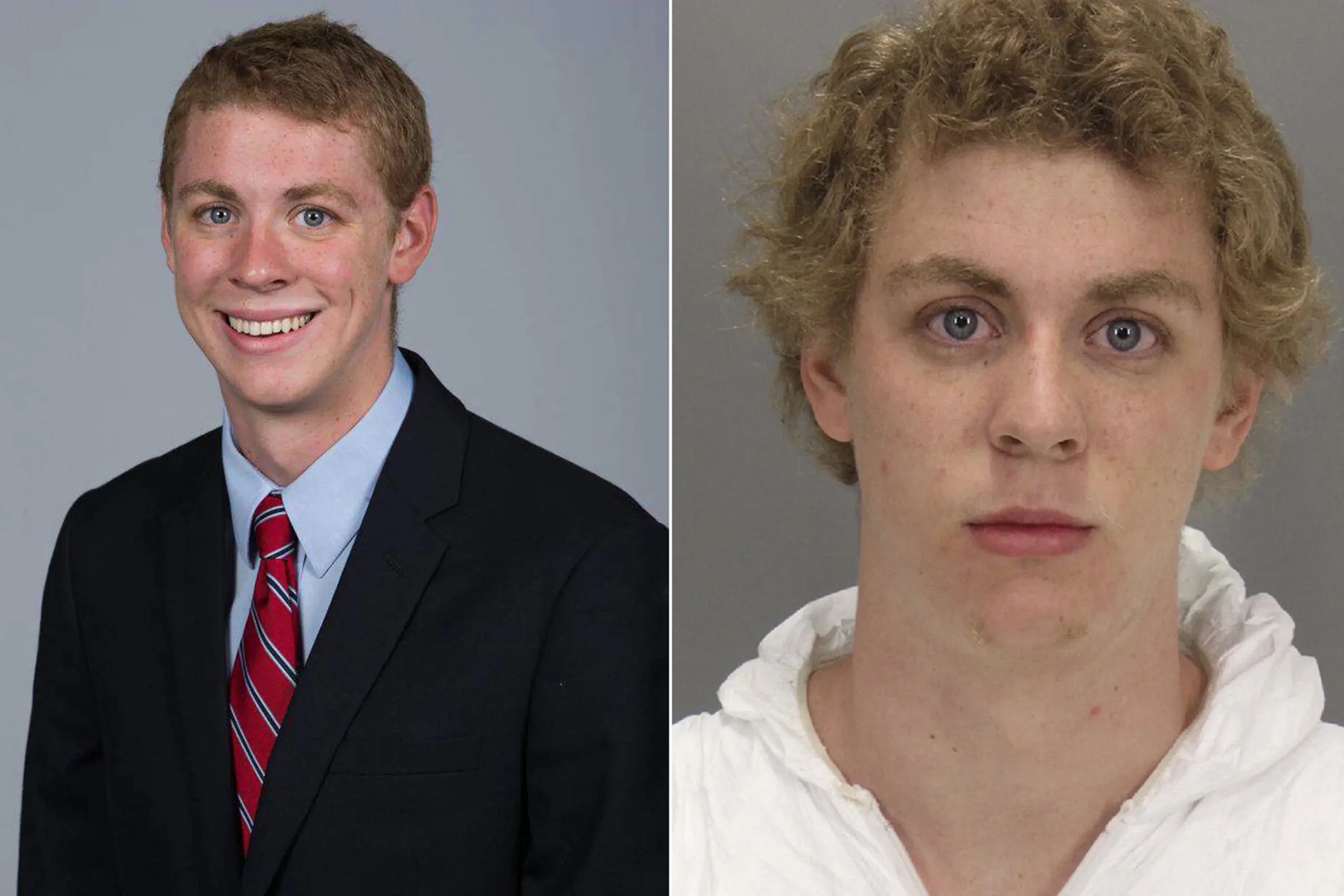
In January 2015, an event unfolded behind a dumpster outside a fraternity house at Stanford University that would permanently change the national dialogue surrounding sexual assault, institutional privilege, and judicial leniency.
A 19-year-old star athlete named Brock Allen Turner was caught committing sexual assault against an unconscious woman. Over a decade later, despite attempts to shed his identity, change his name, and blend into quiet suburban anonymity, Turner’s case continues to make headlines worldwide—frequently resurfacing in outlets like the Daily Mail and standing alongside modern campus controversies such as the Cornell fraternity sexual misconduct allegations.
Click this link or image below for a chance to win

The enduring public fury surrounding Brock Turner is not merely about one man’s crime; it is about what his case exposed regarding institutional protection, judicial bias, and the enduring battle for accountability.
https://www.facebook.com/groups/2593621180772599/posts/4218830704918297/
https://www.facebook.com/photo/?fbid=1376188637878467&set=a.541571498006856
Inside Brock Turner's secret life with new identity as united family image is shattered by fresh scandal a decade after ex Stanford swimmer sexually assaulted unconscious co-ed outside frat house
byu/dailymail inNewsThread
fat disabled guy roasted
https://www.facebook.com/groups/895385969284085/permalink/1569634801859195/
The Crime at Stanford: How Brock Turner Was Caught
On the night of January 17–18, 2015, Brock Turner—a decorated freshman swimmer at Stanford University—attended a party at the Kappa Alpha fraternity house. Also at the party was Chanel Miller (initially known to the public as “Emily Doe”).
Late into the night, Miller became severely incapacitated. Turner took her outside into a dark area behind a dumpster, where he proceeded to sexually assault her while she was completely unconscious.

Unlike many campus assault cases that devolve into “he-said, she-said” disputes, Turner was caught in the act by neutral third-party eyewitnesses.
Two Swedish graduate students, Carl-Fredrik Arndt and Peter Jonsson, were riding their bicycles past the fraternity house when they noticed Turner on top of an motionless woman. Realizing she was unresponsive, Jonsson confronted Turner. When Turner stood up and attempted to flee, the two Swedish students tackled him to the ground, restrained him, and held him until police arrived.
+-------------------------------------------------------------------------------+
|                       THE STANFORD APPREHENSION MATRIX                        |
+-------------------------------------------------------------------------------+
|  A. THE INCIDENT    ──► Assault on an unconscious victim behind a dumpster.   |
|  B. THE WITNESSES   ──► Two Swedish graduate students biking past the scene.  |
|  C. THE INTERVENTION ──► Confronted offender, tackled him as he fled.          |
|  D. THE APPREHENSION──► Restrained Turner on-site until police arrival.       |
+-------------------------------------------------------------------------------+The Trial, The Sentence, and The National Outrage
In March 2016, a jury found Brock Turner guilty of three felony counts:
-
Assault with intent to commit rape
-
Sexual penetration of an unconscious person
-
Sexual penetration of an intoxicated person
Although prosecutors pushed for a six-year state prison sentence, Santa Clara County Superior Court Judge Aaron Persky sentenced Turner to just six months in county jail, followed by probation. Persky cited Turner’s young age, his clean prior record, and the argument that a harsh prison sentence would have a “severe impact on him” and ruin his athletic future.
Adding fuel to the fire, Turner was released from jail after serving just three months due to “good behavior”.
The sentence ignited immediate international outrage. The backlash intensified when Chanel Miller’s powerful, 7,200-word Victim Impact Statement was published in full online, detailing the emotional and physical trauma of the assault and the court’s institutional betrayal. The statement went viral, read by millions globally, and cemented the trial as a turning point in the modern movement against sexual violence.
Very happy to report that Brock Turner is still this afraid to be seen in public.
by inFauxmoi
The public anger resulted in historical political action: Judge Aaron Persky became the first California judge recalled by voters in over 80 years.
Where Is Brock Turner Now? The Name Change and Rebranding
Following his early release in September 2016, Turner returned to his hometown in Ohio as a registered sex offender.
However, because his full name had become synonymous with campus sexual violence, Turner took active steps to escape his reputation:
-
Dropping “Brock”: Media investigations, notably covered in detail by outlets like the Daily Mail, revealed that Turner abandoned his first name and began going exclusively by his middle name, “Allen Turner”.
-
Relocation & Employment: Reports indicated that Turner moved between locations in Ohio, working low-profile packaging and manufacturing jobs.
-
Public Tracking: Despite his attempts to live under the radar, digital communities, investigative outlets, and local residents frequently identify his presence, tracking his public sex offender registry updates and sharing warnings online whenever he relocates or secures new employment.
Why Brock Turner Is Still Mentioned A Decade Later
A decade after the assault, Brock Turner’s name remains an active topic in media analysis, social policy debates, and campus safety advocacy.
1. The Benchmark for Institutional & Judicial Bias
Brock Turner became the absolute archetype of privileged leniency. Whenever a high-profile case emerges involving a wealthy, athletic, or well-connected defendant who receives a light sentence, legal commentators immediately reference the “Brock Turner Standard” to illustrate how systems protect perpetrators over victims.
2. The Link to Recent Campus Controversies (The Cornell Case)
Recent high-profile university scandals—such as the allegations surrounding fraternity members at Cornell University—frequently drag Turner’s name back into national news outlets like the Daily Mail and The Guardian. Critics point out that despite a decade of public promises, institutional review boards, and safety reform, prestigious universities and fraternity systems still struggle with institutional protection, enabling patterns of behavior that mirror the 2015 Stanford case.
3. The Digital Footprint & Continuous Outrage
Unlike era-bound cases from the pre-internet age, the digital footprint of People v. Turner is permanent. Every time Turner moves, changes his public name, or registers in a new jurisdiction, online networks ensure that his history remains visible. Outlets know that coverage of his ongoing life generates massive engagement because the original sentence remains an unhealed social wound.
he Link to Modern Campus Controversies
The echoes of institutional protection seen at Stanford are continually mirrored in subsequent university scandals, a reality dissected in depth in The Cornell 7 Gang Rape Case: Lawsuit, Accused Members, and Future Legal Outlook. That case—centering on allegations of a 2024 fraternity house assault, initial prosecutorial inaction, and intense public scrutiny over how universities protect institutional reputation—proves that elite academic institutions still struggle with systemic accountability. Just as Turner’s case forced a national reckoning, modern lawsuits keep the spotlight on how administrative boards handle predatory behavior.
Frequently Asked Questions (FAQ)
What crimes was Brock Turner convicted of?
Brock Turner was convicted of three felony counts: assault with intent to commit rape, sexual penetration of an unconscious person, and sexual penetration of an intoxicated person.
How long did Brock Turner actually spend in jail?
While sentenced to six months in county jail by Judge Aaron Persky, Turner was released after serving only three months due to credit for good behavior.
What is Brock Turner’s new name?
Brock Turner did not legally change his name via a court order, but he dropped his first name “Brock” and now goes by his middle name, Allen Turner, in an effort to avoid recognition.
Who were the heroes who stopped the assault?
Two Swedish graduate students, Carl-Fredrik Arndt and Peter Jonsson, stopped the assault while riding their bicycles past the fraternity house. They confronted Turner, tackled him when he tried to flee, and held him until police arrived.
What happened to the judge in the Brock Turner case?
Judge Aaron Persky faced intense international criticism for handing down a lenient three-month actual sentence. In 2018, California voters successfully recalled Persky from his judicial seat.
Who was the victim in the Brock Turner case?
The victim, initially known as “Emily Doe,” publicly revealed her identity in 2019 as Chanel Miller. She authored the critically acclaimed memoir Know My Name, detailing her experience before, during, and after the trial.
How the sexual assault effective ruined Brock Turner’s life, reputation and future
While Brock Turner received a remarkably lenient judicial sentence from the court, the long-term non-judicial consequences—often referred to as the “digital sentence”—have dismantled his career prospects, destroyed his reputation, and permanently restricted his personal life.
In the digital age, a crime of this magnitude accompanied by massive global coverage creates a permanent public record. Here is a breakdown of the negative, lifelong impacts the case has had on his existence:
1. Total Destruction of Athletic & Academic Ambitions
Prior to the assault, Turner was on an elite trajectory as a top-tier collegiate athlete:
-
Termination of Olympic/Professional Swimming Aspirations: Turner was a national-level swimmer and a All-American athlete at Stanford, with prospects of competing at the Olympic trials. Following his arrest, USA Swimming permanently banned him from participating in any USA Swimming-sanctioned events or representing the national team.
-
Expulsion from Stanford: Stanford University immediately suspended him after his arrest and subsequently issued a formal ban, barring him from ever stepping foot on campus or completing his degree.
-
Loss of Scholarship & Elite Network: The prestige, corporate sponsorships, and alumni networking associated with a Stanford education were permanently erased overnight.
2. Perpetual Career Paralysis & Unemployment Challenges
Earning a living with an internationally infamous felony record presents near-insurmountable hurdles in the professional world:
  +-------------------------------------------------------------------------+
  |                     THE PROFESSIONAL BLOCKADE MATRIX                    |
  +-------------------------------------------------------------------------+
  |  Standard Corporate Employment ──► Blocked by background checks.        |
  |  Professional Licensing       ──► Disqualified due to felony record.   |
  |  Low-Profile / Blue-Collar    ──► Exposed by ongoing media tracking.    |
  +-------------------------------------------------------------------------+
-
Failed Background Checks: Standard corporate hiring, white-collar professions, finance, and client-facing roles are entirely closed to him.
-
Media & Public Exposure: Whenever Turner has secured employment—such as entry-level positions in factory supply chains, packaging plants, or local manufacturing in Ohio—investigative journalists and online activist groups quickly locate him. Public pressure, boycott threats, and phone campaigns targeting his employers routinely make maintaining employment unstable.
3. Sex Offender Registry Restrictions & Spatial Isolation
Being a registered sex offender imposes strict legal limitations on where a person can live, work, and travel:
-
Geographic Restrictions: Under state sex-offender laws, Turner is legally prohibited from living near schools, playgrounds, daycare centers, or park facilities. This severely limits housing options and forces residence in restricted suburban or industrial pockets.
-
Mandatory Public Reporting: Every time he changes his address, updates his vehicle registration, or changes jobs, he must report the information to local law enforcement, making his location a matter of public record accessible via state registry databases.
4. Complete Loss of Anonymity & Social Ostracization
Perhaps the most pervasive negative effect is the total loss of a private identity:
-
The “Meme/Standard” Status: His name (“Brock Turner”) became a widespread internet idiom for privileged entitlement and sexual misconduct. Educational textbooks, legal ethics courses, and sensitivity workshops explicitly cite his case as a textbook example of systemic failure.
-
Inability to Rebrand: Despite shedding “Brock” to go by his middle name, Allen Turner, continuous reporting by outlets like the Daily Mail and vigilant social media users ensure that any attempts to assimilate into a normal social life or dating pool are quickly met with public exposure.
-
Family & Financial Drain: The legal defense fees, appeals, ongoing public relations fallout, and loss of future earning potential placed a massive, irreversible financial and emotional strain on his immediate family.
-

Know My Name by Chanel Miller – Penguin Books Australia
Summary
While Brock Turner evaded a lengthy prison term, he effectively traded a multi-year prison sentence for a lifetime of social, professional, and personal exile. He lives in a state of permanent visibility where his past actions follow every job application, housing request, and public appearance.

