

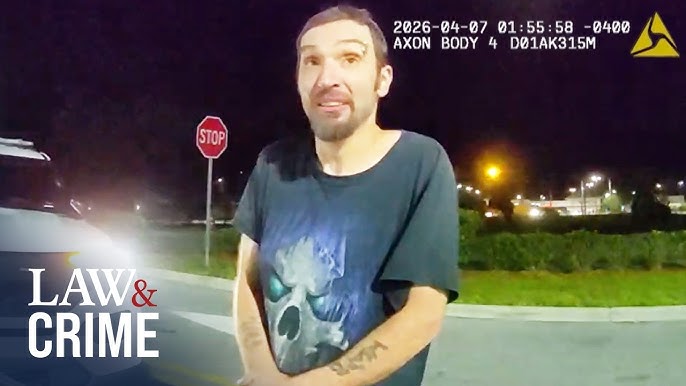
What began as an emergency response to a residential structure fire rapidly spiraled into a complex, horrific first-degree murder investigation. Newly released bodycam footage, home surveillance, and forensic evidence trace the final, chaotic hours of a family home turned into a crime scene, culminating in the indictment of William Larsen.
Authorities allege that Larsen used arson not just once, but twice, as a tool of destruction and a smokescreen to commit a brutal homicide against his mother’s longtime fiancé. This is the complete, chronological breakdown of how a routine emergency call exposed a calculated execution.
The Video Timeline: Key Moments in the Investigation
The digital trail left behind by bodycam audio, cruiser dashcams, and local residential security footage allowed investigators to map out Larsen’s movements down to the exact minute.
| Timestamp | Event Description | Investigative Significance |
| 00:00 – 02:15 | Initial dispatch and arrival at the burning residence. | First responders document the suspicious, localized origin of the smoke. |
| 02:16 – 05:40 | Initial police questioning of William Larsen at the perimeter. | Bodycam captures Larsen’s erratic behavior and conflicting statements. |
| 05:41 – 11:10 | The gap: Larsen leaves the scene and returns undetected. | Neighbors’ surveillance catches Larsen slipping back into the property. |
| 11:11 – 15:45 | Discovery of the victim and the second ignition event. | Fire crews find the fatally stabbed fiancé as a secondary blaze is lit. |
| 15:46 – End | Forensic teardown, arrest footage, and grand jury indictment. | Detailing the physical evidence that secured first-degree murder charges. |
Act I: The First Emergency Response
Late in the evening, local emergency dispatch received a panicked call reporting thick black smoke billowing from a suburban family home. When fire crews and local sheriff’s deputies arrived on the scene, the situation appeared to be a standard, localized domestic fire.
As firefighters worked to contain the blaze to a rear wing of the property, deputies began interviewing individuals gathered near the emergency perimeter. Among them was William Larsen, the son of the homeowner.
Larsen’s initial interaction with law enforcement—captured entirely on police bodycam—was immediately flagged by seasoned investigators as highly unusual. While his mother’s home was actively burning, Larsen appeared detached, defensive, and deeply hyper-vigilant regarding the police presence.
He provided a disjointed alibi explaining his presence at the property, asserting he had merely arrived to check on the structure after noticing smoke from a distance. Lacking definitive physical evidence of foul play at that exact moment, deputies noted his details and directed him to clear the active hot zone.

[CRIME SCENE PROFILE: INITIAL INCIDENT]
Target Property: Single-Family Residential Home
First Alarm: Smoke reported in rear residential wing
Primary Suspect: William Larsen (Observed at perimeter)
Initial Police Stance: Investigating suspicious origin of structural fire
Act II: The Deadly Intermission
What police did not know at the time was that their initial departure created a lethal window of opportunity. Less than forty-five minutes after being told to clear the area, Larsen returned to the vulnerable structure.
Surveillance cameras from a neighboring property caught a dark figure, later identified by clothing matches as Larsen, cutting through a side driveway and sneaking back inside through an unlocked side door.
Inside the home was his mother’s longtime fiancé. Investigators allege that a violent confrontation immediately erupted within the smoke-damaged living room. Utilizing a sharp, heavy blade, Larsen launched a relentless physical assault on the older man.
The medical examiner’s subsequent report revealed that the victim suffered extensive defensive wounds to his forearms and hands, indicating a desperate, losing struggle for his life before sustaining fatal stab wounds to the torso.
Forensic Insight: The presence of extensive defensive lacerations proves the victim was fully conscious and fighting back during the initial phase of the assault, debunking any defense claims of sudden provocation or accidental injury.
Act III: The Second Smokescreen
To cover up the physical evidence of the homicide, Larsen allegedly turned back to his primary tool: acceleration. Authorities state that Larsen deliberately ignited a secondary, far more aggressive fire directly adjacent to where the victim’s body lay.
This second fire was intentionally fueled using localized accelerants to ensure the flames would spread rapidly, threatening to consume the biological evidence of the stabbing and compromise the integrity of the scene.
As neighbors noticed the secondary eruption of flames and called emergency services back to the address, Larsen fled the area on foot. However, his calculation failed to account for the rapid response times of local fire units, who arrived quickly enough to suppress the secondary blaze before it could completely cremate the crime scene.
Act IV: The Forensic Takedown and Indictment
When tactical teams and forensic investigators re-entered the charred interior, they immediately realized they were no longer dealing with a simple property crime. The discovery of the victim’s body—showing clear, deep knife wounds that could not be attributed to structural collapse or thermal damage—instantly shifted the operation into a homicide investigation.
Arson investigators discovered two distinct points of origin for the fires, with no physical or electrical connection between them. This structural anomaly conclusively proved intentional human intervention. Furthermore, a blood-tracking canine unit located discarded, blood-stained garments hidden in a nearby drainage ditch along Larsen’s documented flight path.
Armed with neighboring surveillance logs, bodycam footage showing his presence at the first fire, and matching DNA profiles recovered from the discarded clothing, prosecutors presented a comprehensive case to the grand jury. William Larsen was officially arrested during a tactical raid and has since been indicted on formal charges of:
-
First-Degree Murder: Reflecting the calculated, premeditated nature of returning to the property to kill.
-
Aggravated Arson (Multiple Counts): For intentionally destroying a residential structure and using fire to conceal an active felony.
Larsen currently remains held without bail as the legal system prepares for a high-profile trial that relies heavily on the digital and physical trail he left behind in the smoke.
The tragic case of U.S. Army soldier Zarrius Hildabrand culminated in a high-profile Alaska jury trial where he was convicted of second-degree murder for the death of his 21-year-old wife, Saria Barney Hildabrand, a National Guard combat medic. Prosecutors revealed that the fatal confrontation occurred in August 2023 after Saria discovered evidence on his phone that he was cheating and sending messages to other women. After shooting her in the head, Hildabrand engaged in a cold, calculated cover-up: he purchased cleaning supplies and a large trash bin, stuffed her body inside, and hid her remains under blankets and pillows in a storm drain near their Anchorage apartment. While Hildabrand claimed “selective amnesia” from drinking and feigned helpfulness by participating in search parties with his wife’s distraught family, investigators uncovered a blood-saturated mattress in their home, completely dismantling his web of lies and leading to his conviction.
For more details on the final outcome of the case and the dramatic courtroom moments, you can watch this Court TV report on the Zarrius Hildabrand verdict. This video covers the jury’s final decision, the specific evidence used to convict him, and the immediate aftermath of the trial, or read that article here: Army Soldier Zarrius Hildabrand Kills His Wife And Hides Body In Storm Drain After She Confronted Him For Cheating.

