

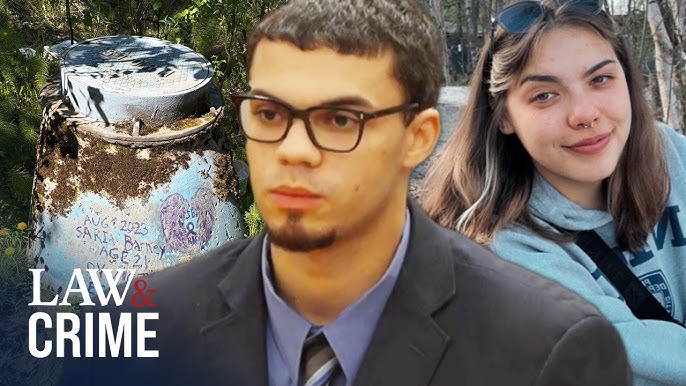
The Anatomy of a Cover-Up: Inside the Conviction of Army Soldier Zarrius Hildabrand
The digital space is flooded with true crime stories, but few are as deeply disturbing as the betrayal that unfolded in Anchorage, Alaska. In a chilling conclusion to a case that has gripped the nation, a jury has found 21-year-old US Army soldier Zarrius Hildabrand guilty of second-degree murder and multiple counts of tampering with physical evidence.
The victim? His new bride, 21-year-old Saria Barney Hildabrand, a dedicated combat medic with the Alaska Army National Guard.
What makes this case stand out—and what has true crime enthusiasts dissecting every frame of the recent Law&Crime Network broadcast—is the jaw-dropping, deeply bizarre behavior of the defendant when he made the high-risk decision to take the witness stand in his own defense. From unrepentant timelines to brutal cross-examinations, here is the full breakdown of how a military husband’s web of lies completely unraveled.
The Video Breakdown & Key Timestamps
The video provided by the Law&Crime Network offers an unprecedented, raw look into the final moments of the trial, including the exact cross-examination exchange that sealed Hildabrand’s fate.
-
[03:59] – The Discovery: Narrative coverage of how a civilian drone operator found Saria Barney’s remains hidden inside a dark storm drain.
-
[07:05] – The Blackout Defense: Zarrius explains his history of heavy drinking, claiming he regularly experienced complete blackouts and would check his phone the next morning to see what he did.
-
[08:15] – The Snapchat Affair: Zarrius openly admits to cheating on Saria with a woman named Cheyenne, stating he kept talking to her so it “wouldn’t look suspicious.”
-
[11:51] – A Shocking Coping Mechanism: The defendant admits to browsing adult websites on his phone immediately after discovering his wife’s dead body, claiming he was “seeking comfort.”
-
[14:08] – The Clean-Up Receipts: Zarrius reviews the Fred Meyer and Lowe’s receipts, explaining under oath how he loaded his wife’s body into a 96-gallon garbage bin.
-
[20:03] – The Fatal Cross-Examination: The prosecution corners Zarrius, forcing him to make the ultimate admission: he cannot actually verify that he didn’t pull the trigger.
-
[24:27] – The Verdict: The dramatic courtroom moment the jury finds Zarrius Hildabrand guilty of second-degree murder and multiple counts of evidence tampering.
-
[25:45] – A Mother’s Voice: Saria’s mother, Meredith Barney, sits down for an exclusive post-verdict interview, breaking down her immediate suspicions of her son-in-law.
The Ultimate Betrayal: A Fatal Birthday Night
The tragedy began in August 2023. Zarrius Hildabrand, an infantryman serving with the 11th Airborne Division at Joint Base Elmendorf-Richardson, went out with friends and his wife to celebrate his 21st birthday. According to prosecutors, the night took a sharp downward turn when Zarrius was denied entry to a local bar for being heavily intoxicated.
The couple returned to their apartment, where a volatile confrontation erupted. The prosecution argued that Saria had uncovered undeniable proof that Zarrius was engaged in a long-distance Snapchat affair with a woman from Kentucky named Cheyenne. The argument ended in cold-blooded murder.
-

Details emerge in arrest of husband related to Anchorage woman’s death The next morning, Saria failed to show up for her shift at her civilian job at a local restaurant called Bread and Brew. By Monday, Zarrius officially reported her missing, sparking massive volunteer search efforts across the military community. But as volunteers combed through the dense Alaska wilderness, a dark truth was hiding just yards away from the couple’s front door. Days later, a volunteer drone operator spotted something unusual overhead, directing police to a local storm drain. Inside, investigators discovered Saria’s body. She had died from a single gunshot wound to the head.
“I Had to Hide My Wife’s Body”: The Courtroom Admissions
Taking the stand in a murder trial is a legal gamble that rarely pays off, and Zarrius Hildabrand’s direct testimony quickly turned surreal. Rather than portraying a grieving husband, Hildabrand stood before the jury and matter-of-factly detailed the exact steps he took to clean up the crime scene and dispose of his wife.
The defense team put forward a highly unconventional theory: they argued that Zarrius had blacked out from heavy drinking, fell into a deep sleep, and woke up to find that Saria had tragically died from an accidental, self-inflicted gunshot wound. Terrified of being blamed, Zarrius claimed he panicked and went into a state of “emotional overload.”
The physical evidence presented by the prosecution painted a highly methodical, cold-blooded clean-up operation. The state produced retail receipts detailing the exact items Zarrius bought while his wife was missing.
The Paper Trail of a Killer
-
Fred Meyer Receipt: Purchased hydrogen peroxide, a spray bottle, Q-tips, and deodorant. Zarrius admitted on the stand that these were bought specifically to bleach the mattress and scrub the bedroom walls.
-
Lowe’s Receipt: Bought a massive, 96-gallon black two-wheeled trash can. Zarrius flatly admitted to the court that this purchase was made for the explicit purpose of transport.
https://www.facebook.com/reel/2571246109959831
The Cross-Examination Blunder: “I Don’t Know If I Pulled The Trigger”
The absolute turning point of the trial arrived during cross-examination. The prosecutor relentlessly dismantled Hildabrand’s blackout defense, pointing out the vast logical gaps in his story.
The prosecutor asked how a high-powered 9mm handgun could fire inside a small apartment without waking him up—especially given his military background around loud artillery. The exchange culminated in a devastating blow to the defense when the prosecutor looked directly at the defendant and asked how he could possibly know he didn’t put the gun to Saria’s head after she confronted him about his infidelity.
Hildabrand’s response shocked the courtroom: “I don’t.”
By admitting under oath that he could not rule out the possibility that he pulled the trigger during his blackout, the defense’s accidental shooting theory completely crumbled. The prosecution cleanly demonstrated that instead of calling 911, running for help, or notifying her military command, Zarrius instantly pivoted to self-preservation.
https://www.facebook.com/NateEatonReporter/posts/pfbid0n22Pqc5c8p8ryroDa8TDcLWfmJBtcgdi41ed1FJfexZAyHJnZLKCRd2GuYHtz3TulA Mother’s Perspective: “I Knew Immediately”
The second half of the broadcast features a deeply moving interview with Meredith Barney, Saria’s mother. Meredith, a professional therapist who specializes in problematic behaviors, revealed that her instinct flared the second she received the initial phone call from Zarrius.
-
https://www.facebook.com/reel/2571246109959831/
Meredith explained that Zarrius was cold, rigid, and completely unhelpful during the search efforts, frequently ghosting family meetings. In one terrifying moment during the search, Zarrius insisted on bringing a firearm to look in the woods with Saria’s family. Intuiting the danger, Meredith refused his company, explicitly fearing for her own safety.
While the second-degree murder conviction carries a sentence of 15 to 99 years in prison, Meredith notes that true justice is bittersweet. The verdict holds a killer accountable, but it cannot bring back a driven, empathetic, and joyous 21-year-old woman who had her entire life ahead of her. Zarrius Hildabrand’s formal sentencing is officially scheduled for October 23rd.
The chilling reality of intimate partner violence cutting short a young life is a tragic theme that extends far beyond the military community. The calculated deception and sudden escalation seen in the Hildabrand trial draw a sobering parallel to another horrific incident of domestic violence covered by global media. In a deeply disturbing case detailed by Global Crime Feed, an estranged wife in San Jose was brutally attacked and killed by her husband following a separation. Both cases highlight a devastating pattern recognized all too well by law enforcement and domestic abuse advocates: the period immediately following a victim’s attempt to establish independence or confront an unfaithful, abusive partner remains the most volatile and dangerous window for lethal retaliation.
-

