

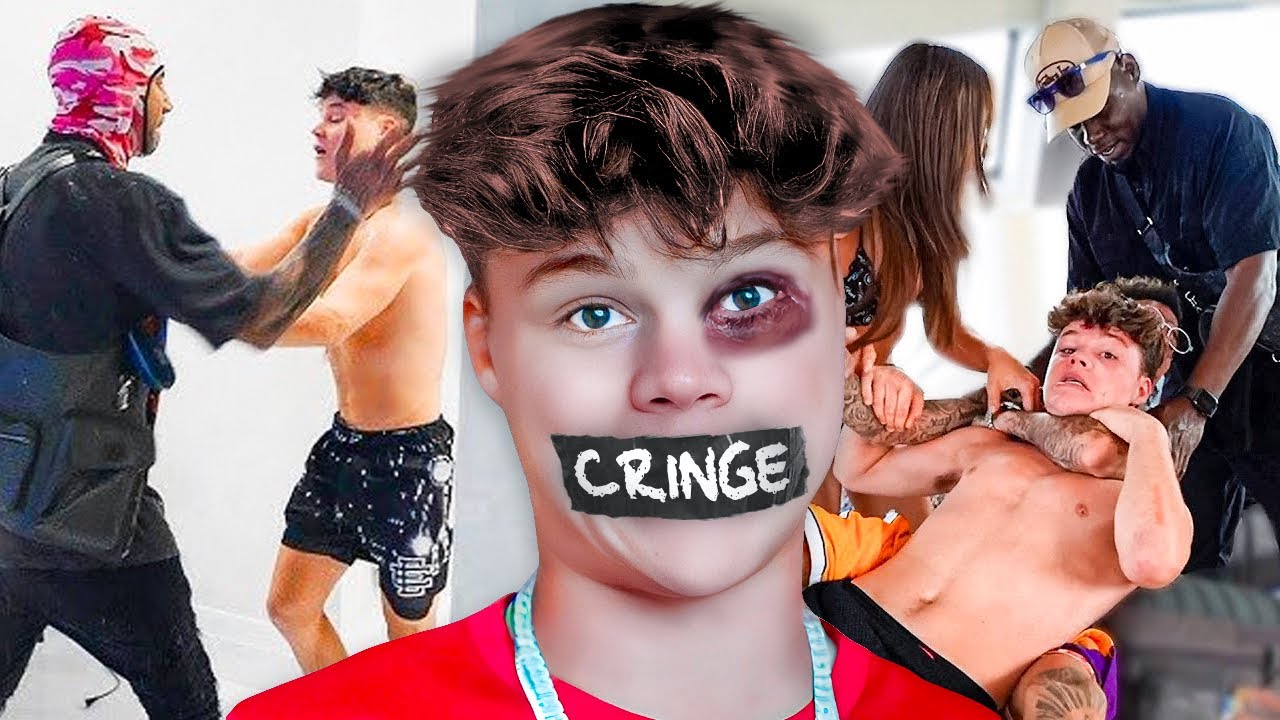
Introduction: The King of Anti-Charisma
In the modern attention economy, there is a fine line between being an entertainer and being a public nuisance. While early YouTube thrived on lighthearted pranks, a toxic subgenre of content creation has emerged over the last few years: clout-chasing via deliberate antagonism. At the absolute forefront of this polarizing shift is Jack Doherty.
Click here to watch Jack Doherty getting slapped

Once a teenage YouTuber pulling standard flipping and gymnastics stunts, Doherty shifted his content strategy to focus almost entirely on confrontation, boundary-stepping, and reckless behavior. Today, he stands as one of the most universally criticized figures across YouTube and live-streaming platforms like Kick. But what turned this young creator into internet enemy number one? The answer lies in a calculated pattern of public harassment, lack of accountability, and a willingness to risk human lives for digital metrics.
1. The Weaponization of Public Harassment
The primary reason why Jack Doherty is disliked stems from his fundamental approach to “entertainment.” His content model relies heavily on entering public spaces—malls, gyms, grocery stores—and intentionally violating the boundaries of unsuspecting strangers.
Unlike traditional pranksters whose comedy relies on confusion or self-deprecation, Doherty’s videos lean heavily into entitlement. He routinely films people without their consent, mocks security guards trying to do their jobs, and escalates minor interactions into tense physical standoffs. For the average viewer, watching a wealthy, privileged teenager belittle working-class citizens or scream at strangers for algorithmic engagement isn’t funny—it’s deeply uncomfortable and malicious.
2. Outsourcing Violence: The Security Guard Dynamic
One of the most heavily criticized aspects of Doherty’s behavior is his reliance on oversized personal security guards. In numerous viral clips, Doherty can be seen instigating verbal fights with people significantly larger or older than him. However, the moment the target of his harassment pushes back or stands their ground, Doherty hides behind his paid security team.
This dynamic reached a boiling point during several public altercations where Doherty’s security guards physically assaulted individuals who reacted to Doherty’s provocations. Viewers widely view this behavior as deeply cowardly: Doherty manufactures a conflict for views, safely insulated from the physical consequences of his own mouth, while his employees take the legal and physical risks.
3. The Infamous McLaren Crash: Recklessness on Live Stream
If his public harassment earned him dislike, his literal disregard for human life earned him widespread condemnation. The definitive turning point in Doherty’s career occurred when he crashed his customized, $200,000 neon-blue McLaren while live-streaming to thousands of viewers on Kick.
The Anatomy of a Live-Streamed Disaster
During a rainy morning, Doherty was captured on camera driving down a slick highway while actively looking down at his phone to read his chat. He lost control of the high-powered supercar, hydroplaned across lanes, and slammed violently into a highway guardrail.
[Doherty Distracted by Phone Chat] ➔ [Hydroplane on Wet Highway] ➔ [Severe Guardrail Collision]
The immediate aftermath of the crash horrified the internet. Instead of checking on his passenger and cameraman, Michael, who was visibly bleeding from a severe head wound and trapped in the vehicle, Doherty’s first instinct was to hand his phone to a bystander to keep filming. He barked orders to ensure the camera angles captured the wreckage and complained about his car while his friend sat dazed and bleeding next to him.
The Public Backlash: The sheer lack of empathy displayed in that moment completely shattered any remaining defense of his character. The clip went viral globally, drawing condemnation from mainstream news outlets, veteran content creators, and the general public. Within hours of the crash, Kick issued a permanent ban against Doherty for violating their safety guidelines regarding illegal and dangerous activities.
4. Legal Troubles and Local Arrests
Doherty’s behavior has frequently crossed the line from social media obnoxiousness into actual illegal activity, resulting in multiple run-ins with law enforcement and business owners.
The Beverly Hills Trespassing and Detainment
Doherty has been kicked out of and banned from dozens of prominent locations across the United States. He was famously detained by police officers in Beverly Hills after staging disruptive pranks in high-end retail districts. Law enforcement has repeatedly warned him that using public and private property as a playground for non-consensual pranks constitutes criminal trespassing and disturbing the peace.

The Threat of Civil Lawsuits
Beyond arrests, Doherty faces mounting civil legal battles. Following the McLaren crash, legal experts and insurance analysts openly noted that filming oneself driving distractedly on a live stream constitutes gross negligence. The financial and legal fallout from his inner circle, property owners, and the state has turned his pursuit of clout into a highly litigious nightmare.
5. The Societal Backlash Against “Clout Culture”
Ultimately, Jack Doherty has become the poster child for everything wrong with modern influencer culture. He represents a generational shift where creators value metrics over morals, and view negative attention as a financial victory.
Every time Doherty posts an apology video, it is widely panned as insincere—a corporate checklist item checked off before he returns to the exact same behavior in his next upload. His inability to read the room, combined with an overt display of unearned wealth, has created a profound sense of fatigue among internet audiences.
Conclusion: A Broken Business Model
The internet is slowly shifting away from rewarding toxic behavior. While Jack Doherty successfully built a multi-million follower empire on the back of controversy, his long-term viability as a creator is severely damaged. Major platforms are tightening their terms of service, brands refuse to touch his content, and his peer group of fellow creators routinely distance themselves from his brand.
Jack Doherty is not disliked because he tells bad jokes; he is disliked because his content relies on the active degradation of others and a total absence of human empathy. As audiences demand more authentic, constructive entertainment, the era of the toxic prankster is rapidly drawing to a close—leaving Doherty as a stark cautionary tale of what happens when you trade your integrity for clicks.
The Darker Orbit: Death Threats, Exposes, and Secret Telegram Wars
As the public backlash against Jack Doherty continues to mount, his orbit has increasingly intersected with the darker, criminal underbelly of the internet’s “alpha male” influencer communities. To understand why Jack Doherty is disliked on such a visceral level, one must look at the toxic ecosystem he participates in—a space where legal lines are constantly blurred. This darker side of clout culture was recently blown wide open in the explosive commentary space, notably highlighted by the video titled “The Anatomy of a Death Threat: Jon Bravo Exposes ‘King Azoulay’ Secret Telegram Warnings.”
In the investigative piece, creator Jon Bravo completely pulled back the curtain on Ben “King” Azoulay, a controversial internet figure with a serious criminal history, revealing a pattern of intimidation, hidden substance abuse allegations, and direct, terrifying secret Telegram warnings aimed at silencing critics. For audiences tracking the modern downfall of digital creators, this crossover underscores a terrifying truth: creators like Doherty are no longer just making annoying prank videos. They are operating in an aggressive, high-stakes ecosystem filled with real-world crime, legal exposure, and underground threats, turning what used to be internet drama into dangerous, real-life criminality.

