

Legal Notice: The following report provides a summary of ongoing legal proceedings and historical records. Under the Australian legal system, all individuals are presumed innocent until proven guilty in a court of law. This report is for informational purposes and does not constitute legal advice.

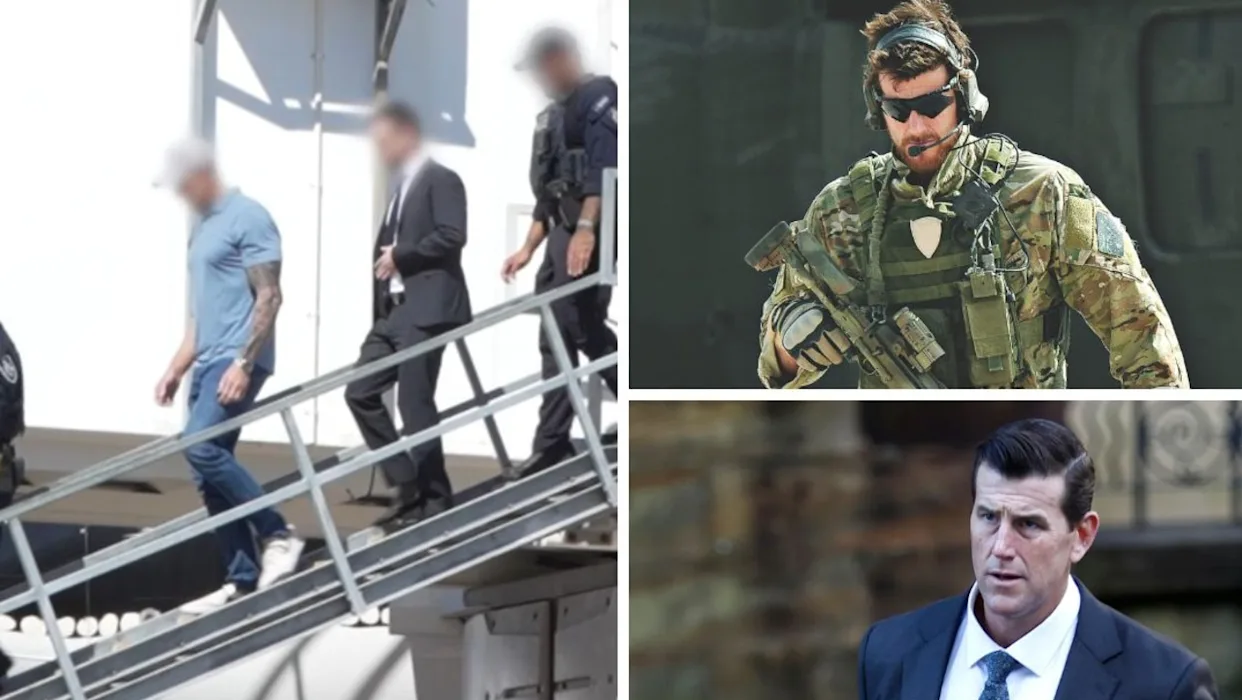
The arrest of Ben Roberts-Smith at Sydney Airport on Tuesday, April 7, 2026, marks a watershed moment for the Australian judicial and military systems. As a recipient of the Victoria Cross, Roberts-Smith has occupied a singular position in the national consciousness. However, following years of exhaustive investigation, he now faces five counts of the war crime of murder related to his service in Afghanistan.
This case is being closely monitored by legal scholars and international observers, as it represents a significant application of the laws of armed conflict within a domestic criminal framework.
Career Trajectory and Distinguished Service
Benjamin Roberts-Smith was born in Perth in 1978 into a family with a deep-seated tradition of public and military service. Influenced by this background, he enlisted in the Australian Regular Army in 1996. After early deployments, he successfully completed the selection process for the Special Air Service Regiment (SASR) in 2003.
During his tenure in the SASR, Roberts-Smith received several of the nation’s highest honors for his actions during the War in Afghanistan:
-
Medal for Gallantry (2006): Awarded for his role in defending his patrol against a superior force in the Chora Pass.
-
Victoria Cross for Australia (2011): Awarded for conspicuous gallantry during a 2010 operation in Tizak, where he neutralized enemy machine-gun positions under fire.
Following his honorable discharge in 2013, Roberts-Smith successfully pivoted to the corporate sector, earning an MBA and assuming executive roles within the Seven Network.

Investigative Findings and the Path to Prosecution
The public narrative surrounding Roberts-Smith’s service began to shift in 2017 and 2018. Investigative reporting by The Sydney Morning Herald, The Age, and The Canberra Times alleged that several members of the SASR, including Roberts-Smith, were involved in the unlawful treatment of non-combatants and prisoners between 2009 and 2012.
Specific allegations investigated by authorities include:
-
The 2012 Darwan Allegation: Claims involving the death of a non-combatant following a fall from a cliff.
-
Unlawful Executions: Allegations concerning the treatment of unarmed individuals under the control of Australian forces.
-
Organizational Culture: Reports regarding the internal environment and interpersonal conduct within specialized units.
The 2023 Civil Defamation Trial
In response to these reports, Roberts-Smith initiated a defamation lawsuit against the publishers. In 2023, Justice Anthony Besanko dismissed the case, finding that the news organizations had established the “substantial truth” of several of the most serious allegations on the balance of probabilities.
It is important to note that while the civil trial established a “balance of probabilities,” the current criminal proceedings require the prosecution to prove guilt “beyond a reasonable doubt”—the highest standard in the Australian legal system.
The 2026 Criminal Indictment
The current charges are the culmination of a multi-year investigation by the Office of the Special Investigator (OSI) and the Australian Federal Police (AFP). Roberts-Smith has been remanded in custody following his arrest on April 7, 2026.
The indictment involves five counts of murder categorized as war crimes. These charges signify the first time a Victoria Cross recipient has faced such a prosecution in Australian history, underscoring the government’s commitment to the Brereton Report recommendations and international humanitarian obligations.
Comparison of Legal Frameworks
| Feature | Civil Proceedings (2023) | Criminal Proceedings (2026) |
| Legal Venue | Federal Court of Australia | Criminal Jurisdiction |
| Burden of Proof | Balance of Probabilities | Beyond a Reasonable Doubt |
| Primary Focus | Defamation and Reputation | Criminal Liability and Justice |
| Potential Penalty | Financial Costs | Life Imprisonment |
Editor’s Strategic Analysis
The prosecution of Ben Roberts-Smith serves as a significant test for the institutional integrity of the Australian Defence Force (ADF). In my view, the move from civil findings to a formal criminal indictment suggests that investigators believe they have met the rigorous evidentiary thresholds required for a war crimes prosecution.
This case represents a necessary, albeit difficult, evolution in how modern militaries handle allegations of misconduct. By pursuing this matter through a transparent judicial process, the Australian legal system reaffirms that the laws of armed conflict apply universally, regardless of an individual’s rank or previous decorations. As an editor following these developments, I believe the trial will provide a critical framework for military accountability and the protection of international humanitarian standards in the 21st century.
Section Addition: The Standard of Proof and Legal Thresholds
A critical aspect for readers to understand is the transition from a civil defamation ruling to a criminal prosecution. In the 2023 civil trial, the burden of proof was the “balance of probabilities”—a standard where the court determines if an event was “more likely than not” to have occurred. However, the 2026 criminal proceedings in the New South Wales court system operate under the significantly higher threshold of “beyond a reasonable doubt.” This distinction is vital; while the civil court established the “substantial truth” of several allegations, the criminal court must find that no other reasonable explanation exists except for the guilt of the accused.
Institutional Reform and the Brereton Report
The prosecution is a direct outgrowth of the Brereton Report (the Inspector-General of the Australian Defence Force Afghanistan Inquiry), which investigated hundreds of allegations of misconduct between 2005 and 2016. This report did more than just recommend criminal investigations; it triggered a fundamental cultural shift within the Australian Defence Force (ADF).
The “Office of the Special Investigator” (OSI) was specifically created to manage these complex, long-term inquiries. For the ADF, this case serves as a benchmark for Command Responsibility. It raises the question of how military culture is monitored in elite units and what safeguards are necessary to ensure that the rules of engagement are strictly adhered to, even in high-pressure, “last-mile” combat scenarios. This trial is not just about the actions of one individual, but about the transparency and accountability of the entire military infrastructure.
The Global Precedent for International Humanitarian Law
International observers from organizations such as Amnesty International have noted that this prosecution is a rare and significant application of the Geneva Conventions within a domestic setting. By choosing to prosecute such a high-profile, decorated figure, Australia is signaling to the global community that its commitment to international law is absolute. This sets a precedent for how modern democracies handle legacy allegations from the “War on Terror” era, balancing national security concerns with the ethical requirements of global justice.
Reference Links: For further official information, readers may consult the public media releases from the Australian Federal Police (AFP) and the Office of the Special Investigator (OSI).

