

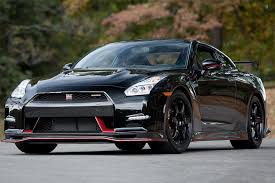
Introduction: The Birth of a Giant
In the pantheon of automotive legends, few names command as much respect as “Godzilla.” While the moniker originally belonged to the Skyline GT-R R32 of the early 1990s, the Nissan GT-R R35 cemented this title into the global consciousness upon its debut. Released as a standalone model, the R35 represented a paradigm shift in performance engineering.
When it first hit the scene in 2007/2008, it didn’t just compete with the European elite; it decimated them. By offering the performance of a Ferrari F430 or a Lamborghini Gallardo at a fraction of the price, the GT-R democratized speed. Nearly two decades later, even as production concludes in various global markets, the R35 stands as a testament to Japanese engineering prowess and a “supercar killer” that refuses to age.
1. Engineering Mastery: The Heart of the Beast
The R35 is not merely a car; it is a masterpiece of precision engineering. At its core lies the VR38DETT, a 3.8-liter twin-turbocharged V6 engine. What makes this engine truly special is the “Takumi” philosophy. Each GT-R engine is hand-assembled by one of only a handful of master craftsmen in a climate-controlled clean room in Yokohama, Japan.
Performance by the Numbers
- Acceleration: The R35 is a master of the “dig.” Utilizing a sophisticated ATTESA E-TS All-Wheel-Drive (AWD) system, it can sprint from 0-60 mph in a staggering 2.7 to 2.9 seconds (model dependent). This is achieved through a launch control system that optimizes torque distribution to prevent wheel spin.
- Top Speed: Aerodynamics play a crucial role in the GT-R’s design. With a drag coefficient as low as 0.26, the car can slice through the air to reach a top speed of 205 mph (330 km/h).
- Horsepower Evolution: The R35 has seen a continuous evolution. Early 2009 models launched with 480 hp, but through meticulous refinement, the standard 2024 models push 565 hp, while the Nismo Edition reaches a monstrous 600 hp.
2. The “Anytime, Anywhere” Supercar Philosophy
One of the most profound arguments for the GT-R being the “best” car ever made is its versatility. Most supercars are “fair-weather friends”—fragile machines meant for pristine tracks and sunny weekends. The GT-R was designed under the “anytime, anywhere” philosophy.
Thanks to its AWD system and advanced Vehicle Dynamic Control (VDC), the GT-R maintains its composure on rain-slicked roads, through snow, and over rough tarmac. It offers a level of confidence that its rear-wheel-drive competitors simply cannot match. You can drive a GT-R to the grocery store on a Tuesday and shatter lap records at the Nürburgring on a Wednesday.
3. The King of the Aftermarket: 2,000 HP and Beyond
The GT-R’s “High Value” status is bolstered by its potential for modification. The engine block is notoriously over-engineered, allowing it to handle significantly more power than the factory settings.
In the tuning community, “Godzilla” has reached mythical proportions. Tuners like AMS Performance and Litchfield have profound success, pushing these cars to 2,000+ horsepower, enabling them to outrun modern hypercars in half-mile drags. This aftermarket support ensures that the R35 remains relevant in car culture, dominating social media and global events.
4. Market Dynamics: From Bargain to Appreciating Asset
The financial trajectory of the R35 is fascinating for investors and collectors.
- The Launch Era: At its 2008 launch, the GT-R was priced near $70,000. It was the bargain of the century.
- The Premium Shift: Today, a new Nismo edition can exceed $220,000.
- The Collector Factor: As Nissan begins to sunset the R35 in preparation for a rumored electric or hybrid successor, clean, low-mileage R35s are becoming appreciating assets. The “Final Edition” models and T-Spec variants are already seeing premiums on the secondary market.
For many, owning an R35 isn’t just a hobby; it’s a strategic investment in one of the last great internal combustion “analog-digital” hybrids.

5. Media & Cultural Impact
The R35 is a digital icon. For a generation that grew up playing Gran Turismo and Need for Speed, the GT-R was the hero car. This translates into massive digital value; content creators who feature the R35—focusing on exhaust notes, acceleration tests, and aesthetic builds—routinely see millions of views. The car’s “sound signature”—a mechanical, jet-like whine followed by a deep V6 growl—is instantly recognizable.
Legal & Compliance Analysis
Emissions and Environmental Regulation
The primary reason for the R35’s withdrawal from markets like Europe and Australia is not lack of popularity, but tightening noise and emission regulations. The R35’s older engine architecture struggles to meet the stringent Euro 6d or newer acoustic standards, which has forced Nissan to halt sales in those territories.
Street Legality vs. Modification
While the GT-R is a favorite for tuners, owners must navigate the legal landscape of exhaust decibel limits and emissions tampering laws (such as CARB in California). Modifying a GT-R to exceed 1,000 hp often renders it “for track use only” in the eyes of the law.
FAQ: Frequently Asked Questions
Q: Is the Nissan GT-R R35 a “Daily Driver”? A: Yes. Unlike many exotic cars, the GT-R has a usable trunk, four seats (though the rear is tight), and a relatively comfortable “Comfort” mode for its adjustable suspension.
Q: Why is it called “Godzilla”? A: The name was originally coined by the Australian motoring press in 1989 for the Skyline R32, referring to its ability to come from Japan and “crush” everything in its path on the race track.
Q: Does the R35 have a manual transmission? A: No. The R35 was one of the first supercars to fully commit to a dual-clutch 6-speed automatic transmission, prioritizing shift speed (0.15 seconds) over traditional manual engagement.
Q: How does the R35 compare to the older R34? A: The R34 is a cult classic with a 2.6L inline-6 (RB26), known for its 90s aesthetic. The R35 is a significant leap forward in technology, speed, and safety, representing the modern era of the GT-R brand.
Summary: A Masterpiece in Metal
Whether you admire it for its sub-3-second 0-60 time, its Takumi-crafted engine, or its imposing aesthetic, the Nissan GT-R R35 is undeniably one of the greatest automotive achievements in history. It challenged the status quo, beat the Europeans at their own game, and created a legacy that will be talked about for decades.
As we look toward the future of electrification, the R35 stands as a roaring, twin-turbocharged monument to what is possible when a manufacturer decides to build a car without compromise.
Author’s Choice: While the GT-R looks menacing in Black and sophisticated in Bayside Blue, the Vibrant Red (as seen on the Nismo models) truly highlights the car’s aggressive lines and carbon fiber accents. What’s your pick?


