

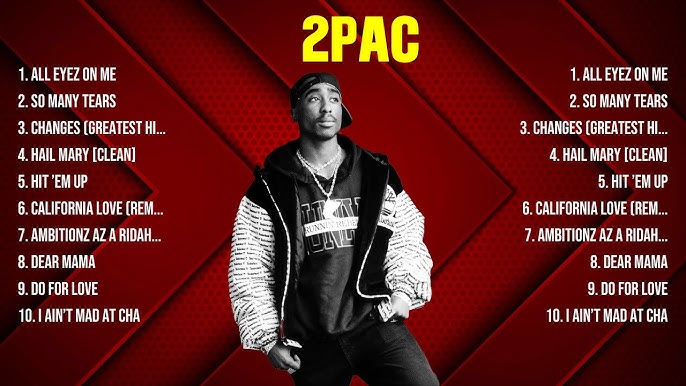
Tupac Amaru Shakur (1971–1996) remains an anomaly in the landscape of American music. Operating under the monikers 2Pac and Makaveli, his career spanned a mere five years, yet his output—exceeding 75 million records sold—redefined the commercial and emotional boundaries of Hip-Hop. Born into a lineage of Black Panther Party activism in East Harlem, Shakur’s music was never merely entertainment; it was a complex tapestry of revolutionary sociopolitical critique, raw vulnerability, and the “Thug Life” bravado that characterized the 1990s aesthetic.
This retrospective analyzes the ten definitive tracks that encapsulate Shakur’s artistic range, examining the technical production and cultural weight that secure his position as a generational icon.

1. Dear Mama (1995) | The Anthem of Vulnerability
“Dear Mama” serves as the definitive example of Shakur’s “dualistic” persona. While the prevailing genre trends of the mid-90s favored unwavering machismo, Shakur utilized this track to offer a poignant tribute to Afeni Shakur. By acknowledging her struggles with addiction and poverty, the track humanized the “thug” archetype, proving that artistic strength could be found in confession. In 2010, the Library of Congress inducted the song into the National Recording Registry, citing its cultural significance.
2. Changes (1998) | The Posthumous Sociological Critique
Released two years after his death, “Changes” remains a cornerstone of socially conscious rap. Sampling Bruce Hornsby’s “The Way It Is,” the track addresses systemic racism, police brutality, and the cyclical nature of urban poverty. It is a rare example of a track that manages to balance weariness with a call for institutional reform, maintaining relevance decades after its recording.
3. California Love (1995) | The Commercial Zenith
Following his release from Clinton Correctional Facility, Shakur signed with Death Row Records, marking the start of his most commercially aggressive era. Produced by Dr. Dre, “California Love” utilized a heavy G-Funk aesthetic and Roger Troutman’s “talk box” vocals to create a regional anthem. The track reached Number 1 on the Billboard Hot 100, solidifying the West Coast’s dominance in the global market.
4. Hail Mary (1996) | The Makaveli Mystique
Recorded under the alias Makaveli for The Don Killuminati: The 7 Day Theory, “Hail Mary” is characterized by its gothic, brooding production. The track explores themes of paranoia and impending mortality. The lyrics provide a window into Shakur’s psyche weeks before his death, blending religious imagery with the cold realities of street warfare.
5. Keep Ya Head Up (1993) | The Feminist Standard in Hip-Hop
At a time when misogyny was frequently criticized in Gangsta Rap, “Keep Ya Head Up” stood as a radical outlier. Dedicated to Black women, Shakur offered words of encouragement and structural critique of patriarchal neglect. The track’s empathy was a direct reflection of his upbringing in a female-headed, activist household.

2Pac’s Technical and Commercial Impact
To understand Shakur’s “Value,” one must look at the data surrounding his most prolific period:
| Album | Year | Certification | Key Theme |
| Me Against the World | 1995 | Double Platinum | Introspection & Paranoia |
| All Eyez on Me | 1996 | Diamond (10M+) | Celebration & Defiance |
| The 7 Day Theory | 1996 | 4x Platinum | Rebirth & Vengeance |
6. Ambitionz Az a Ridah (1996) | The Sonic Manifesto
As the opening track to the Diamond-certified All Eyez on Me, this song introduced a more menacing, charismatic Shakur. The “me against the world” mentality was crystallized here, fueled by the fallout of the 1994 Quad Studios shooting. Its cultural footprint is massive, serving as the definitive entrance theme for athletes like Mike Tyson.
7. Brenda’s Got a Baby (1991) | The Debut of the Storyteller
Shakur’s debut single showcased his cinematic approach to songwriting. By chronicling the tragic life of a 12-year-old girl failed by every social institution, Shakur forced the listener into a position of radical empathy. It established him as a “reporter” for the disenfranchised.
8. I Ain’t Mad at Cha (1996) | The Maturity of the Outlaw
Released shortly after his passing, this track reflected a newfound maturity. Shakur addressed friends and associates with whom he had drifted apart, choosing forgiveness over friction. The music video, depicting Shakur in the afterlife, added a haunting, prophetic layer to his legacy.
9. Life Goes On (1996) | The Elegy for the Ghetto
A profound meditation on death and the transient nature of life in high-crime environments. Shakur provides a voice for the collective grief of a generation lost to urban violence, balancing the tragedy of loss with the necessity of perseverance.
10. Hit ‘Em Up (1996) | The Definitive Diss Track
While controversial, “Hit ‘Em Up” is an essential piece of Hip-Hop history. It represents the absolute peak of the East Coast-West Coast rivalry. Targeting The Notorious B.I.G. and Bad Boy Records, the track is a masterclass in aggressive delivery and lyrical warfare, though it remains a somber reminder of the real-world violence that plagued the era.
Editor’s Strategic Analysis: Why 2Pac Remains the Industry Standard
The enduring power of 2Pac lies in his Authenticity Paradox. He was a ballet-trained art student and a revolutionary’s son who became the face of “Thug Life.” This complexity allowed him to connect with multiple demographics simultaneously—from the streets to the ivory towers of academia, where his lyrics are now studied in sociology and literature courses.
From an “Information Gain” perspective, Shakur’s career teaches us that Hip-Hop is at its most potent when it serves as a mirror to society. His ability to pivot from a song of maternal love to a ferocious war cry is not a contradiction, but a reflection of the multifaceted human experience in the inner city.
Rest in peace Tupac Amaru Shakur (June 16, 1971 – September 13, 1996)
Medical/Legal Disclaimer: This article is for informational purposes. Reference to historical events and social issues is intended for educational analysis and does not constitute an endorsement of the lifestyles depicted in the music.

