

New Mexico Family Shooting Bodycam: Inside the Desperate Rescue and Investigation of Luis Sanchez
Few law enforcement responses test first responders quite like a domestic shooting involving young children. In Dad Busted for Executing His Family: Cops, host Chris Stewart of the Law & Crime Network walks through newly released bodycam video and case developments surrounding the early-morning tragedy on February 17 in New Mexico involving Luis Sanchez, his wife—reportedly an assistant district attorney with the local prosecutor’s office—and their two young sons, ages four and one.
Rather than treating the footage as mere spectacle, examining the sequence of events from the initial 911 call to the rescue attempt, crime-scene processing, interrogation room exchange, and later custody outcome highlights how chaotic domestic emergencies unfold and why strict procedural guardrails govern every step of an investigation.
Timeline & Key Moments in the Video
For readers tracking the coverage in Dad Busted for Executing His Family: Cops, the narrative moves through distinct phases:
-
[00:00] Opening Overview: Introduces the newly released bodycam video, the arrest of Luis Sanchez after allegedly shooting his wife and two young sons (ages one and four), and deputies’ attempts to save lives.
-
[00:48] Sheriff’s Reaction & Case Context: Notes the Bernalillo County Sheriff’s description of the scene as one of the most horrific responders face, and states that just after midnight on February 17, Sanchez’s wife—reportedly an assistant DA—called 911 claiming Sanchez was trying to kill her and their two boys.
-
[01:41] Arrival & Front-Door Confrontation: Shows deputies arriving with rifles at a sliding screen door as Sanchez speaks from the doorway, references the Marine Corps, claims he killed the baby, and begs deputies to shoot him before a taser is deployed and he is taken into custody.
-
[06:03] Entry & Life-Saving Rescue: Follows deputies entering the residence, locating the wounded mother and checking on the two young boys, including rushing a shot child toward medical transport while a four-year-old son later dies from his injuries.
-
[08:57] Interior Sweep & Evidence Preservation: Captures deputies clearing rooms, spotting blood and shell casings, noting a firearm in the sink, securing the perimeter, and starting a crime-scene log.
-
[12:24] Cruiser & Station Processing: Shows Sanchez in the back of a police cruiser and later at the police station receiving foot coverings and guidance into an interview room, while a deputy explains that the blood on him came from the boy he rushed to the hospital.
-
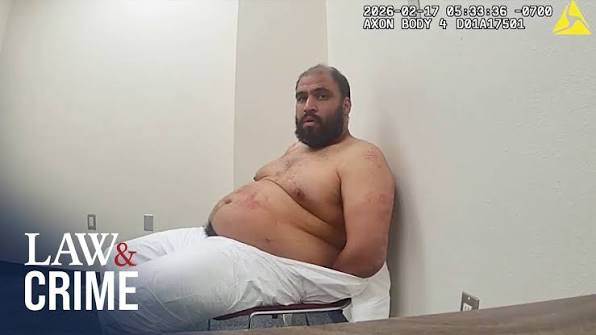
[18:06] Interrogation Room & Miranda Warnings: Depicts an investigator advising Sanchez of his Miranda rights—including the right to remain silent and the right to an attorney—while Sanchez declines to answer substantive questions and gives minimal responses.
-
[21:11] Charges, Jurisdiction & April 6 Custody Death: Summarizes the charges filed (intentional child abuse resulting in death, child abuse with great bodily harm, aggravated battery on a household member with great bodily harm, and tampering with evidence), notes that the state Department of Justice took over because the wife was a local prosecutor, and reports that Sanchez died in custody at the county jail on April 6 in what authorities believe was suicide.
-
How First Responders Navigate High-Risk Domestic Scenes
Tactical Caution and De-Escalation Under Extreme Stress
When deputies pull up to a dark residence following a report of family members being shot, every doorway and shadow poses an immediate threat. In the footage from Dad Busted for Executing His Family: Cops, officers approach with rifles raised while attempting to communicate verbally from the threshold.
When a suspect at the door makes erratic statements, demands to be shot, and refuses to comply peacefully, officers face a narrow margin for error. Using a taser to gain physical control rather than escalating immediately to lethal force reflects standard de-escalation priorities when circumstances allow—though every second in a volatile domestic call carries life-or-death stakes.
- Click image below for a chance to win 2k a week for 1 week

Triage, Evidence Integrity, and Responder Trauma
Inside the home, law enforcement duties split almost instantaneously between saving lives and preserving a crime scene. A deputy who finds a wounded child cannot pause to photograph angles or bag shell casings first; immediate medical extraction takes priority, even when a four-year-old boy ultimately does not survive his injuries.
At the same time, other officers begin clearing bedrooms and bathrooms, noting bloodstains, locating fired casings, and initiating a crime-scene log so forensic investigators can reconstruct events later without contamination. Just as notable is the emotional toll visible afterward: when another officer checks on a deputy covered in blood, the response is matter-of-fact—noting it belongs to the child he tried to save—underscoring how first responders compartmentalize acute trauma on the job.

Procedural Protections and Case Jurisdiction
Miranda Rights and Silence in Custody
Once a suspect is detained in a police station and questioned, Miranda warnings are not a formality—they are a constitutional safeguard. In the station interview segment of Dad Busted for Executing His Family: Cops, the detective clearly outlines Sanchez’s right to remain silent, his right to an attorney (including state-appointed counsel if unable to afford one), and his ability to stop answering questions at any point.
Even when a suspect is uncooperative, evasive about household members, or refuses substantive questioning, investigators must stay within constitutional boundaries. Anything obtained in violation of Miranda risks suppression at trial, which is why disciplined detectives state the warnings plainly, record the refusal to answer questions, and proceed with lawful warrant-backed identification steps such as fingerprints and DNA.
Conflict-of-Interest Hand-Offs and Unresolved Trials
Because Sanchez’s wife worked as an assistant district attorney with the local prosecutor’s office, the state Department of Justice stepped in to handle the case. Moving prosecution to the state level prevents real or perceived conflicts of interest when a local prosecutor or their family is involved in a criminal matter.
Ultimately, however, criminal charges—even severe ones like intentional child abuse resulting in death, aggravated battery on a household member with great bodily harm, and tampering with evidence—are allegations to be tested in court. Because coverage notes that Sanchez died in county jail custody on April 6 in an apparent suicide, the legal system never reached a verdict on those charges, leaving lasting grief for the surviving family members and community.
Frequently Asked Questions (FAQ)
Who is featured in the bodycam video covered by Law & Crime?
The video coverage focuses on deputies responding to a shooting involving Luis Sanchez, his wife—reportedly an assistant district attorney with the local prosecutor’s office—and their two young sons, ages four and one, in New Mexico.
What happened to the two children in the shooting?
According to the video coverage, deputies found injured family members inside the home and rushed a young boy toward medical care, while the four-year-old son died from his injuries.
Why did the state Department of Justice get involved in the case?
As explained in the broadcast, the state Department of Justice took over the case because Sanchez’s wife was a prosecutor with the local district attorney’s office, avoiding a conflict of interest for local prosecutors.
What charges were filed against Luis Sanchez?
The video reports that Sanchez faced charges including intentional child abuse resulting in death, child abuse with great bodily harm, aggravated battery on a household member with great bodily harm, and tampering with evidence.
Did the case ever go to trial?
No. According to the coverage, Sanchez died in custody at the county jail on April 6—after authorities responded to his cell in the early evening and declared him dead—in what is believed to be a suicide, meaning he never faced the charges in court.
While the Law & Crime bodycam broadcast does not spell out a definitive motive—and Luis Sanchez never stood trial because he died by suicide in custody at the Bernalillo County Metropolitan Detention Center on April 5, 2026—court records, the criminal complaint, and statutory sentencing guidelines in New Mexico make clear both what prosecutors alleged triggered the attack and the sentence he would have faced had he been convicted.
Alleged Motive: Jealousy, Marital Breakdown, and Acute Psychological Crisis
According to the criminal complaint filed by the Bernalillo County Sheriff’s Office and statements given by his surviving wife, Paige Mowrer, the shooting followed an abrupt overnight confrontation rooted in relationship grievances and severe mental instability:
-
Accusations of Infidelity and Lack of Intimacy: Mowrer told investigators before undergoing emergency surgery that Sanchez woke her up just after midnight on February 17, 2026, accusing her of cheating on him and complaining about a lack of sex in their marriage before pulling out a gun as she dialed 911.
-
Resentment Over Her Legal Career: Both on the 911 recording and when exiting the residence naked in front of deputies, Sanchez fixated repeatedly on his wife’s profession as an assistant district attorney—yelling, “She’s a lawyer and I killed this bitch” alongside “Why aren’t you dead?” and “How is the baby still alive?”
-
Religious Delusions and Marine Corps / PTSD Statements: Mowrer also told detectives that Sanchez claimed he had spoken to God and believed he was an evil person. In the bodycam footage (
[00:02:21]and[00:12:42]), Sanchez repeatedly referenced his Marine Corps background, pleaded with deputies to shoot him (“I’m a murderer, kill me”), and spoke incoherently about lawyers, cops, and reincarnation—pointing to an acute psychotic or suicidal break during the attack. -
Pending Divorce Filing: Subsequent local news reporting noted that Mowrer had filed for divorce shortly before Sanchez’s April 5 suicide in jail, though prior to the February 17 shooting, Sanchez had no criminal record and deputies had never been called to the residence for domestic violence.
Most Likely Jail Sentence Had He Survived and Been Convicted
Had Luis Sanchez lived to stand trial and been convicted on the charges outlined in the video ([00:21:24])—plus any upgraded murder or attempted murder counts typically added by a grand jury—he would almost certainly have spent the rest of his natural life in prison under New Mexico law:
| Charge / Offense Category | New Mexico Statutory Classification | Mandatory / Basic Sentence |
Intentional Child Abuse Resulting in Death (Child Under 12) (NMSA § 30-6-1(H)) |
First-Degree Felony (Resulting in Death of a Child) | Mandatory Life Imprisonment (minimum 30 years served before parole eligibility under NMSA § 31-18-14) |
Child Abuse Resulting in Great Bodily Harm (1-year-old son, NMSA § 30-6-1(E)) |
First-Degree Felony | 18 years basic sentence (plus firearm enhancement) |
| Aggravated Battery on a Household Member (Great Bodily Harm) / Attempted Murder (Wife) | Third-Degree Felony (or Second-Degree Felony if upgraded to Attempted First-Degree Murder) | 3 to 9+ years (up to 15 years if upgraded to second-degree attempted murder, plus firearm enhancement) |
Tampering With Evidence (NMSA § 30-22-5) |
Third-Degree Felony (when underlying crime is a capital or first-degree felony) | 3 years basic sentence |
Why Life Without Realistic Release Was Virtually Certain
-
Automatic Life Term on the Primary Count: Under New Mexico Statutes § 30-6-1(H), intentional child abuse resulting in the death of a child under the age of twelve (his son was four) carries a statutory basic sentence of life imprisonment—which under New Mexico sentencing law requires serving at least 30 years before a defendant can even apply for parole. (New Mexico abolished the death penalty in 2009, making life imprisonment the maximum punishment.)
-
Consecutive Stacking for Surviving Victims: Because his wife and one-year-old son both suffered critical, life-threatening gunshot wounds, judges routinely run sentences for separate victims consecutively rather than concurrently—adding another 21 to 33+ years on top of the 30-year minimum before parole eligibility.
-
Practical Outcome at Age 41: Being 41 years old at the time of his arrest, a mandatory 30-year minimum plus consecutive sentences for shooting his wife and surviving infant would have meant at least 50+ years before first parole eligibility—effectively guaranteeing he would never leave prison alive.
-
Alleged Motive and Potential Sentence Under New Mexico Law
While Sanchez never stood trial due to his April 5 death in jail custody, court filings and survivor statements point to a sudden domestic confrontation fueled by jealousy and acute psychological instability. According to the criminal complaint, Sanchez woke his wife—assistant district attorney Paige Mowrer—shortly after midnight accusing her of infidelity and complaining about a lack of intimacy before opening fire while she was on the phone with 911. Both on the emergency call and in bodycam footage (
[00:02:21]), Sanchez fixated on her career as a lawyer, cited his Marine Corps background, and begged deputies to shoot him, while his wife later told detectives he claimed to have spoken to God and called himself evil.Had Sanchez survived to face a jury and been convicted, New Mexico sentencing statutes left virtually no path to freedom. Under NMSA § 30-6-1(H), intentional child abuse resulting in the death of a child under age twelve carries a mandatory sentence of life imprisonment (requiring at least 30 years served before parole eligibility in a state without the death penalty). Stacked consecutively with first-degree child abuse resulting in great bodily harm for shooting his one-year-old son (18 years), felony charges for critically wounding his wife, and tampering with evidence (3 years), the 41-year-old faced more than 50 years before ever becoming eligible for parole.
Did he commit suicide?
Yes. Authorities reported that Luis Sanchez died by apparent suicide while in custody at the county jail (Bernalillo County Metropolitan Detention Center) on April 6, 2026 (with some reports noting the evening of April 5/6).
According to official statements from the detention center and the Law & Crime broadcast, jail staff responded to his cell at 6:19 p.m. after finding him unresponsive, and he was pronounced dead at 6:51 p.m. Because of his death, all criminal charges against him were terminated and the case never went to tria

