

The Incident: A Night of Chaos in Downtown Lowell
In the early hours of Sunday morning, what began as a routine weekend patrol in downtown Lowell, Massachusetts, rapidly descended into chaos. Officers responding to a disturbance outside of Tescobar on Middlesex Street encountered a volatile situation involving a large crowd of over 30 people. As the situation escalated, the scene turned violent, resulting in injuries to multiple individuals and culminating in a shocking assault on a police officer that has since circulated widely on social media.
https://www.facebook.com/reel/1750646709410272
The incident, which occurred around 1:40 a.m., reportedly began when an altercation between two men triggered a wider brawl. As law enforcement attempted to restore order and disperse the crowd, the scene became increasingly dangerous. Among those involved in the altercation was 20-year-old Malakai Linton of Chelmsford, who now faces significant legal repercussions following the event.
The Confrontation and the Viral Video
The focal point of the investigation is a moment captured on cell phone footage that has since gone viral. Prosecutors allege that during the process of attempting to detain him, Linton punched an officer in the jaw with a closed fist. The force of the blow was significant enough to knock the officer—identified in court as Officer Bettencourt—completely unconscious.
https://www.instagram.com/reels/DbTMITmPNvA/
According to Assistant District Attorney Kate McCarthy, the incident occurred after officers attempted to use a Taser to bring the situation under control. The prosecution stated in court that officers had deployed a Taser multiple times with no initial effect before the strike occurred. The officer sustained a concussion and an arm injury during the fall that followed the punch.
Conflicting Perspectives and Family Testimony
While the video footage has provided a clear visual of the strike, it has also sparked a debate about the context of the event. Krystel Linton, the mother of the accused, has publicly stated that the viral footage presents an incomplete picture of the night’s events. She maintains that the family was treated unfairly by the officers on the scene.
According to Ms. Linton, she herself was injured during the melee, suffering a fall that resulted in a brain bleed. She contends that the narrative being shared on social media focuses on only one segment of the encounter. “They are not showing the other end,” she stated, alleging that the police force failed to intervene when she was injured on the ground and that the events leading up to the punch were more complex than the circulating clip suggests. These conflicting accounts will likely become a central focus as the legal process moves forward.
Legal Proceedings and Bail
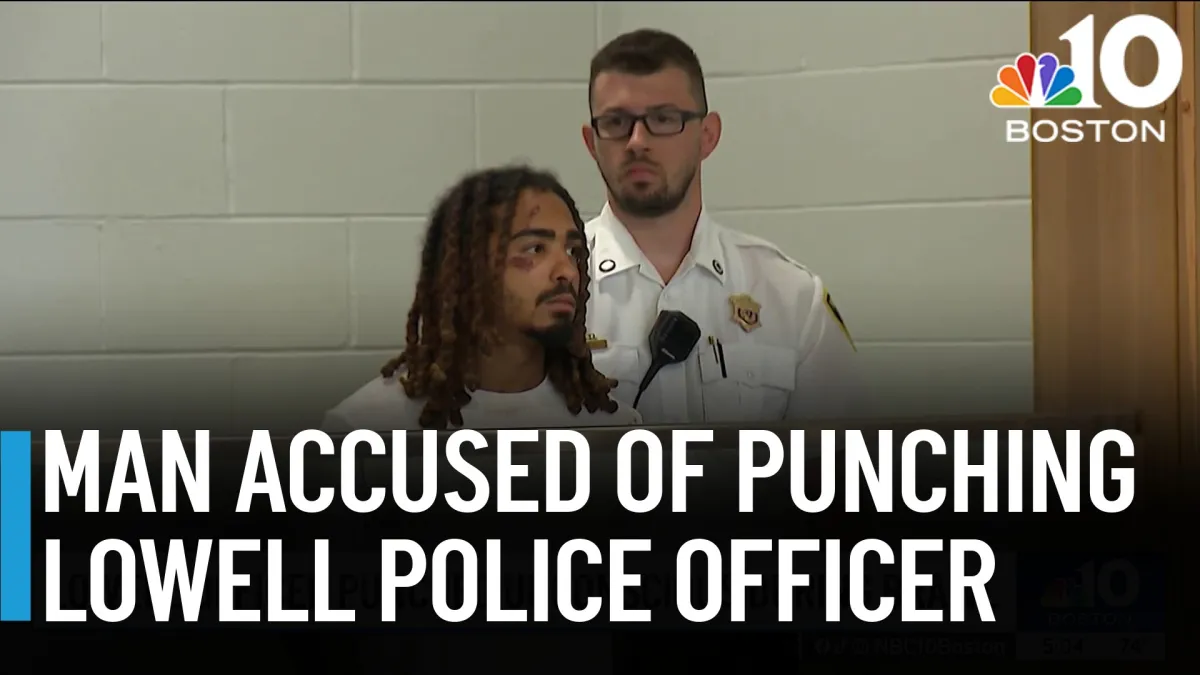
Malakai Linton appeared in court on Monday for his arraignment, where he was charged with assault and battery on a police officer and other related counts. The presiding judge ordered him held on $7,500 bail. He is expected to return to court on August 28, where the case will continue to be litigated.
This is not the first time the Lowell nightlife scene has faced scrutiny regarding violence. In years past, incidents involving large-scale brawls and injuries to officers have prompted local officials to reconsider policing strategies and safety codes for area venues. This latest event serves as a reminder of the inherent dangers that law enforcement personnel face when responding to high-tension disturbances in crowded urban nightlife settings.
The Broader Context of Public Safety
The incident in Lowell raises broader questions about the intersection of public safety, nightlife management, and the role of law enforcement in high-density environments. When crowds turn violent, officers are often tasked with de-escalating situations where emotions are high and participants may be impaired.
In this case, the legal system must now weigh the evidence presented by the prosecution—including the video documentation of the assault—against the defense’s claims of provocation or procedural failures by the officers involved. For the public, the incident highlights the volatility of such environments and the critical importance of maintaining order in spaces where large numbers of people gather.
Moving Forward
As the investigation continues, the focus will shift from social media reactions to the courtroom. Legal experts often emphasize that viral videos, while impactful, represent only a sliver of the events that take place in real-time. The discovery process will likely involve reviewing body-worn camera footage, witness statements, and reports from all officers present to determine the full scope of the altercation.
For the city of Lowell and its law enforcement community, the focus remains on ensuring that such incidents do not jeopardize the safety of residents or visitors. The outcome of this case will undoubtedly be watched closely, as it touches upon issues of police conduct, citizen rights, and the accountability of individuals who engage in public disturbances.
A Pattern of Volatile Encounters
This incident in Lowell is unfortunately part of a broader trend of high-stakes, violent confrontations involving law enforcement in public spaces. In a separate, high-profile case that has recently drawn national attention, a man was involved in a violent struggle with police after allegedly being caught in a sting operation targeting child predators. Much like the Lowell disturbance, that situation escalated rapidly into a physical confrontation when the suspect, upon realizing he had been exposed, turned his aggression toward the officers attempting to make the arrest. In that instance, the suspect reportedly bit an officer during the ensuing brawl. Both incidents highlight the extreme volatility officers face when confronting individuals who are backed into a corner—whether by a large, chaotic crowd or by the sudden, life-altering exposure of a criminal sting. These events serve as a sobering reminder that when criminal suspects or aggressive individuals feel their control over a situation slipping away, the physical risk to the officers tasked with maintaining order increases exponentially.
Disclaimer: This article is based on reports from court proceedings and local news updates. The legal matter is ongoing, and all defendants are considered innocent until proven guilty in a court of law.
Disclaimer: This article is based on reports from court proceedings and local news updates. The legal matter is ongoing, and all defendants are considered innocent until proven guilty in a court of law.

