

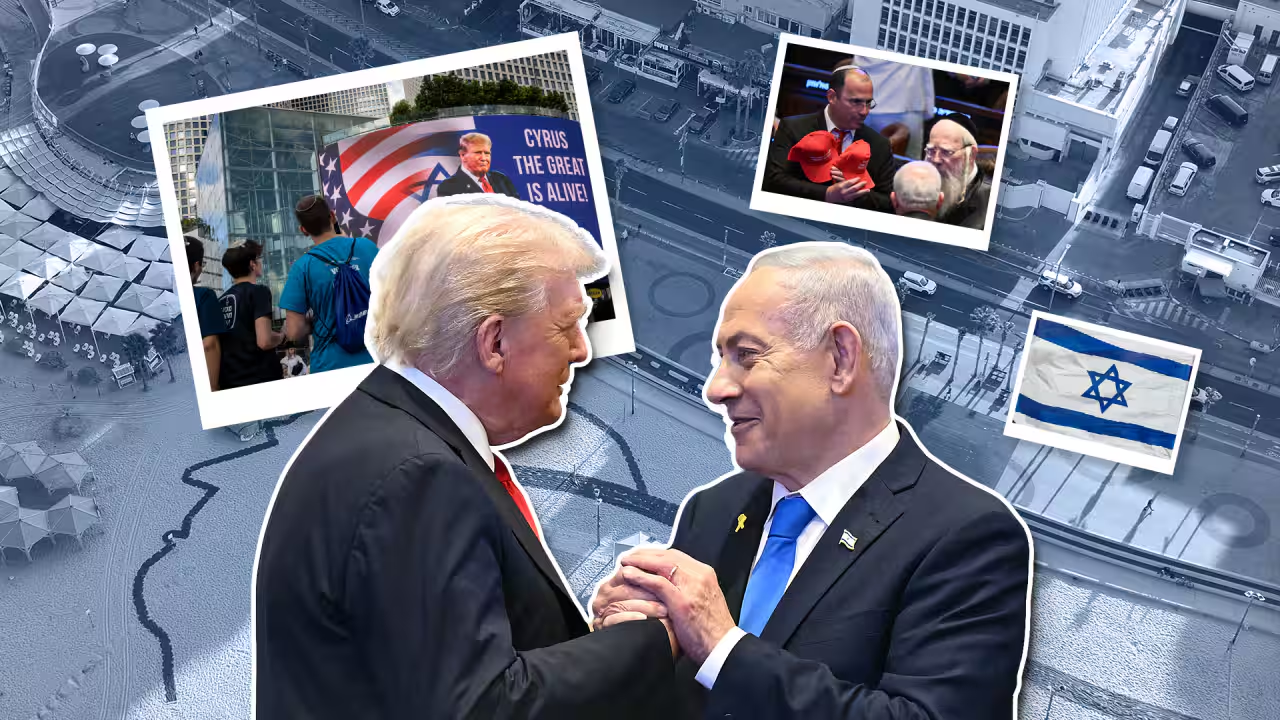
The geopolitical landscape of the Middle East is currently facing a paradigm shift as reports emerge regarding a comprehensive “15-Point Proposal” drafted by the Trump administration. While the conflict between Israel and the Islamic Republic of Iran has historically been defined by proxy warfare and “shadow” operations, the recent escalation into direct military strikes has forced a diplomatic urgency not seen in decades. This analysis explores the pillars of the proposed peace framework, the conflicting reports from Tehran, and the forensic reality of the current military damage.

1. The 15-Point Framework: The Three Pillars of Diplomacy
According to diplomatic sources and administrative briefings, the 15-Point Proposal is structured around three non-negotiable pillars designed to address the root causes of regional instability. Unlike the previous JCPOA (Joint Comprehensive Plan of Action), this framework seeks a definitive closure to the “Nuclear Question” rather than a temporary freeze.
Pillar I: Total Nuclear Dismantlement
The cornerstone of the Trump administration’s demand is the total and verified dismantlement of Iran’s nuclear infrastructure. This includes:
- Cessation of Enrichment: A permanent halt to all uranium enrichment above civilian-grade levels.
- Asset Transfer: The reported requirement for Iran to hand over its existing stockpiles of enriched uranium to the United States or a mutually agreed-upon third party.
- Site Verification: Unprecedented access for inspectors to ensure that facilities like Natanz and Fordow are converted to non-military use or decommissioned entirely.

- Media reports that the 15 Points Proposal and peace plan was drafted by the US to be presented to Tehran. It is only rumored to be the foundation of the administrations desire for peace and ceasefire. Civilians are frustrated with speculation, and want immediate action to take place rather and political posturing.
15 Points Proposal – Core components
15 Points Proposal contains 3 main pillars according to diplomatic sources.
- Nuclear dismantlement. Iran is ordered to fully dismantle its nuclear infrastructure, cease all of its uranium enrichment and hand it over to the United States.
- De-escalation (on a regional level). Tehran is ordered to stop its current funding and arming of regional proxies and promise to never seek any more nuclear weapons.
- Maritime security. The unrestricted opening of the Strait of Hormuz to international shipping.
Pillar II: Regional Proxy De-escalation
The proposal mandates that Tehran cease the funding, arming, and tactical support of regional proxies. This “Strategic Retreat” is aimed at decoupling the Iranian Revolutionary Guard Corps (IRGC) from conflicts in Lebanon, Yemen, and Gaza. In exchange, the U.S. offers a path toward regional legitimacy.
Pillar III: Maritime and Trade Security
Ensuring the unrestricted opening of the Strait of Hormuz is vital for global energy markets. The proposal includes guarantees for international shipping lanes, removing the threat of maritime blockades that have historically spiked global oil prices.
2. Economic Incentives: The “Art of the Deal” for Tehran
To balance these heavy demands, the Trump administration is offering a “Maximum Pressure to Maximum Prosperity” pivot.
- Sanctions Relief: A tiered removal of the crippling primary and secondary sanctions that have isolated the Iranian banking and oil sectors.
- Civilian Energy Support: The administration has proposed a strictly monitored civilian nuclear project in Southern Iran, focused solely on power generation and medical isotopes, potentially supported by American and European technology.
- Elimination of the “Snapback” Risk: A promise to eliminate the UN “Snapback” mechanism, which allows for the automatic reimposition of global sanctions, providing Iran with the long-term economic predictability required for foreign investment.
3. The “Fake News” Friction: Conflicting Realities
Despite President Trump’s optimistic claims that Iran is “keen and eager” for a deal, the rhetoric from Tehran remains combative. Iranian officials have publicly labeled reports of active negotiations as “fake news,” asserting that no formal dialogue has taken place.
Forensic Analysis of the Conflict: While the diplomatic dance continues, the physical reality on the ground is grim. Satellite imagery and intelligence reports suggest that the military standoff has resulted in staggering damage. Allegations that over 82,000 sites—ranging from logistical hubs to tactical positions—have been impacted in Iran highlight the scale of the “Maximum Pressure” military phase led by Defense Secretary Pete Hegseth.
4. The Key Players and Diplomatic Architecture
The success of the 15-Point Plan rests on a specific “War Cabinet” of negotiators:
- Vice President JD Vance: Focusing on the domestic economic impact and industrial security.
- Secretary of State Marco Rubio: Leading the diplomatic “Hardline” and ensuring Israeli security concerns are integrated into every point.
- Steve Witkoff (Special Envoy): Utilizing his background in high-stakes negotiation to bridge the gap between regional leaders.
The Israeli Factor: Even with a U.S.-led proposal, Israel has signaled its intent to maintain independent military readiness. The Netanyahu administration remains skeptical of any deal that does not include absolute guarantees regarding “Breakout Time” for nuclear weapons.
5. Legal Analysis: Sovereignty vs. International Mandates
From a legal perspective, the 15-Point Proposal operates in a grey area of international law.
- Treaty Power: For the proposal to be binding and outlast a single administration, it would likely require the status of a formal treaty, necessitating a two-thirds majority in the U.S. Senate—a high bar in a polarized political climate.
- The Principle of Non-Interference: Critics argue that demanding the transfer of nuclear assets to a foreign power (the U.S.) challenges basic tenets of national sovereignty.
- Execution of Sanctions Relief: Legally, the President has broad authority under the International Emergency Economic Powers Act (IEEPA) to lift sanctions, but “Snapback” provisions tied to previous UN resolutions present a complex web of international litigation.
FAQ: Understanding the 15-Point Peace Proposal
What is the “15-Point Proposal”? It is a reported diplomatic framework drafted by the Trump administration to achieve a permanent ceasefire between Israel and Iran through nuclear disarmament and economic incentives.
Has Iran agreed to the plan? Currently, there is a discrepancy in reports. President Trump claims negotiations are active, while Iranian officials have denied any formal participation in a peace treaty.
What happens to Iran’s economy if the deal is signed? The deal promises a full relief of U.S. sanctions, which could potentially reintegrate Iran into the global financial system (SWIFT) and allow for the legal export of oil.
Why is the Strait of Hormuz included in the plan? The Strait is a chokepoint for 20% of the world’s oil. Its security is essential for global economic stability and is a primary concern for the U.S. and its allies.
Final Commentary: The High Stakes of Speculation
As the world watches the White House, the distinction between “political posturing” and “immediate action” remains thin. Civilians on both sides of the conflict expressed frustration with the speculative nature of the 15-Point Plan while the military toll continues to rise. Whether this becomes a historical footnote or the blueprint for a new Middle East depends on the willingness of Tehran to trade its nuclear ambitions for economic survival.
Legal Disclaimer: This report is for informational and analytical purposes only. It is based on current media reports, administrative briefings, and geopolitical trends as of 2025. This content does not constitute legal or professional foreign policy advice. International situations are fluid; readers are encouraged to consult official government statements from the U.S. State Department and the IAEA for verified updates.

