

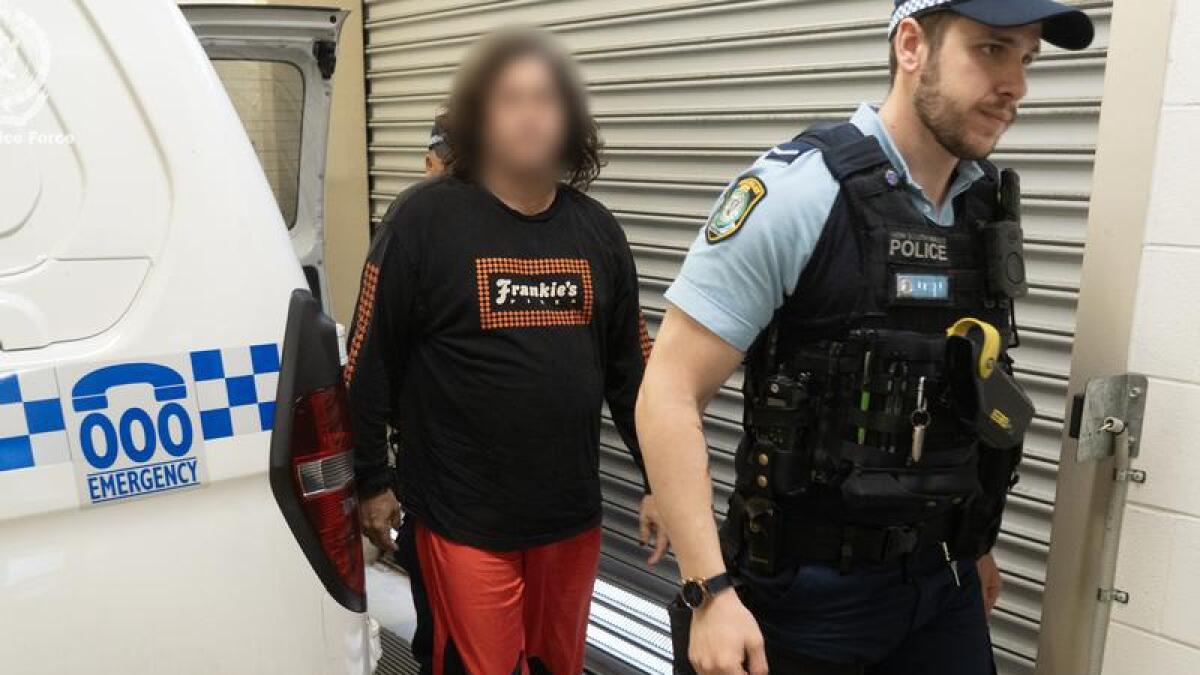
The arrest of Azaria Byrne, the high-profile frontman of the Sydney rock band “The Art,” has uncovered one of the most significant and eclectic drug distribution networks in recent New South Wales history. Operating under the pseudonym Azaria Byrne, the 45-year-old musician (legally David Byrne) was apprehended alongside his fiancée, Brooks Mitchell, and eight others following an intensive year-long investigation known as Strike Force Dulce. This analysis examines the mechanics of the $5.5 million international syndicate, the forensic significance of the seized contraband, and the legal complexities of the charges leveled against the Byrne family.
1. The Investigation: The Genesis of Strike Force Dulce
Strike Force Dulce was established by the New South Wales Police Force to investigate the large-scale supply of prohibited drugs across Sydney’s southwest and inner-city suburbs. For nearly twelve months, detectives utilized sophisticated surveillance techniques to map the hierarchy and logistics of a group that appeared to bridge the gap between Sydney’s bohemian creative circles and hardcore organized crime.
The investigation culminated in a series of coordinated tactical raids. The primary targets were the $1.25 million family residence in Sydney’s South West and a secondary “creative” space—a converted warehouse in Earlwood used as a recording studio. The juxtaposition of a professional recording environment with a massive narcotics depot is a central theme in the prosecution’s narrative of “hidden-in-plain-sight” criminality.

2. Forensic Breakdown: The $5.5 Million “Pharmaceutical Warehouse”
The sheer variety and volume of the substances seized distinguish this case from typical “street-level” drug busts. The Earlwood warehouse served as the syndicate’s logistical heart, housing a diverse inventory that suggests a broad consumer base spanning the club scene, the festival circuit, and private wellness circles.
The Seizure Inventory
According to police reports, the following quantities were recovered and cataloged:
- Ketamine (25kg): A massive quantity of a dissociative anesthetic that has seen a surge in “recreational” use.
- Cannabis (17kg): Large commercial quantities for regional distribution.
- MDMA (3.5kg) & LSD (20,000 pills): High-volume “party drugs” intended for mass distribution.
- Cocaine (2.5kg) & Methamphetamine (70g): Traditional high-value stimulants.
- Ancillary Substances: Significant quantities of Diazepam (5.6kg) and Psilocybin (magic mushrooms), indicating a “full-service” illicit pharmacy.
- Financial Proceeds: $200,000 in physical cash, treated as “Proceeds of Crime.”
Analytical Insight: The presence of over 5.6kg of Diazepam alongside stimulants like cocaine and MDMA indicates a sophisticated understanding of the market. Syndicates often sell “downers” alongside “uppers” to cater to the full cycle of substance use, maximizing revenue per customer.

3. The Weaponry and Prohibited Components
In addition to the drug charges, Azaria Byrne faces serious allegations regarding prohibited weapons. During the search of his Earlwood property, detectives reportedly discovered:
- Illegal Firearm Parts: The possession of firearm components is a critical charge in NSW, often used to prevent the assembly of “ghost guns” or the repair of unregistered weapons.
- Flick Knife: Classified as a prohibited weapon under the Weapons Prohibition Act 1998, possession carries mandatory penalties.
From a legal standpoint, the combination of large commercial drug supply and illegal weapons components significantly complicates the defense’s ability to argue for a “low-level” or “passive” involvement in the group.

4. Legal Analysis: The Byrne Family and the Criminal Group
The prosecution has leveled three primary categories of charges against the ten individuals involved:
A. Supply of Large Commercial Quantities
This is the most severe charge under the Drug Misuse and Trafficking Act 1985 (NSW). Given the 25kg of ketamine and 17kg of cannabis, the defendants face potential life imprisonment as a maximum penalty. The prosecution must prove that the individuals had “knowledge” and “control” over these substances.
B. Participating in a Criminal Group
Section 93T of the Crimes Act 1900 (NSW) targets individuals who contribute to the activities of a group for the purpose of obtaining a financial benefit. This charge was applied not only to Byrne and Mitchell but also to Byrne’s 61-year-old mother, Joanne Cullip. Her inclusion suggests that investigators believe the domestic environment was integral to the syndicate’s financial management.
C. Dealing with the Proceeds of Crime
This relates to the $200,000 in cash and the $1.25 million property. Under “Unexplained Wealth” laws, the state can move to freeze or seize these assets if it can be demonstrated on the balance of probabilities that they were funded through illicit revenue.
5. Societal Impact: The Collapse of a Rock Persona
Azaria Byrne’s band, “The Art,” was a notable fixture in the Sydney music scene, having toured internationally and shared stages with rock legends. The transition from performing at major venues to being detained in a high-security strike force operation marks a total collapse of professional reputation.
This case highlights the “Double Life” phenomenon frequently seen in high-profile drug investigations. The “recording studio” served as a perfect cover—an environment expected to have high foot traffic, unusual hours, and heavy equipment moving in and out. For the music community, the revelation that a subleased recording space was allegedly a massive narcotics hub is a chilling reminder of how organized crime can infiltrate and exploit creative subcultures.
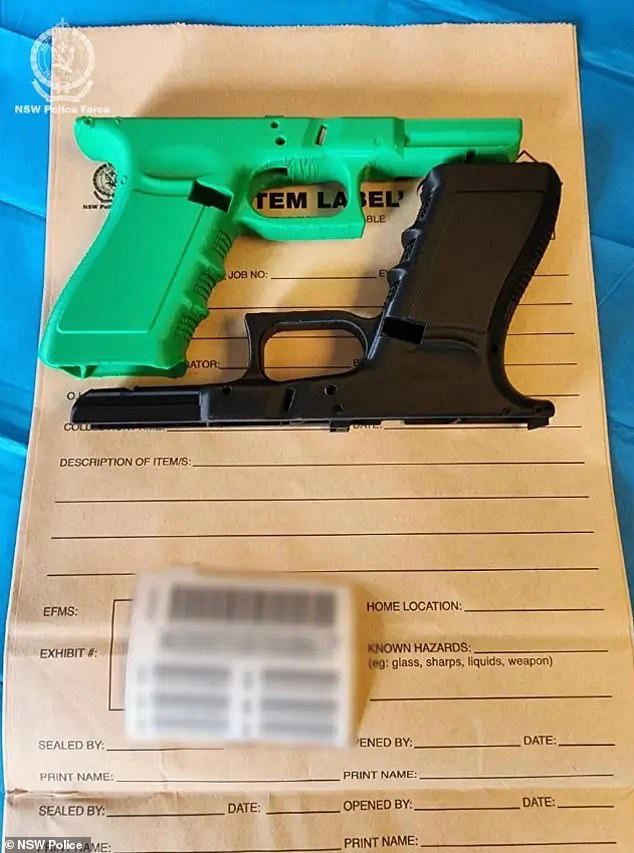
Authorities also leveled charges against Byrne for the possession of prohibited weapon components, which were reportedly discovered in his dilapidated Earlwood residence. Along with these items, investigators allegedly recovered a flick knife during their search of the property.
FAQ: The Azaria Byrne/Strike Force Dulce Case
What is David “Azaria” Byrne charged with? Byrne is charged with supplying a large commercial quantity of a prohibited drug, participating in a criminal group, dealing with the proceeds of crime, and the possession of illegal firearm parts and a prohibited weapon (flick knife).
How was the $5.5 million value calculated? Police estimate the value based on the “street value” of the combined weights of ketamine, cocaine, MDMA, cannabis, and LSD seized at the Earlwood warehouse and South West residence.
What was the role of the recording studio? The Earlwood warehouse, used as a recording studio and subleased to musicians, is alleged to have been the primary storage and distribution hub for the drug syndicate.
Is Azaria Byrne still in custody? As of the latest reports, Byrne and his fiancée Brooks Mitchell remain under the jurisdiction of the court system, while his mother, Joanne Cullip, has been granted bail to appear at a later date.
Legal Analysis & Disclaimer
This report is for informational and analytical purposes only. Under Australian Law, Azaria Byrne (David Byrne), Brooks Mitchell, Joanne Cullip, and all other co-accused are presumed innocent until proven guilty in a court of law. The details presented are based on official NSW Police Force media releases and court mentions. This content is intended for educational purposes regarding criminal justice and forensic logistics.

 and the Strike Force Dulce investigation. We explore the massive $5.5 million drug seizure, firearm charges, and the dismantling of a Sydney-based criminal group.)