

The digital architecture of the modern influencer economy grants online creators unprecedented access to their fanbases. However, this direct line of communication can occasionally reveal a severe vulnerability when a prominent adult creator misuses that access.
The corporate and public unravelling of beauty mogul James Charles stands as a monumental case study in internet accountability. In early 2021, the then-21-year-old multi-millionaire lifestyle creator faced a devastating wave of viral exposure detailing inappropriate, sexually explicit communication with underage boys.
Unlike standard internet commentary or unverified rumors, the exposure of Charles was driven entirely by a synchronized, decentralized wave of digital evidence. The fallout permanently altered the trajectory of his career, triggering a historic corporate withdrawal and exposing the dangerous dynamics of online celebrity power imbalances.
📱 Stage 1: The TikTok Receipts That Sparked the Fuse
The operational exposure of James Charles did not begin with a mainstream media exposé or an official law enforcement announcement. Instead, it originated entirely through grassroots digital documentation on TikTok.
In late February 2021, a 16-year-old TikTok user named Isaiyah uploaded a series of videos that instantly broke through the platform’s algorithm. Rather than simply stating an allegation, Isaiyah provided unredacted screen recordings of his Instagram and Snapchat Direct Messages (DMs) containing extended, highly flirtatious, and sexually suggestive text conversations with Charles.
[TikTok Accusations Shared] ➔ [Screen Recordings of DMs Released] ➔ [Multiple Victims Step Forward] ➔ [Corporate Fallout]
Crucially, the screen recordings proved that the communication took place while Isaiyah was a minor. Charles initially attempted to mitigate the brewing public relations disaster via a Twitter statement, claiming he had been explicitly misled into believing Isaiyah was 18 years old.
However, Charles’s initial defense strategy quickly collapsed. The visibility of the first video acted as a catalyst, encouraging a flood of other young individuals to come forward. Throughout March 2021, over a dozen different teenage boys published matching evidence packages across social media. The shared screenshots, voice notes, and explicit photo requests demonstrated a clear, repetitive pattern of behavior targeting young fans.
🎥 Stage 2: The On-Screen Confession and the Admission of Recklessness
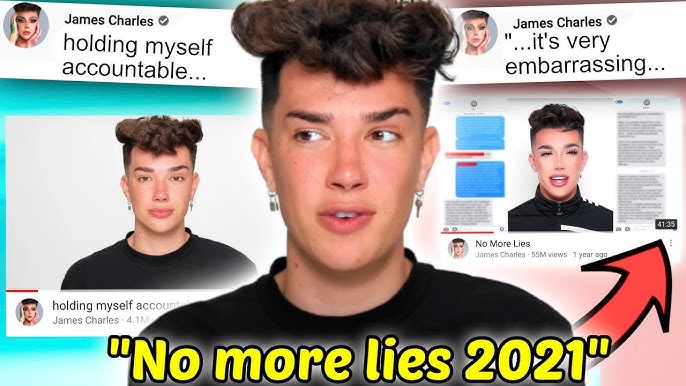
Faced with an overwhelming and undeniable digital paper trail, Charles was forced to pivot from public denials to a strategy of total capitulation. On April 1, 2021, he uploaded a stark, 14-minute video to his YouTube channel titled “Holding Myself Accountable”.
In the video, Charles addressed the public, explicitly admitting to engaging in highly inappropriate, sexually explicit messaging with two distinct 16-year-old boys. While he maintained that both individuals had verbally or digitally claimed to be of legal age at the start of their interactions, he admitted that his failure to independently verify their ages was entirely “reckless” and “desperate”.
“To the guys involved in the situation, I wanna say I’m sorry. I’m sorry that I flirted with you and I’m really sorry if I ever made you uncomfortable. It is completely unacceptable.” — James Charles (April 2021)
Crucially, the video marked a rare moment where a major influencer openly acknowledged the concept of a power imbalance. Charles admitted that even if he did not intentionally seek to exploit his fans, the raw excitement of a young person receiving direct attention from an elite online celebrity creates an implicit pressure cooker where boundaries are easily crossed.
📉 Stage 3: The Rapid Collapse of Commercial Alliances
The moment Charles hit upload on his public confession, the corporate backlash from his global business partners was immediate, severe, and financially devastating.
-
Morphe Cosmetics Separation: The cosmetics titan, which had generated tens of millions of dollars in mutual revenue through the Morphe x James Charles eyeshadow palette collaboration, released an explicit statement severing all business ties and winding down his product offerings.
-
YouTube Demonetization: Executing its strict Creator Responsibility Policy, YouTube stepped in and temporarily stripped Charles’s channel of its ability to run ad placements, cutting off his main source of digital revenue.
-
Television Cancellation: Variety confirmed that Charles was immediately removed as the premier host of YouTube’s official reality competition series, Instant Influencer, and replaced for subsequent production cycles.
This corporate desertion and loss of platform revenue highlights a broader systemic issue explored in The Privilege Paradox: James Charles and the Backlash Over a Laid-Off Worker’s Plea. That separate controversy exposed how detached elite internet creators can become from the economic realities of their working-class audiences, sparking massive backlash when Charles dismissively interacted with a vulnerable, unemployed worker. When looking at both situations together, a distinct pattern of behavior emerges. Whether he is crossing explicit age boundaries in private messages or showing a complete lack of basic empathy toward a struggling follower in public, Charles consistently reveals a profound blind spot regarding the massive power and privilege he holds over everyday internet users.
✍️ Editor’s Opinion: The Fragility of Digital Accountability
The exposure of James Charles exposes a deeply unsettling dynamic within modern internet culture: the total transactionalization of apology and accountability. For years, Charles operated as an untouchable titan of the beauty space, commanding tens of millions of impressions and massive retail leverage. Yet, his 2021 confession laid bare a systemic failure of basic boundaries, revealing a predator-adjacent pattern of utilizing social media platforms like a personal, unregulated dating app for fans.
What makes the aftermath of this scandal so deeply frustrating is the predictable lifecycle of “influencer redemption.” Following a brief period of strategic isolation, Charles quietly returned to the internet, launched a new beauty brand (Painted), re-monetized his content channels, and largely reclaimed his commercial footing. This quick bounce-back demonstrates that digital platforms and beauty consumers frequently possess an incredibly short memory span when it comes to the safety of minors.
The reality remains clear: true accountability cannot be achieved through a highly produced, 14-minute monetization video. Until streaming platforms and corporate sponsors enforce permanent, unyielding penalties for the grooming and exploitation of underage followers, the digital space will remain an inherently compromised environment for young, impressionable users.
❓ Frequently Asked Questions
Q1: Was James Charles ever criminally charged following the 2021 minor scandal?
No, James Charles has not faced formal criminal charges in connection with the 2021 online grooming and sexting allegations. While his behavior was widely condemned by corporate partners and child safety advocates, the fallout remained confined to civil contract terminations, platform demonetization, and massive public backlash.
Q2: Did James Charles permanently lose his YouTube channel?
No. While YouTube temporarily suspended his account from the YouTube Partner Program under its Creator Responsibility Policy in April 2021, the platform eventually reinstated his monetization privileges after an extended probationary window, allowing him to return to active video production.
Q3: What is James Charles’s current business status today?
Despite losing his historic partnership with Morphe Cosmetics in 2021, Charles has managed to rebuild his business footprint. In late 2023, he officially launched his own independent, vegan makeup brand called Painted, moving away from third-party licensing to direct-to-consumer manufacturing.

