

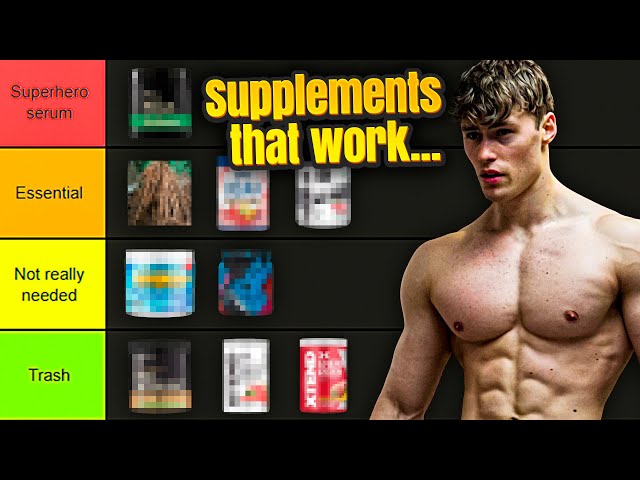
In the multi-billion-dollar fitness industry, supplements are frequently marketed as magic bullets capable of bypassing the foundational laws of thermodynamics and progressive overload. Glossy advertisements promise rapid muscle hypertrophy, effortless fat oxidation, and instantaneous cognitive focus. However, the physiological reality is far more clinical. Supplements do not replace foundational training and meticulous nutrition; rather, they serve as optimization tools designed to squeeze the absolute maximum performance, recovery, and metabolic efficiency out of a well-structured regimen.
To navigate the saturated supplement marketplace effectively, one must look strictly at peer-reviewed human clinical trials. When evaluated through the lens of rigorous sports science, only a select handfull of compounds demonstrate statistically significant, repeatable efficacy. By categorizing these formulations into distinct performance pillars—strength and power, fat loss and metabolic rate, and cognitive mood enhancement—athletes and fitness enthusiasts can construct a streamlined, high-value protocol that yields tangible physical dividends.
Pillar 1: Maximum Strength and Power Output
When the primary objective is absolute strength, explosive power, and intra-workout cellular energy, the supplementation strategy must focus on maximizing the body’s primary anaerobic energy pathways.
Creatine Monohydrate: The Gold Standard of Hypertrophy
No single compound in the history of sports nutrition has been as exhaustively researched or validated as creatine monohydrate. At a cellular level, creatine serves as a substrate for the phosphagen energy system. During high-intensity, short-duration resistance training (such as heavy barbell squats or maximal effort bench presses), your muscles rapidly deplete their stores of Adenosine Triphosphate (ATP). Creatine donates a phosphate molecule to ADP, rapidly regenerating ATP and allowing for an extra 1 to 2 repetitions under heavy load.
Furthermore, creatine promotes cellular hydration by drawing water into the intracellular space of the muscle fiber. This volumization effect not only improves mechanical leverage but also activates osmotic signaling pathways that trigger muscle protein synthesis.
-
Dosing Protocol: Skip the unnecessary “loading phase” of 20 grams per day, which frequently induces gastrointestinal distress. Instead, consume a highly consistent daily dose of 3 to 5 grams of pure micronized creatine monohydrate at any time of day.
Beta-Alanine: Intramuscular Carnosine Saturation
While creatine dominates the first 10 seconds of a heavy set, beta-alanine takes over during high-volume hypertrophy training or sprint intervals lasting between 60 and 240 seconds. Beta-alanine is a non-essential amino acid that binds with histidine in the body to form carnosine, a potent intracellular hydrogen ion buffer.
As your muscles contract intensely under load, lactic acid dissociates into lactate and hydrogen ions ($H^+$), causing intramuscular pH to drop into an acidic state. This acidity causes the burning sensation and subsequent muscular failure associated with high-rep training. By saturating your carnosine stores via daily beta-alanine intake, you enhance your muscles’ ability to buffer these hydrogen ions, effectively delaying the onset of neuromuscular fatigue.
-
Dosing Protocol: To achieve intramuscular saturation, consume 3.2 to 6.4 grams daily, split into smaller doses throughout the day to mitigate acute paresthesia (the harmless, temporary tingling sensation across the skin).
Exclusive $1,000 Cash & BPI Sports Supplement Stack Giveaway!
Now that you have the scientific blueprint for building a high-value supplement stack, it’s time to supercharge your transformation for free. We have partnered with BPI Sports to launch an exclusive, elite-tier fitness giveaway for our community. One lucky winner will walk away with a $1,000 cold hard cash grand prize, paired alongside a massive, premium BPI Sports Supplement Stack—featuring their top-rated micronized creatine, advanced pre-workouts, and premium whey isolates to completely optimize your strength, fat loss, and recovery goals. There are no hoops to jump through and zero hidden fees; claiming your entry takes less than sixty seconds. Simply click the link or the official giveaway image below right now to secure your entry and find out if you are our next big winner!
[👉 CLICK HERE TO ENTER THE $1,000 CASH & BPI SPORTS GIVEAWAY NOW! 👈]

Pillar 2: Fat Loss and Metabolic Optimization
It is thermodynamically impossible to supplement your way out of a chronic caloric surplus. However, once a structured caloric deficit is firmly established, specific compounds can optimize lipid mobilization, elevate thermogenesis, and preserve lean skeletal tissue.
[Caloric Deficit Established] ➔ [Caffeine / Green Tea] ➔ [Elevated Catecholamines] ➔ [Enhanced Lipid Mobilization]Caffeine Anhydrous: The Thermogenic Catalyst
Caffeine is far more than a morning pick-me-up; it is a highly potent metabolic stimulant. Caffeine operates primarily as an adenosine receptor antagonist in the central nervous system, preventing the signaling of fatigue. Simultaneously, it stimulates the adrenal glands to release epinephrine and norepinephrine (catecholamines).
These catecholamines bind directly to the beta-receptors on adipocytes (fat cells), signaling them to release stored fatty acids into the bloodstream to be burned for fuel. Additionally, caffeine acutely elevates your basal metabolic rate (BMR) via non-exercise activity thermogenesis (NEAT) and direct heat production.
-
Dosing Protocol: For athletic performance and fat oxidation, clinical doses range from 3 to 6 mg per kilogram of body weight, consumed roughly 45 minutes prior to physical activity. To prevent receptor downregulation and adrenal desensitization, caffeine should ideally be cycled or restricted on non-training days.
L-Carnitine L-Tartrate: Fatty Acid Transport
Once caffeine has successfully mobilized fatty acids out of your fat tissue and into the bloodstream, those fatty acids must be transported into the mitochondria of your cells to undergo beta-oxidation (burning for energy). This is where L-Carnitine plays a critical structural role.
L-Carnitine acts as a shuttle ferry across the mitochondrial membrane. Supplementing with the highly bioavailable L-Tartrate form ensures that fatty acid oxidation pathways are operating at maximum capacity, reducing the body’s reliance on glycogen and protecting lean muscle tissue from catabolism during fasted or low-carbohydrate training phases.
-
Dosing Protocol: Consume 2 to 3 grams daily, preferably taken alongside a carbohydrate meal or post-workout shake, as insulin significantly enhances muscle carnitine retention.
Pillar 3: Cognitive Support and Mood Enhancement
A frequently overlooked aspect of body composition and strength development is the mental architecture driving the physical execution. Training hard while maintaining a caloric deficit places a massive stress load on the central nervous system, which can degrade mood, elevate cortisol, and crush training intent.
L-Theanine: Clean Focus Without the Crash
When paired with caffeine, the amino acid L-Theanine creates a highly synergetic cognitive state often referred to as “smooth focus.” Caffeine alone can induce vasoconstriction, jitteriness, and a sharp cortisol spike. L-Theanine easily crosses the blood-brain barrier to increase alpha brain wave activity, which promotes a state of calm, collected alertness. It rounds off the harsh physical edges of central nervous system stimulants, allowing for high executive focus during complex movements without the subsequent mood crash.
-
Dosing Protocol: Utilize a strict 2:1 or 1:1 ratio of L-Theanine to caffeine (e.g., 200 mg of L-Theanine paired with 100 to 200 mg of caffeine).
Ashwagandha (KSM-66): Cortisol Regulation
Physical training is an acute stressor, and dieting is a chronic stressor. When chronic stress goes unmanaged, the adrenal glands continuously pump out cortisol, which can impair sleep quality, trigger water retention, and promote muscle protein degradation.
Ashwagandha is an adaptogenic herb that has been clinically proven to modulate the human hypothalamic-pituitary-adrenal (HPA) axis. Standardized extracts, particularly the high-potency KSM-66 formulation, consistently demonstrate the ability to significantly lower circulating serum cortisol levels, improve sleep latency, and support healthy natural testosterone-to-cortisol ratios in hard-training athletes.
-
Dosing Protocol: Consume 300 to 600 mg of a standardized KSM-66 extract daily, split between morning and evening doses.
Summary Optimization Matrix
To maximize efficiency and financial investment, prioritize your supplement stack based on established clinical efficacy rather than marketing hyperbole:
Performance Goal Tier 1 (Essential Core) Tier 2 (Performance Optimization) Strength & Power Creatine Monohydrate (3-5g daily) Beta-Alanine (3.2-6.4g daily) Fat Loss & Energy Caffeine Anhydrous (3-6mg/kg) L-Carnitine L-Tartrate (2-3g daily) Mood & Focus L-Theanine (1:1 with Caffeine) Ashwagandha KSM-66 (600mg daily) Ultimately, a premium supplementation protocol is designed to complement, not carry, your fitness journey. When layered over a disciplined training program and a structured nutritional framework, these scientifically validated compounds provide the definitive edge required to shatter plateaus and unlock elite performance metrics.
Frequently Asked Questions (FAQ)
Do I need to cycle off of creatine monohydrate? No. Creatine does not operate on a receptor-based feedback loop, meaning your body does not build a tolerance to it. It works via cellular saturation. Once your muscle tissue is fully saturated through consistent daily dosing, you can maintain that 3 to 5-gram dose indefinitely without any down-regulation or adverse health effects.
Can fat burners cause me to lose weight without a diet? Absolutely not. Thermogenic supplements like caffeine or green tea extract can slightly increase your energy expenditure and improve fat mobilization, but they cannot override a caloric surplus. If you consume more calories than your body burns, you will still gain weight regardless of the fat burners you take.
Why does beta-alanine make my skin tingle? Beta-alanine activates specific sensory neurons located under the skin, resulting in a temporary sensation called paresthesia. It is completely harmless, is not an allergic reaction, and typically subsides within 60 to 90 minutes. If you find the feeling uncomfortable, you can mitigate it by splitting your daily dose into smaller amounts of 1.5 grams throughout the day.
How does L-Theanine improve my workout focus? L-Theanine promotes alpha brain wave activity, which induces relaxation without drowsiness. When paired with a stimulant like caffeine, it counteracts the anxious jitters and vasoconstriction, leaving you with a clean, calm, and highly dialed-in cognitive focus during heavy lifting sessions.
Neurobiological Fortitude: Bridging the Gap Between Body and Mind
While optimization through physical supplementation is crucial for muscular output, the true bottleneck of athletic performance often lies within the central nervous system. The heavy neurological toll of intense training combined with a strict caloric deficit makes psychological management just as vital as physical recovery. The physiological mechanics behind this mind-body connection are detailed profoundly in the definitive analytical feature, “The Neurobiology of Resilience: How Exercise Regulates Anxiety and Intrusive Thoughts.” When the body is pushed to its absolute physical limits, it triggers a cascade of neurochemical stress markers that can easily manifests as cognitive fatigue or elevated baseline anxiety. However, structured exercise acts as a powerful counter-mechanism, actively promoting neuroplasticity, stimulating brain-derived neurotrophic factor (BDNF), and balancing neurotransmitter pathways to build an internal buffer against psychological stress. Supplementation within the cognitive category is not designed to replace this natural neurological adaptation, but rather to act as a synergetic catalyst—stabilizing the hormonal environment so that the brain can efficiently process the acute stress of high-intensity training.
-

