

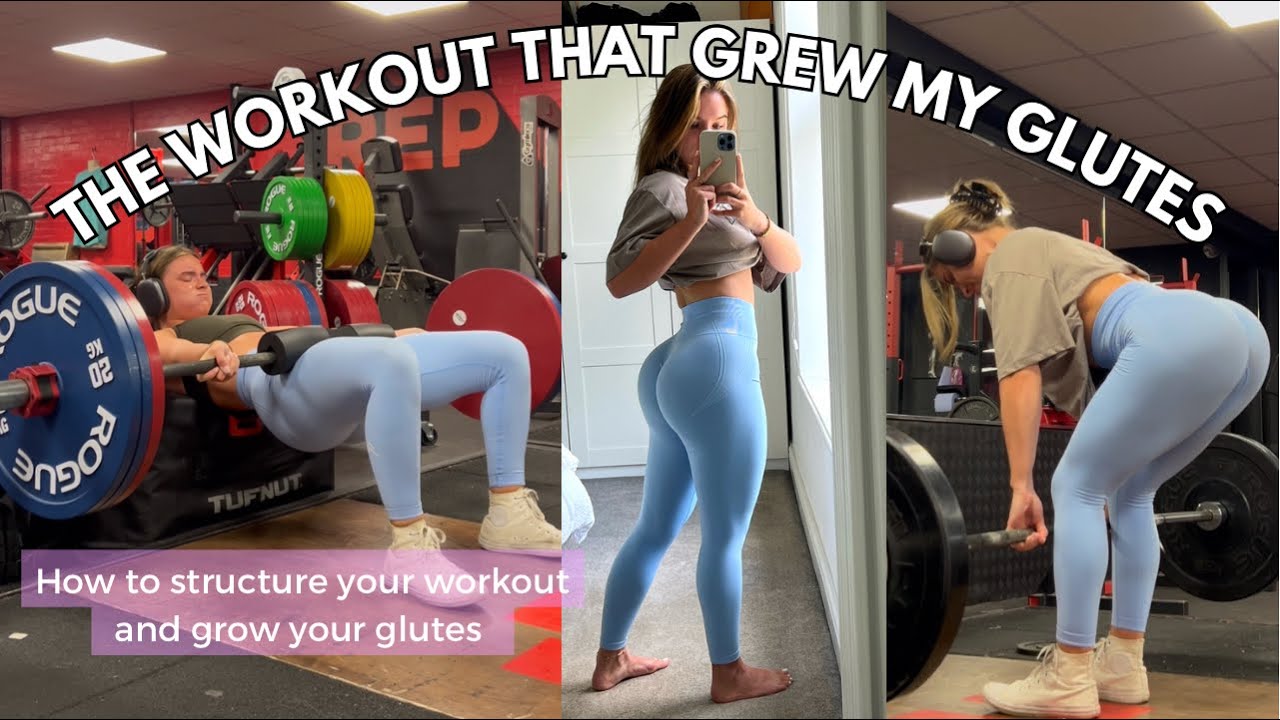
The gluteus maximus is the largest and heaviest muscle in the human body. Yet, in modern fitness spaces, glute training is frequently misunderstood. It is often reduced to high-rep, low-load isolation circuits utilizing resistance bands or ankle weights. While these methods can elicit a temporary metabolic “burn,” they lack the mechanical tension required to stimulate true myofibrillar hypertrophy.
Click here to see more videos of her amazing glutes
To build exceptional glute development, you must treat the glutes like any other major muscle group: target them with heavy mechanical loads, train them through multiple planes of motion, and master progressive overload.
Why Your Glutes Should Never Be Neglected
Beyond the obvious aesthetic goals of a rounded, powerful physique, the glutes serve as the literal engine of your lower body. Neglecting them creates a cascade of biomechanical dysfunctions.
-
The Powerhouse of Hip Extension: The glutes are the primary drivers of hip extension, hyperextension, and external rotation. Strong glutes translate directly to explosive athletic performance, increasing your sprinting speed, vertical jump, and absolute strength in the squat and deadlift.
-
Injury Prevention and Structural Support: When glutes are weak or underactive—a common side effect of prolonged sitting—the body compensates. This phenomenon, known as glute amnesia, forces the lower back (lumbar erectors) and hamstrings to take over the burden of lifting. This structural compensation is a leading cause of chronic lower back pain, hip impingement, and knee instability (patellofemoral pain syndrome).
-
Posture and Pelvic Alignment: The glutes play a critical role in stabilizing your pelvis. Strong glutes counteract an anterior pelvic tilt (where the pelvis dumps forward, creating an exaggerated lower back arch and protruding abdomen), pulling the pelvis back into a neutral, healthy alignment.
The 8 Most Effective Exercises to Grow Your Glutes
To maximize growth, you must target the glutes in both their shortened position (peak contraction at the top of the movement) and their lengthened position (deep stretch at the bottom).
1. The Barbell Hip Thrust
The hip thrust is the undisputed king of short-range glute hyper-contraction. Because the line of resistance is horizontal rather than vertical, it places maximum mechanical tension on the glutes at the absolute peak of the movement.
[Barbell Loaded at Hips] O /|\ <-- Torso Pivot on Bench (Hips Up) / | \ ========O==/==+==\=== <-- Full Hip Extension / \ / \ [Feet] [Bench Support]-
Pros: Puts the highest level of isolated mechanical tension on the glutes without loading the spine; highly scalable for progressive overload.
-
Cons: Cumbersome setup time; can cause physical discomfort on the hip bones if proper padding isn’t used.
2. Romanian Deadlifts (RDLs)
Unlike the hip thrust, the RDL targets the glutes in their maximally lengthened (stretched) position, which is a powerful driver for muscle damage and subsequent hypertrophy.
-
Pros: Hits the entire posterior chain simultaneously, including the glutes, hamstrings, and lower back; exceptional for functional strength.
-
Cons: High demands on grip strength and core stability; high risk of lower back strain if spinal flexion occurs.
3. Deficit Bulgarian Split Squats
By elevating your front foot slightly on a small plate or platform (creating a deficit), you force the glute of the working leg into an extreme range of deep motion at the bottom of the movement.
(Torso Upright) O /|\ / | \ / | \ / | \ <-- Back Foot on Bench [Working] | [= Bench =] __Foot__ | [Deficit] |-
Pros: Corrects unilateral (side-to-side) muscle imbalances; provides an unmatched deep structural stretch on the glute-ham tie-in.
-
Cons: Requires an immense amount of balance and neurological coordination; highly physically demanding.
4. The Conventional Barbell Deadlift
The deadlift is a foundational compound movement. While it recruits the entire body, the final lockout phase requires supreme, explosive glute activation.
-
Pros: Triggers a massive systemic hormonal response due to the heavy loads handled; builds absolute full-body strength.
-
Cons: High systemic central nervous system (CNS) fatigue; requires flawless, rigid technique to prevent lumbar injuries.
5. Low-Bar Back Squats
By resting the barbell lower on your posterior deltoids rather than your trapezius, you force the torso to lean forward slightly. This subtle shift alters the biomechanics, loading the hips and glutes significantly more than a traditional high-bar squat.
-
Pros: Allows for deep hip flexion under immense load; builds exceptional lower-body mass.
-
Cons: Demands high mobility in the ankles, hips, and wrists; can be tough on the lower back if hip-firing occurs.
6. Walking Dumbbell Lunges
Lunges are a dynamic, moving unilateral exercise. The step-out phase requires decelerating your body weight, which stretches the glute, while the step-up phase requires explosive hip extension.
-
Pros: High metabolic stress; keeps constant, unremitting tension on the working muscle throughout the entire set.
-
Cons: Can be limited by cardiovascular endurance rather than muscular failure; requires ample gym floor space.
7. Cable Pull-Throughs
This movement mimics the hip hinge of a deadlift but utilizes a cable machine. The continuous horizontal tension forces the glutes to work hard against the resistance throughout the entire range of motion.
-
Pros: Very low spinal loading, making it highly accessible for people recovering from back injuries; easy to isolate the hip hinge.
-
Cons: Weight stack limitations on standard cable machines; can feel awkward to find your center of balance.
8. Seated Cable/Machine Abductions
While the first seven exercises target the massive gluteus maximus, this isolation movement explicitly targets the gluteus medius (the upper, outer side of the hip), which creates upper glute fullness.
(Side View) O <-- Lean Forward for /|\ Gluteus Medius Focus / | \ *--+--* / \ [Pad] <--- [Pad] <-- Pressing Knees Outward-
Pros: Directly targets the upper shelf of the glute; very low overall systemic fatigue.
-
Cons: Minimal functional crossover to athletic movements; cannot be loaded as heavily as compound lifts.
Glute Hypertrophy Programming Matrix
To optimize your training splits, balance your routine between lengthened and shortened positions across the week.
Exercise Primary Target Muscle Position Recommended Rep Range Barbell Hip Thrust Gluteus Maximus Shortened (Peak Contraction) 3 sets x 8–12 reps Romanian Deadlift Gluteus Maximus & Hamstrings Lengthened (Deep Stretch) 4 sets x 6–10 reps Bulgarian Split Squat Gluteus Maximus & Quads Lengthened (Deep Stretch) 3 sets x 8–10 reps (per leg) Seated Abductions Gluteus Medius Peak Contraction 3 sets x 15–20 reps Frequently Asked Questions (FAQ)
How many times a week should I train my glutes to see growth?
For optimal hypertrophy, target your glutes 2 to 3 times per week. This frequency allows you to accumulate enough total weekly volume while giving the muscle fibers 48 to 72 hours to fully repair and grow between sessions.
Can I grow my glutes without doing heavy squats?
Yes, absolutely. While squats are an excellent lower-body exercise, movements like Hip Thrusts, RDLs, and Bulgarian Split Squats place significantly more direct, isolated mechanical tension on the glutes than standard squats do.
Why do I only feel my quads working during lower body days?
This is typically caused by a lack of mind-muscle connection or structural compensations. To fix this, perform a 5-minute glute activation warm-up before your heavy sets using bodyweight glute bridges or lateral band walks to wake up the neurological pathways to your glutes.
Click image below for more sexy glute photos

The Evolutionary Perspective: Attraction and Physical Signaling
Beyond the structural and athletic advantages, well-developed glutes play a distinct role in interpersonal attraction and evolutionary biology. Across diverse sociological studies, defined lower-body development is consistently categorized as a strong visual cue of health, physical vitality, and structural integrity. From an evolutionary standpoint, primitive human biology relies on physical markers to subconsciously assess a potential partner’s genetic fitness and reproductive health. In women, a developed posterior chain accentuates the waist-to-hip ratio, a classic biological signifier of youth and fertility. In men, developed glutes and hamstrings signal absolute power, functional strength, and athletic capability. Because modern fitness culture heavily prioritizes a strong, conditioned physique, having developed glutes shifts the overall silhouette into a shape that is universally perceived by the opposite gender as a reflection of discipline, high physical capability, and peak genetic health.
The Cultural Shift: From Cardio to Heavy Compound Lifting
The emphasis on building strong, developed glutes is part of a larger, systemic shift in how modern culture views health and fitness. For decades, traditional media pushed the narrative that optimal female fitness meant endless hours of cardio and strict caloric deprivation. Today, that outdated archetype has been entirely replaced by an era that celebrates lean muscle mass, absolute strength, and physical power. To see how this movement is shaping global trends, check out our curated profiling feature, 10 Most Inspiring Female Fitness Icons Defining the Modern Era. These premier athletes and digital content creators have built massive global platforms by showcasing the exact heavy lifting protocols, progressive overload strategies, and structural dedication required to completely reshape the human physique. For webmasters tracking viral digital trends, analyzing how these icons utilize their physical transformations to command digital attention provides a masterclass in modern audience engagement and niche community building.
-

