

he Evolution of the Sting: Weaponizing Nostalgia for Justice
For nearly two decades, the name Chris Hansen has served as the ultimate linguistic deterrent against online child exploitation. In the mid-2000s, NBC’s groundbreaking To Catch a Predator series fundamentally altered the cultural landscape. It established an iconic blueprint: a dark suburban kitchen, a decoy’s abrupt exit, a glass of lemonade, and a calm, deep voice asking a startled target to “take a seat.”
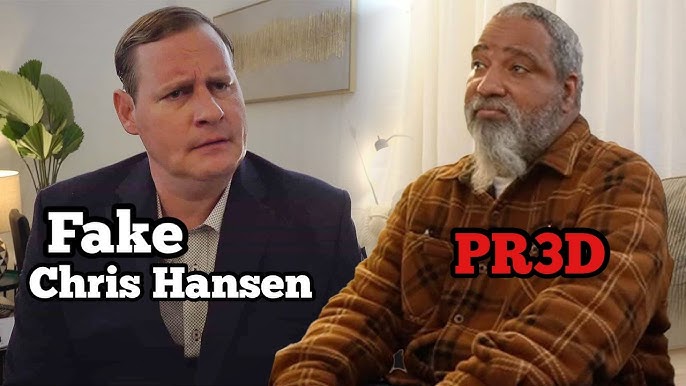
The best Chris Hansen Impersonator alive (more footage)
While broadcast television networks have largely moved away from producing high-budget, investigative sting operations, the architecture of the predator catch has not vanished. Instead, it has decentralized.
Today, a highly motivated network of independent citizen-led catch groups, independent journalists, and digital content creators have filled the vacuum. But as the tactics of online predators have modernized, so too have the strategies of the catch groups. In a fascinating evolution of psychological warfare, contemporary watchdogs are no longer just recording confrontations—they are weaponizing pop-culture nostalgia.
By hiring a dedicated Chris Hansen impersonator to step out of the shadows, modern sting operations are utilizing deep-seated psychological triggers to break down a target’s defenses, forcing immediate psychological shock and rapid confessions.
🧠 The Psychology of the Impersonator Setup
Why hire an impersonator rather than simply confronting a target with standard, angry reprimands? The answer lies in the deep-seated cultural trauma associated with the Hansen archetype.
To an online predator, Chris Hansen represents the absolute end of their civilian life. He represents the public exposure of their darkest secrets, the destruction of their career, and the inevitable arrival of flashing police lights.
[Target Enters House] ➔ [Expects Underage Decoy] ➔ [Impersonator Delivers Hansen Catchphrase] ➔ [Total Psychological Collapse]
When an independent catch group stages a house and introduces a dedicated impersonator—complete with the signature trench coat, direct eye contact, and smooth, measured delivery—the target experiences an instant, disorienting rush of cognitive dissonance.
The target’s brain immediately flashes to the historic television footage they have consumed for years. The initial shock is so overwhelming that it bypasses their natural defensive instincts to run or lie. Before the target can even register whether they are dealing with the actual legendary broadcaster or a highly skilled actor, they are already compliance-mapped, completely breaking down under the weight of the iconic interrogation style.
This profound mental unraveling highlights the exact tactical vulnerabilities exploited by modern digital watchdogs. When a suspect’s cognitive defenses are completely shattered by an unexpected pop-culture confrontation, they often provide critical admissions that can make or break a prosecution. In our exhaustive diagnostic piece, Anatomy of a Digital Sting: Psychology, Law, and the Defenses of a Repeat Predator, we dissect the complex legal frameworks governing these civilian operations. Understanding how psychological shock lines up with constitutional privacy rights, admissibility standards, and the defensive strategies deployed by serial offenders is crucial for anyone analyzing the true impact of internet vigilantism. While a faux-broadcaster can successfully induce a tactical confession, the evidence must still survive the rigorous legal gauntlet of a real courtroom.
📂 Dissecting the Confrontation Blueprint
An analysis of these independent, high-value operations reveals a highly structured, operational blueprint designed to ensure maximum narrative impact and undeniable digital proof:
-
The Digital Paper Trail: Long before any physical meeting occurs, tech-savvy team members secure concrete digital evidence. Every text message, explicit image request, and location confirmation is archived and printed, creating an unyielding evidence package.
-
The Safe House Grid: The physical location is rigged with a multi-angle camera matrix. Microphones are hidden in central staging areas—typically the kitchen or living room entryway—to capture every word, stutter, and sigh.
-
The Decoy Phaseout: The moment the target crosses the threshold, the adult decoy playing the part of the minor exits to a secure back room, locking the door behind them.
-
The Hansen Reveal: Rather than encountering an angry crowd, the target is greeted by the calm, deadpan presence of the impersonator delivering the timeless line: “Why don’t you go ahead and take a seat right over there for me?”
✍️ Editor’s Opinion: The Complex Ethics of Digital Vigilantism
The sheer entertainment value and visceral satisfaction of watching an online predator collapse in real time when confronted by a faux-Chris Hansen is undeniable. It hits a deeply satisfying cultural note, blending genuine true-crime accountability with an almost surreal level of dark performance art. These videos rack up millions of impressions because they provide the public with a clear, unambiguous victory over active societal dangers.
However, as an editorial team analyzing the broader public health and legal landscape, we must cast a critical eye on the structural risks of amateur internet vigilantism.
While independent catch groups are frequently fueled by a genuine, passionate desire to protect children, they operate entirely outside the boundaries of constitutional law. They do not possess police powers, they lack standardized chain-of-custody protocols for digital evidence, and their highly dramatic confrontational styles can occasionally compromise official law enforcement investigations.
If an operation is executed poorly, a slick defense attorney can easily argue entrapment or point to contaminated digital evidence to get a dangerous individual off on a legal technicality.
The use of a Chris Hansen impersonator is an incredibly effective tool for producing viral digital content, holding public mirrors up to corruption, and forcing immediate social accountability. But for these operations to achieve permanent value, they must seamlessly integrate with local police departments. The viral video should only ever serve as the opening hook; the true finale must always take place inside a standardized, legally binding court of law.
❓ Frequently Asked Questions
Q1: Is it illegal for civilian catch groups to use a Chris Hansen impersonator?
No, it is generally legal. As long as the impersonator does not explicitly claim to be a sworn law enforcement officer, a federal agent, or a licensed private investigator, they are not guilty of criminal impersonation. Acting as a journalist or performing a parody/takedown of a public figure is protected under standard expression laws.
Q2: Can evidence gathered by amateur catch groups be used in a court of law?
Yes, but it faces incredibly strict judicial scrutiny. Prosecutors can introduce civilian-captured chat logs and video recordings as evidence, provided the catch group can verify the authenticity of the files and prove that they did not manipulate or alter the digital paper trail.
Q3: Why don’t online predators simply run away as soon as they see the camera crew?
The primary reason is acute psychological shock. When a target enters a house expecting a vulnerable minor and is suddenly met with bright studio lights, a camera crew, and a dominant authority figure, their fight-or-flight response frequently malfunctions. Many freeze up, falsely believing that if they stay and talk or apologize, they can somehow negotiate their way out of the situation.
⏱️ Video Timeline Analysis
To see exactly how these high-stakes psychological tactics unfold in real time, review this precise breakdown of the confrontation:
-
00:00 – 04:15 | The Operational Briefing: The investigative team walks viewers through the digital paper trail, showcasing the explicit chat logs, printed evidence packages, and the structural setup of the sting house.
-
04:16 – 09:30 | Arriving at the Grid: The target pulls up to the location, coordinates via text message, and enters the residence, expecting to meet the online decoy.
-
09:31 – 15:45 | The Hansen Reveal: The decoy exits, and the Chris Hansen impersonator steps out of the shadows, deploying the iconic catchphrases and catching the target in a state of absolute psychological shock.
-
15:46 – 26:10 | The Interrogation & Receipts: The impersonator systematically reads the printed chat logs back to the target, dismantling every excuse, lie, and deflection in classic investigative fashion.
-
26:11 – End | The Final Fallout & Wrap-Up: The target realizes the gravity of the exposure, the confrontation reaches its peak, and the team provides a critical debrief on the legal status and long-term impact of the sting.
To explore further variations of how these modern stings operate on the ground, you can check out this undercover broadcast covering a Chris Hansen Alabama Sting Operation, which shows the real-world law enforcement integration that follows these intense public confrontations.
-

