

Introduction: Moving Beyond the Traditional “Bulk and Cut”
For decades, the fitness industry has operated under the rigid dogma of the “Bulk and Cut” cycle. Athletes were told they must eat in a massive caloric surplus to gain muscle (often gaining significant fat in the process) and then suffer through a grueling caloric deficit to strip away the fat (often losing hard-earned muscle).
However, modern exercise physiology has illuminated a more sophisticated path: Body Recomposition. This is the process of losing body fat while simultaneously increasing lean muscle mass. While often called the “Holy Grail” of fitness, it is not magic—it is a result of managing energy systems and protein signaling with surgical precision. This extensive guide will break down exactly how you can achieve this transformation.
Fat as a Fuel Source
Fat tissue (adipose) is simply stored chemical energy. Muscle tissue, on the other hand, is functional tissue that requires energy to build and maintain. When you are in a “recomp” phase, your goal is to provide enough stimulus (weight lifting) to signal to your body that it needs more muscle, while keeping dietary energy just low enough that the body is forced to pull from its own fat stores to fuel that muscle-building process.
Muscle Protein Synthesis (MPS) vs. Muscle Protein Breakdown (MPB)
At any given moment, your body is either building muscle (MPS) or breaking it down (MPB). The net balance determines whether you grow. Through high protein intake and resistance training, you can keep your body in a state of positive net protein balance even if you aren’t eating a surplus of total calories.
Section 1: The Nutritional Sweet Spot – Calories and Macros
Nutrition is the most critical variable in body recomposition. If you eat too much, you’ll just gain weight; if you eat too little, your body will lack the energy to build new tissue.
Finding Maintenance Calories
The first step is determining your Total Daily Energy Expenditure (TDEE). For most people, the “sweet spot” for recomposition is eating within +/- 5% of your maintenance calories.
- The Maintenance Approach: This provides the body with enough energy for high-intensity workouts while ensuring there isn’t so much excess that it gets stored as fat.
- Increasing the weight on the bar.
- Increasing the number of repetitions.
- Decreasing rest intervals.
- Improving form and “time under tension.”The “Small Deficit” Approach: A deficit of roughly 200–300 calories is often ideal for those with a slightly higher body fat percentage.
The Protein Requirement (Non-Negotiable)
Protein is the building block of muscle. During a recomposition phase, your protein needs are significantly higher than during a traditional bulk.
- The Target: 1.2g to 1.6g of protein per pound of body weight (or 2.6g to 3.5g per kg).
- Why so high? High protein intake increases thermogenesis (the energy required to digest food) and provides a surplus of amino acids, ensuring that even in a slight energy dip, the body has no reason to break down existing muscle.
Carbohydrates and Fats
- Carbohydrates: These are your primary fuel for high-intensity training. Focus on complex carbs like oats, rice, and sweet potatoes, primarily centered around your workout window.
-
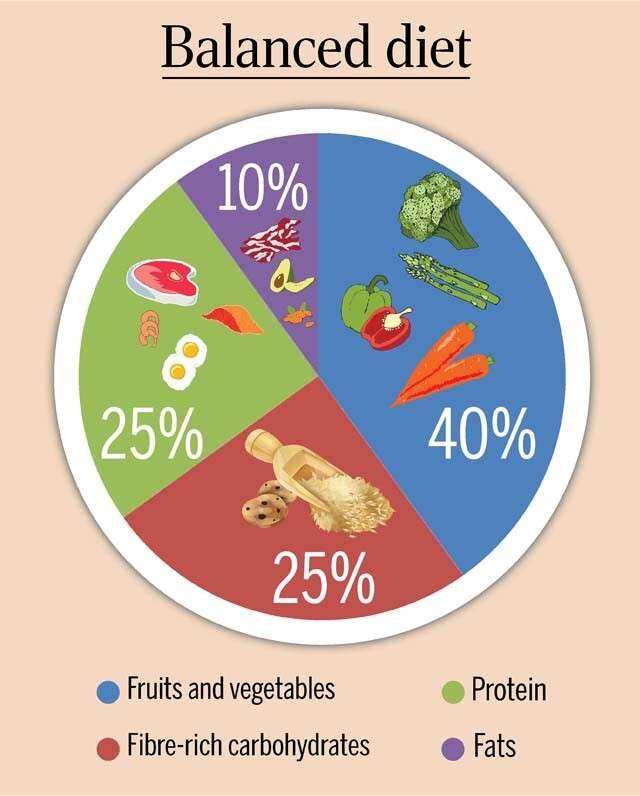
A balanced diet chart should be used as a rough guideline on what type of foods to consume Fats: These are essential for hormonal health, particularly testosterone production. Ensure fats make up at least 20-25% of your total caloric intake.
Section 2: Training for the Recomposition Stimulus
You cannot “eat” your way into more muscle without a mechanical reason for the tissue to exist. Your training must be focused on Hypertrophy and Progressive Overload.
The Principle of Progressive Overload
To build muscle while losing fat, you must constantly challenge your muscles. This means:
- Increasing the weight on the bar.
- Increasing the number of repetitions.
- Decreasing rest intervals.
- Improving form and “time under tension.”
-

Muscle fibres can rapidly adapt to exercise by changing size and function source: https://www.researchgate.net/figure/Muscle-fibres-can-rapidly-adapt-to-exercise-by-changing-size-and-function-a-Muscle_fig1_366520222 Compound vs. Isolation Movements
Your program should be built around compound movements: Squats, Deadlifts, Bench Presses, Overhead Presses, and Rows. These exercises recruit the most muscle fibers and trigger a larger systemic hormonal response (Growth Hormone and Testosterone) compared to isolation moves like bicep curls or leg extensions.
Cardiovascular Training: The “Less is More” Rule
Too much steady-state cardio can interfere with the signaling pathways for muscle growth (the mTor pathway). For body recomposition, prioritize LISS (Low-Intensity Steady State) cardio, such as walking 8,000–10,000 steps a day. This burns fat without causing the central nervous system fatigue that hinders your lifting.
Section 3: The Role of Hormones and Recovery
The “recomp” happens when you sleep, not when you lift. Cortisol, the stress hormone, is the enemy of recomposition. High cortisol levels encourage the body to store abdominal fat and break down muscle for quick energy.
Sleep: The Anabolic Window
During deep sleep, the body releases the majority of its natural Growth Hormone. Aim for a minimum of 7.5 to 9 hours of quality sleep. Lack of sleep lowers insulin sensitivity, making it harder for your body to shuttle nutrients into muscle cells rather than fat cells.
Stress Management
Chronic life stress can stall a recomposition journey. Techniques such as meditation, regular walks in nature, and ensuring you have “off” days from the gym are essential to keep your endocrine system balanced.
Section 4: Who Should Attempt Body Recomposition?
While everyone wants to lose fat and gain muscle, certain individuals will find this process much more efficient:
- The Beginner: Often called “newbie gains,” beginners have a high sensitivity to training and can see dramatic shifts in body composition rapidly.
- The Detrained: If you used to be fit but took a year off, your “muscle memory” allows you to regain tissue quickly while burning fat.
- The High Body-Fat Individual: If you have significant fat stores, your body has a massive “on-board” energy reserve to fuel muscle growth even in a caloric deficit.
- The “Skinny-Fat”: Those who appear thin but have little muscle definition.
Section 5: Tracking Progress (Why the Scale Lies)
In a traditional diet, the scale is king. In body recomposition, the scale can be your worst enemy. Because muscle is significantly denser than fat, you may stay the exact same weight for three months while completely changing your appearance.
Better Metrics for Success:
- Progress Photos: Take photos every 2 weeks in the same lighting.
- Body Measurements: Measure your waist, chest, arms, and thighs. A shrinking waist and growing arms is a definitive sign of successful recomposition.
- Strength Gains: If your lifts are going up while your clothes fit better, you are winning.
- Body Fat Percentage: Use calipers or DEXA scans for a more accurate picture than the standard scale.
Beyond the Transformation: Long-Term Maintenance
Mastering your body composition is only half the battle; the real challenge lies in keeping those results for life. While recomposition focuses on the “how-to” of the physical change, it is essential to pair these habits with a broader lifestyle strategy. For a deeper dive into the psychological and biological methods of keeping weight off, check out our companion piece: Sustainable Weight Loss: 10 Science-Backed Strategies for Long-Term Success. This article explores how to transition from a transformation phase into a permanent state of health without the “yo-yo” effect typical of most diets.
Conclusion: Consistency Over Perfection
Body recomposition is a marathon, not a sprint. Unlike a “crash diet” where you might lose 10 pounds in two weeks, recomposition takes months of dedicated effort. However, the results are far more sustainable. You aren’t just “getting smaller”—you are building a metabolic engine that burns more calories at rest and a physique that looks athletic and defined.
By balancing high protein intake, smart caloric management, and intense resistance training, you can bypass the misery of extreme bulking and cutting. Stay patient, trust the science, and focus on the long-term transformation.
Disclaimer: The information provided in this article is for educational purposes only. Always consult with a physician or healthcare provider before starting a new exercise or nutrition programs

