

The 1,800-Day Divide: What Happens When One Person Gambles $0 Into Debt and Another Compounds $150,000?
Nine hundred days—roughly 2.46 years, 30 months, or 128.5 weeks—is long enough to expose the true trajectory of a person’s life. Over a single weekend, luck, mood, or a sudden burst of motivation can disguise where someone is headed. Over 900 days, luck averages out, excuses run thin, and daily habits turn into measurable physical and financial outcomes.
Consider two people starting at the exact same baseline who just completed their first 900-day cycle:
-
Person A spent the last 900 days trapped in a payday compulsion loop—blowing every paycheck within hours on poker machines, cocaine, and fast food, reaching 113 kg, and ending the 900-day stretch with $0 in savings (and frequently borrowing small amounts to survive until the next pay cycle).
-
Person B spent the exact same 900 days operating with structured self-control—training consistently at the gym, eating whole, nutrient-dense meals, keeping fixed overhead low, and funneling surplus income into a high-yield savings account (HYSA) to accumulate $150,000.
If neither person changes their behavior, what do their projected earnings, net worth, and physical health look like after another 900 days (reaching the 1,800-day / ~4.93-year mark)?
The First 900 Days: Establishing the Behavioral Baseline
Before projecting forward, look at the rate of accumulation each person established during the first 900 days:
-
Person A’s Pace: $0 saved across 30 months equals $0 per month in net capital formation. Even if Person A earned an average net income of $4,500 to $5,000 per month—roughly $135,000 to $150,000 in total wages over 900 days—100% of that cash flow evaporated into negative-expectation bets, stimulants, and hyper-palatable food.
-
Person B’s Pace: Accumulating $150,000 in 900 days (~30 months) requires an average monthly wealth gain of roughly $4,700 to $5,000 per month when combining consistent principal contributions with compounding interest (at a realistic 4.5% to 5.0% APY high-yield savings rate).
In behavioral economics, a 900-day track record is not a fluke; it is an entrenched operating system.
Projected Earnings and Net Worth After Another 900 Days (Day 1,800)
Assuming both individuals continue their exact habits for another 900 days (30 additional months) at a representative 4.75% annual interest rate on high-yield cash reserves, the gap stops being linear and turns exponential.
| Metric (At Day 1,800 / ~4.93 Years) | Person A (Compulsive Payday Loop) | Person B (Disciplined HYSA Saver) | The 1,800-Day Gap |
| Starting Balance (Day 900) | $0 (or net negative IOUs) | $150,000 | +$150,000 |
| New Principal Added (Days 901–1,800) | $0 | ~$141,000 (~$4,700/mo) | +$141,000 |
| Interest Earned (Days 901–1,800) | $0 (or debt interest paid) | ~$28,400 (at 4.75% APY) | +$28,400 |
| Projected Net Savings (Day 1,800) | $0 to -$15,000 (debt risk) | ~$319,400 | ~$319,400+ |
| Passive Monthly Income at Day 1,800 | $0 / month | ~$1,264 / month (pre-tax) | +$1,264 / month |
| Physical Trajectory | 113 kg+ (rising metabolic risk) | Lean, muscular, high energy | Complete divergence |

Why Person B Doubles Down on Momentum
During the first 900 days, Person B’s $150,000 had to be built mostly through raw labor and disciplined saving. During the second 900 days, Person B’s existing $150,000 works alongside their paycheck. At 4.75% APY compounded monthly, that initial $150,000 alone generates roughly $18,900 in passive interest over the next 30 months—while new monthly deposits add another ~$9,500 in interest on top of $141,000 in principal. By Day 1,800, Person B holds nearly $320,000 in liquid cash earning over $1,260 every single month without lifting a finger.
Why Person A Faces Asymmetric Downside

Projecting $0 for Person A over the next 900 days is actually the best-case scenario for an unchanged habit loop. When someone repeatedly empties their bank account within hours of payday, unexpected expenses—car repairs, dental bills, or mid-week cash shortfalls—force reliance on credit cards, short-term loans, or borrowing from friends. Over 1,800 days, a $0 savings rate almost always slides into negative net worth.
Click image below for a chance to win 2k a week for 1 week

Positive Compounding vs. Negative Financial Compounding
Most personal finance advice focuses exclusively on positive compound interest, ignoring its mirror image: negative compounding. Both forces operate on the exact same mathematical principle—small, repeated actions feeding back into themselves until the output accelerates—but they point in opposite directions.
1. Positive Compounding (The Virtuous Cycle)
Person B’s routine creates cross-domain synergy where financial discipline and physical health reinforce each other:
-
Financial Acceleration: Every dollar saved in a high-yield account earns interest, and that interest earns interest. Just as importantly, having a six-figure buffer eliminates financial panic, lowers chronic cortisol, and allows Person B to make calm, rational career and investment decisions.
-
Biological Compounding: Consistent resistance training and clean nutrition increase insulin sensitivity, preserve lean muscle mass, improve deep sleep, and stabilize daytime energy. Better sleep and stable blood sugar sharpen prefrontal cortex function—the exact part of the brain responsible for impulse control and long-term planning.
2. Negative Financial Compounding (The Dopamine Trap)
Person A’s lifestyle stacks three high-variance dopamine triggers—gambling, cocaine, and ultra-processed junk food—creating a destructive feedback loop:
-
Neurochemical Hijacking: Cocaine floods the brain with artificial dopamine while suppressing the prefrontal cortex’s ability to weigh risk. Combined with poker machines or online wagering, this turns payday into a short-lived biochemical storm where an entire fortnight’s wages vanish in hours.
-
Severe Delay Discounting: After 900 days of extreme dopamine spikes, normal financial progress—like watching a savings account grow by $1,000 a week—feels flat and unrewarding. The brain discounts future security so heavily that only an immediate bet or hit feels worth pursuing.
-
Compounding Health & Earning Drag: Carrying 113 kg alongside stimulant crashes, sleep deprivation, and chronic financial stress elevates blood pressure, drives visceral fat gain, and saps workplace stamina. Over another 900 days, reduced energy and health complications threaten Person A’s ability to even maintain steady employment—potentially cutting off the very paycheck funding the cycle.
As explored in How Compulsive Gambling Addiction Will Ruin Your Finances and Trap You in Poverty, compulsive betting rarely stays purely about money—it becomes an emotional escape from reality that erodes long-term judgment. As the piece notes, “gambling hijacks the brain and tricks your mind into thinking you are one hit away from a big win,” while simultaneously ensuring that your “ability to delay gratification and think long term is severely damaged due to compulsive gambling.” That exact cognitive trap explains how someone can stay stuck at $0 across 900 days—and remain locked in the exact same cycle for another 900 days—while a disciplined saver compounds $150,000 into nearly $320,000.
The Role of Financial Habits and Daily Discipline
The difference between $0 and $319,400 after 1,800 days rarely comes down to intelligence or even starting salary. It comes down to friction design and identity:
-
Automating Before Willpower Is Tested: Disciplined savers do not wait until the end of the month to see what is left over. They route money into high-yield savings on payday before discretionary spending can touch it. Compulsive spenders leave 100% of their paycheck exposed in a checking account with instant tap-and-go or betting access.
-
Respecting Small Units: Person B understands that $150,000 is simply hundreds of boring, repeatable decisions—meal-prepping instead of ordering fast food, showing up to the gym at 7:00 AM, and transferring surplus cash every pay cycle. Person A views small savings as pointless compared to the fantasy of one “big win.”
-
Environment Over Motivation: Relying on sheer willpower against an 835- to 900-day addiction loop almost always fails. Breaking negative compounding requires structural circuit-breakers: bank gambling blocks, self-exclusion registries (such as BetStop in Australia), automated payday transfers into locked accounts, and professional addiction support.
-
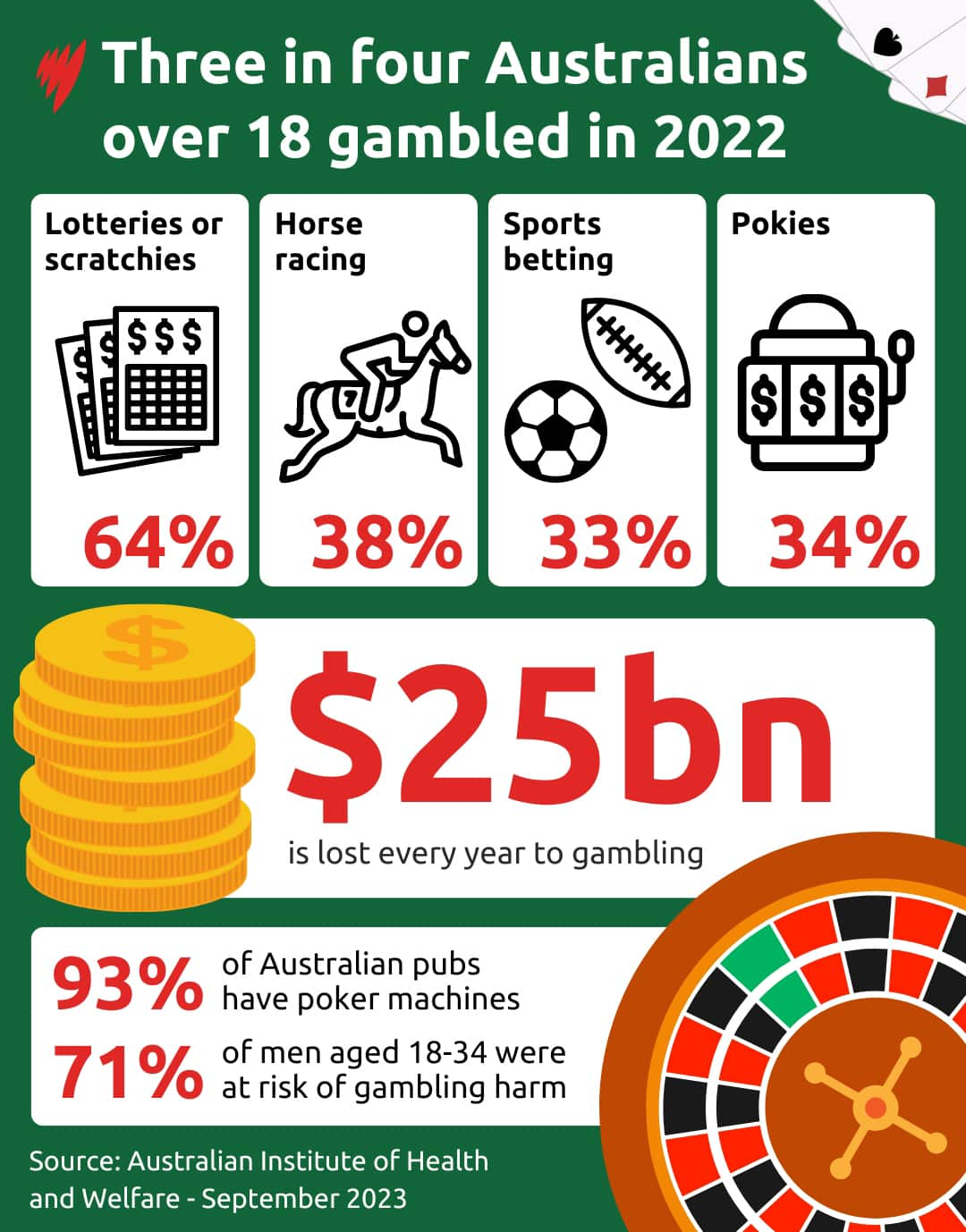
How can Australia quit its $24 billion gambling addiction?
Frequently Asked Questions (FAQ)
How much can you realistically save in 900 days with a high-yield savings account?
Saving $150,000 in 900 days (~30 months) requires setting aside roughly $4,700 per month in an account earning 4.5% to 5.0% APY. If you save a more modest $1,500 per month at 4.75% APY over 900 days, you will still accumulate approximately $47,750 ($45,000 in principal plus ~$2,750 in interest).
What is negative financial compounding?
Negative financial compounding occurs when destructive financial habits—such as high-interest debt, payday borrowing, chronic gambling losses, and lifestyle-related health decline—feed into each other over time. Instead of assets generating passive income, debt interest, stress, and lost earning power accelerate financial decline.
Why can’t a compulsive gambler save money even when living costs are low?
Prolonged gambling addiction rewires the brain’s reward system, causing extreme delay discounting (undervaluing future rewards) and weakening impulse control in the prefrontal cortex. When payday hits, the availability of cash acts as an immediate trigger to chase losses or seek a dopamine spike, overriding rational budgeting goals.
How does physical health impact long-term wealth building?
Consistent exercise and nutritious eating improve sleep quality, regulate stress hormones like cortisol, and strengthen executive brain function. Better physical health reduces medical expenses, increases daily energy and career productivity, and reinforces the self-control required to stick to a long-term financial plan.
Can Person A still recover financially after 900 days of $0 savings?
Yes, recovery is possible at any stage, provided the environment changes first. Interrupting negative compounding starts with removing instant access to cash on payday (via automated transfers to a trusted third party or locked account), activating bank gambling blocks, and seeking confidential support from services like Gambling Help Online (1800 858 858) and the National Alcohol and Other Drug Hotline (1800 250 015).

